Why You Should Do Toe Raises, Not Just Calf Raises
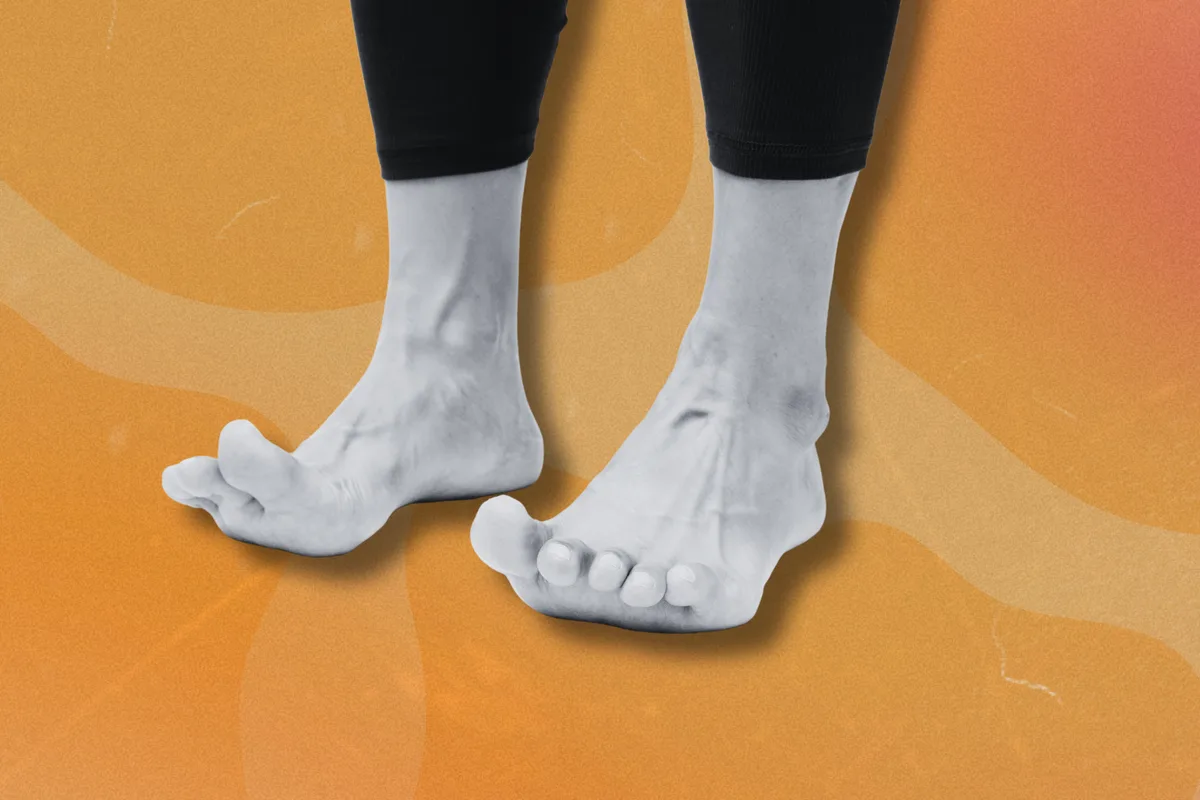
—Photo-illustration by TIME (Source Image: GETB/Getty Images) Here’s a workout tip that sounds like it belongs in a nursery rhyme: Bring your toes toward your nose.
That’s how physical therapist Joseph Hribick reminds patients to do toe raises.
Fortunately, it’s not a flexibility test: Your toes don’t have to get anywhere near your face.
Keep your heels on the floor, lift the fronts of your feet, and you’ll work the muscles along your shins.
“Each time we step, we need to be able to clear our toes from the ground,” says Hribick, a clinical assistant professor of physical therapy at Lebanon Valley College in Pennsylvania.
Otherwise, your toes could snag on the carpet or catch as you walk through a doorway, making you more likely to trip .
If you’ve ever done calf raises , you know the opposite move: lifting your heels and rising onto the balls of your feet.
Toe raises give the other side of your lower legs some attention.
They require no equipment, you can do them while you’re sitting at your desk, and they can make your shins burn (in a good way) after surprisingly few reps.
What are the benefits of toe raises? The star of the toe raise is the tibialis anterior , a muscle that runs along the front of your shin.
It helps lift your foot as your leg swings forward—and then controls how your foot lowers after your heel touches the ground, Hribick says.
Your calves do the opposite job: They help push you forward.
Daniel Safford, an assistant professor of physical therapy at Arcadia University in Pennsylvania, suggests giving both sides of your lower legs some attention.
“You’re covering a lot of your bases if you do just those two things,” he says of calf raises and toe raises.
5News aggregated this summary from the outlet’s public feed. The full article, with all the context, is on time.com — the content belongs to TIME.