President Trump Has a Pet-Project Docket at the National Parks
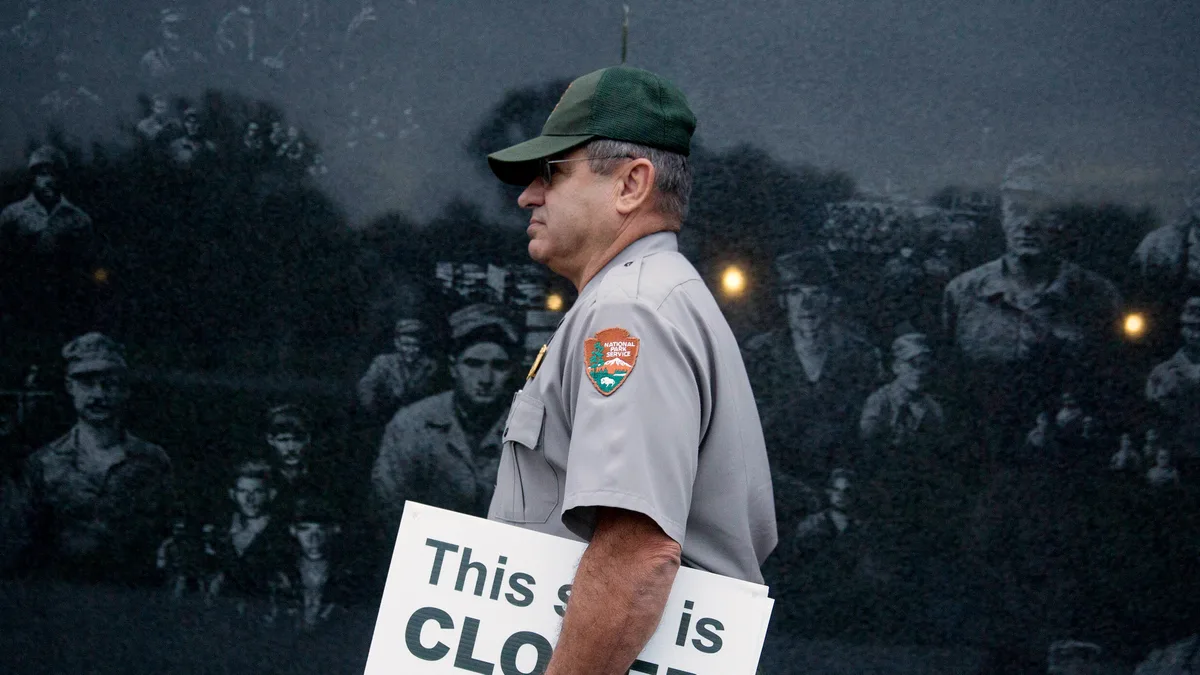
P resident Trump gets what he wants, when he wants it, from the National Park Service.
One and a half million dollars to replace brick pavers in Lafayette Park, across from the White House? Contracting officials at the NPS Washington headquarters found the money within five days last month.
A $170,000 request to remove a fence around the Hains Point golf course, preparing the ground for a new “championship-quality” layout? Six days this summer.
And the more–than–$5 million project to gild equine statues along the nearby Memorial Bridge? That took 12 days.
The rapid-approval system is specific to projects Trump wants, thanks to a reorganization at the Interior Department led by Secretary Doug Burgum .
Trump issued an executive order to make the District of Columbia “safe and beautiful,” justifying the creation of an NPS docket of “White House priorities” that is handled separately from other park projects and is prioritized both for funding and contracting resources, according to documents I obtained and interviews with five current or former NPS officials.
Meanwhile, many other projects throughout the nationwide system of parks are languishing.
The list I received includes Trump’s well-known projects on the National Mall and the refurbishment of the White House, along with several lesser-known efforts: The hiring and equipping of 450 new U.S.
Park Police officers in the Washington region, and more than $12.8 million—some of which came from the Department of Justice—for police equipment, including new Flock license-plate-reading cameras, radios, tasers, laptops, body cameras, and body armor.
Internal documentation for park projects typically includes “Consequences of Failure to Act,” which scores the urgency based on health and safety measures.
When work began in January on fountains near the White House, officials described the need for the work in this way: “Such failure will disappoint visitors, as well as residents and employees of the White House.” The new project-funding system was described by a contracting officer during an April meeting with NPS officials.
“There’s three different lists: White House priorities, high priorities, and low priorities,” the official told colleagues on the virtual call, according to a written account that was provided to me.
Those on the call, who do not work on White House priorities, were advised that projects on the low-priority list likely would not be completed, so they should attempt to get their needs moved to the high-priority list.
White House priorities, meanwhile, were nonnegotiable.
5News aggregated this summary from the outlet’s public feed. The full article, with all the context, is on www.theatlantic.com — the content belongs to The Atlantic.