Part of a key firearms law lapsed following a federal court decision. What happens now?
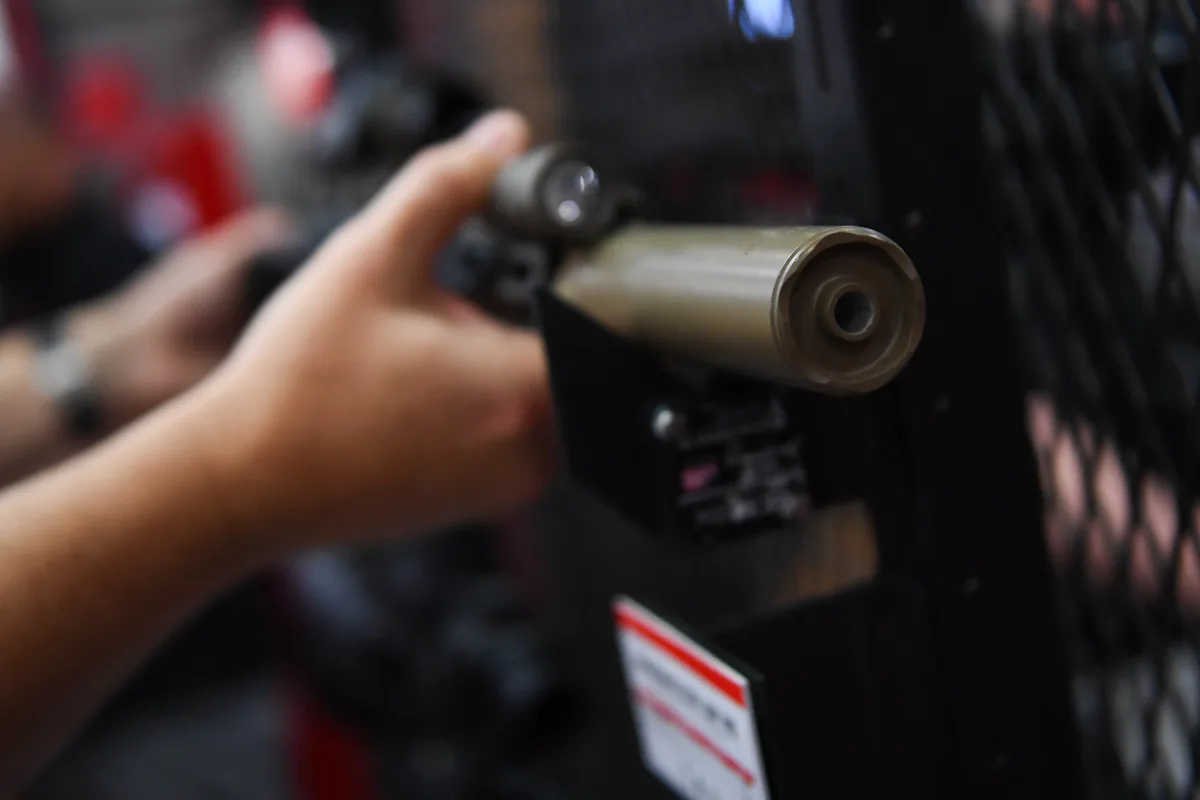
A SureFire firearm sound suppressor, commonly referred to as a silencer, is displayed during the National Rifle Association (NRA) Annual Meeting in Houston, Texas on May 28, 2022. A recent court ruling eased restrictions around the purchase of suppressors. PATRICK T. FALLON/AFP hide caption
Gun rights groups are celebrating a federal ruling that lifts restrictions on the purchase of silencers, used to lessen the sound of gunshots, and certain firearms.
Judge James Wesley Hendrix out of the Northern District of Texas invalidated key components of the nearly 100-year-old National Firearms Act (NFA) in more than a dozen states.
Hendrix gave the Justice Department one week to submit an emergency appeal before his decision went into effect. But the DOJ never did. The department has more than a month to submit a non-emergency appeal, but it's unlikely. The agency has made a wider push to restore gun rights to people with certain felony convictions, including nonviolent theft and drug offenses, according to a final rule published Monday.
Under the Texas ruling, some Americans can now buy and sell those silencers and weapons without first registering them with the federal government or submitting photos of themselves or fingerprints.
"This is truly one of the greatest Second Amendment victories in the last 100 years," said Erich Pratt, the senior vice president of Gun Owners of America. "It's something that we have wanted since we were first incorporated in 1976."
But it leaves a confusing patchwork of rules and regulations, since it applies only to plaintiffs in the Texas case.
The National Firearms Act, established in the 1930s and born out of Prohibition-era gang violence, regulated the sale and registration of certain rifles, shotguns and suppressors, commonly referred to as "silencers".
When Congress passed the NFA in 1934, the goal was to restrict weapons seen as particularly dangerous.
The law imposed a $200 tax on the manufacture and transfer of these guns and required owners to register those weapons.
The tax stayed on the books until 2025, when Congress passed the One Big Beautiful Bill Act . A provision cut the tax down to $0 for the transfer and manufacture of short-barreled shotguns, short-barreled rifles and silencers.
Some states and gun rights groups, like Gun Owners of America, shortly thereafter sued the federal government. They argued that without a tax, there's no constitutional basis for any of the other requirements in the National Firearms Act.
Hendrix sided with them, writing in his decision last week, "By zeroing out the transfer and making taxes for most NFA firearms, Congress eliminated the constitutional basis for the regulations that formerly supported the taxes for those firearms. No longer can the challenged NFA provisions be justified — as they have been for nearly 90 years — under Congress's taxing power."
Gun control advocates say the decision makes Americans a lot less safe now.
5News aggregated this summary from the outlet’s public feed. The full article, with all the context, is on www.npr.org — the content belongs to NPR.