Front face of a stela: A 1,300-year-old carving of a powerful Maya 'Lady Supreme Warlord' that weighs over 2 tons
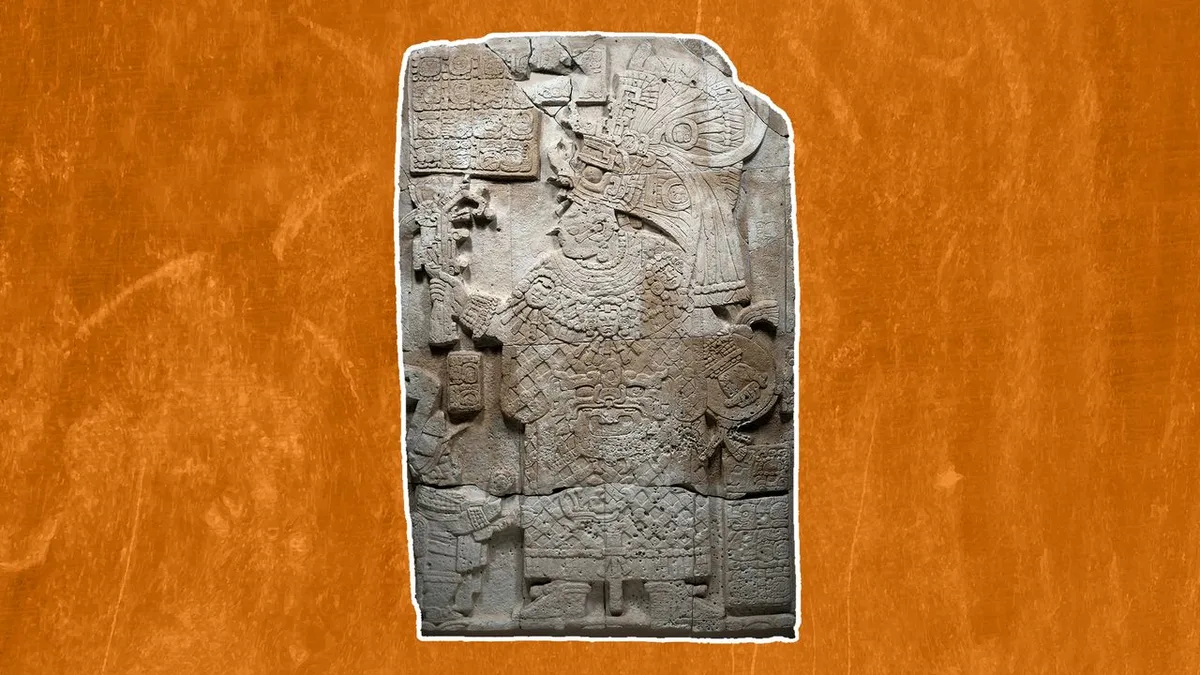
A limestone carving depicting the Maya queen known as Lady K'abel. (Image credit: Cleveland Museum of Art, Purchase from the J.
H.
Wade Fund 1967.29) QUICK FACTS Name: Front face of a stela What it is: A limestone carving Where it is from: Petén, Guatemala When it was made: A.D.
692 This massive limestone carving depicts a Maya queen known as Lady K'abel (meaning Water Lily Hand) and Na Kan Ajaw (meaning Divine Woman of the Snake Polity).
The stela, or carved stone slab, was likely erected in A.D.
692 to mark the end of a k'atun, a 20-year period in the Maya calendar.
The stela is in the collection of the Cleveland Museum of Art (CMA).
It has been reconstructed from more than 40 fragments of carved limestone but is only the front part of the original freestanding monument.
The enormous carving is roughly 9 feet (2.74 meters) tall and weighs about 2,500 pounds (1,134 kilograms).
It was found in a provincial Maya town called El Perú-Waka' in the Petén region of northern Guatemala.
In Petén, this carved portrait of Lady K'abel stood next to a similar one of her husband, K'inich Bahlam II, a man of lower rank.
As a member of the powerful Kaanul or Snake dynasty, Lady K'abel ruled El Perú-Waka' as the military governor, according to the CMA.
The stela also describes her as Ix Kaloomte', meaning Lady Supreme Warlord, and experts think Lady K'abel may have led an army from the city of Calakmul against the city of Tikal.
On the stela, Lady K'abel is "smothered in finery," Susan E.
5News aggregated this summary from the outlet’s public feed. The full article, with all the context, is on www.livescience.com — the content belongs to Live Science.