This Is Your Brain on Short-Form Video
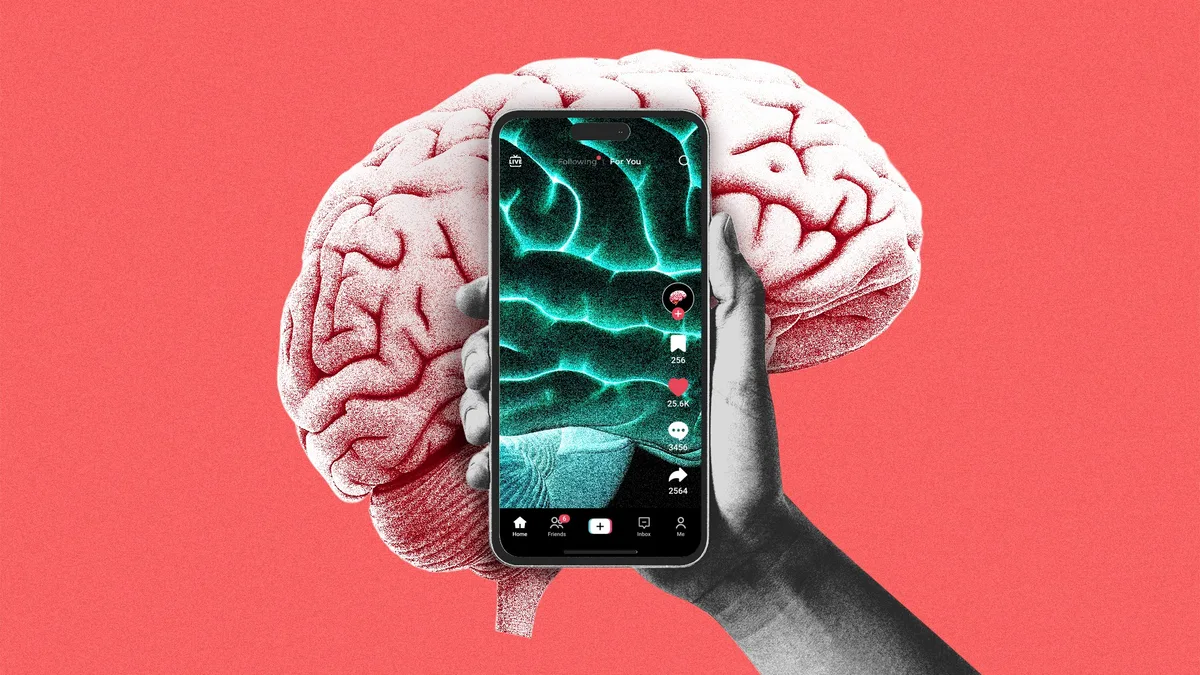
Among the many aspects of online life accused of rotting our brains, a certain folk psychology holds that short-form video is an especially egregious driver of the decay.
In an interview last month promoting his new film, in which a London couple move their tech-dependent kids to a barn without electricity, Andrew Garfield described himself as addicted to an Instagram feed full of “weird ceramics” and Japanese craftspeople.
“I’ve given all of those hours to nothing,” he told Variety .
“It’s genuinely enraging because we don’t have as much control over these impulses as we should.” Even Steve Chen, one of the co-founders of YouTube—home to many a recycled TikTok on its Shorts—has said that he’s wary of his kids watching too much short-form video, because of the damage it does to attention.
Sometimes, when I emerge from the dark vortex of a scroll gone too long, I worry that my thoughts will permanently become as flighty as my feed.
But here’s the tricky part: Very little research exists on what short-form videos are doing to the human mind.
This lack of data gives cover to tech executives, who, when faced with the potentially harmful effects of their products, can cite the difficulty of establishing any one app or feature as the cause of a person’s unraveling.
Short-form video in particular is a marker of how far behind cognitive research is, compared with the relentless pace of new technology.
What available studies hint at so far is at least worthy of unease, and the not-knowing is only making things worse.
Research on short-form videos and cognition is difficult to conduct.
Studies on human subjects tend to be slow and expensive, and academics are wary of spending years investigating apps that could be irrelevant by the time their results are published.
Plus, the federal government hasn’t prioritized funding research on potentially addictive behaviors, including gambling and social-media use.
The industry could help fill in the gaps by funding or even leading research, especially given that American social-media platforms have exclusive and valuable data.
But companies are not particularly motivated to bankroll research that could show detrimental effects of their wildly profitable products.
5News aggregated this summary from the outlet’s public feed. The full article, with all the context, is on www.theatlantic.com — the content belongs to The Atlantic.