Under Trump’s Supreme Court, conservative churches are getting to write the rules
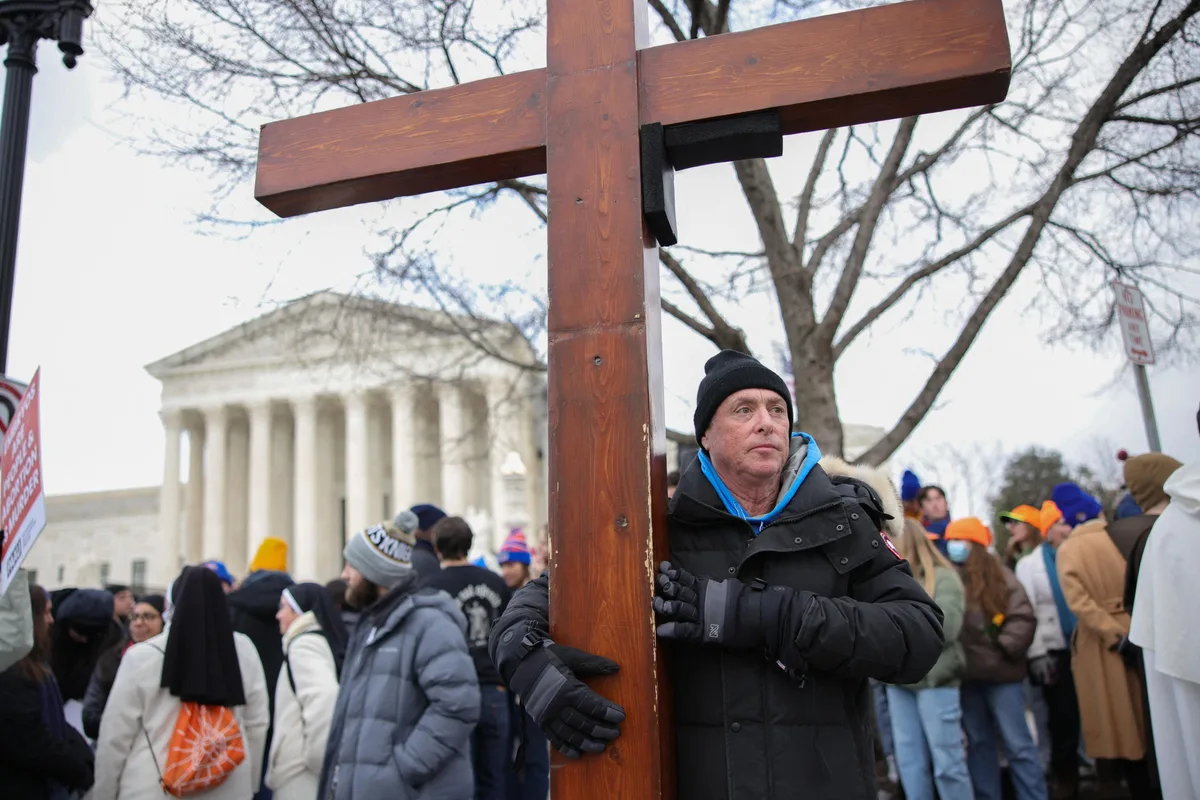
The Supreme Court decision in Roman Catholic Diocese of Brooklyn v.
Cuomo fundamentally shifted the Court’s approach to lawsuits seeking religious exemptions from state laws. | Bryan Dozier/Middle East Images/AFP via Getty Images The Republican Party’s supermajority on the Supreme Court was barely a month old when the justices handed down one of the most consequential religion decisions of the last several decades.
It was Amy Coney Barrett’s first significant vote as a justice.
The issue in Roman Catholic Diocese of Brooklyn v.
Cuomo (2020) was whether churches and other houses of worship were exempt from Covid-era restrictions on attendance.
At the height of the pandemic, New York imposed strict limits on how many people could attend worship services at the same time — a rule that steered straight into the emerging partisan divide over whether pandemic restrictions had gone too far — although these restrictions were actually less stringent than the rules imposed on similar secular venues like theaters and lecture halls.
Just months earlier, a 5-4 Court had upheld similar restrictions in California , with Republican Chief Justice John Roberts joining the Court’s Democrats.
Although Roberts typically votes with his fellow Republicans in religion cases, he worried that the judiciary “ lacks the background, competence, and expertise to assess public health ” and decide life or death matters like how to halt the spread of Covid.
The Court’s other four Republicans dissented, but this was before Barrett joined the Court, so they were still in the minority.
But the new majority’s decision in Roman Catholic Diocese rejected this restrained approach, and the decision fundamentally shifted the Court’s approach to lawsuits seeking religious exemptions from state laws.
Before Republicans gained their supermajority on the Court, the justices gave states a fair amount of leeway to navigate the fraught political questions that arise when someone exercises their faith in a way that can harm other people, or limit their legal rights.
But now the justices typically make these calls themselves, and they usually do so in favor of religious conservatives .
As a result, under the current Supreme Court, one of the Constitution’s most difficult balancing acts — the task of weighing when one person’s religious beliefs should overcome another person’s freedoms — has toppled over on the side of religious individuals and groups, often allowing them to violate the freedoms of others.
This is especially true when lawsuits pit religious conservatives against people exercising sexual freedoms such as the right to use birth control or to marry a person of the same sex .
5News aggregated this summary from the outlet’s public feed. The full article, with all the context, is on www.vox.com — the content belongs to Vox.