OpenAI wants to consult elite mathematicians about how to not fumble again
‘The group will advise on the review and communication of emerging results.’
‘The group will advise on the review and communication of emerging results.’
After turning a string of spectacular mathematical results into a reputational crisis , OpenAI is consulting human mathematicians to help it figure out a less disastrous path forward.
On Monday, the company announced a new independent panel of mathematicians tasked with advising it and other AI companies on their interactions with mathematical research and the wider mathematics community, including how new results are presented and released. Its abrupt arrival caught many mathematicians by surprise. Researchers told The Verge the group is a good first step, but many said they were left with basic questions about what it will actually do, how much influence it will have, and whether OpenAI will actually listen to it, as well as concerns over whether such a small group of prominent researchers can represent the wider mathematical community.
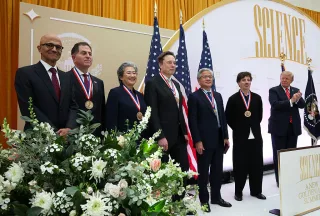
The nine-member group is stacked with who researchers described to The Verge as celebrities in the field, drawn from institutions including Stanford, Harvard, Oxford, and Cambridge, with multiple Fields Medals and MacArthur “genius grants” among them. It will be hosted by Princeton, New Jersey’s Institute for Advanced Study (IAS), one of the world’s most revered centers of mathematical research and the former intellectual home of figures including Albert Einstein, John von Neumann, and J. Robert Oppenheimer.
“The other fundamental fact is that our overarching aim is to represent as well as we possibly can the interests of the mathematical community.”
OpenAI said the group, called the Advisory Group on Mathematics and Artificial Intelligence (AGMAI), will operate independently, with the freedom to offer advice the company has not requested, publicly comment on its impact on mathematics, and make its advice public, though it did not provide details on what this may entail. It appears that the group will be granted early access to OpenAI’s research in order to fulfill its task. Members will not be paid by OpenAI and the group can change its membership as it sees fit, OpenAI said. “Its value depends on its members being able to exercise their own judgement and challenge ours,” the company said. “The group will advise on the review and communication of emerging results: they will help OpenAI assess their significance, advise on how to coordinate their dissemination, and advise on academic and professional standards of mathematical research. It will also advise on how our tools can support mathematical research and learning.”
For all the emphasis on independence, it remains unclear how much influence the group will actually have or why it was formed in the first place. Simon Machado, a researcher at ETH Zurich in Switzerland, said the whole thing seemed “shrouded in mystery” and he questioned how the nine members were selected.
5News aggregated this summary from the outlet’s public feed. The full article, with all the context, is on www.theverge.com — the content belongs to The Verge.