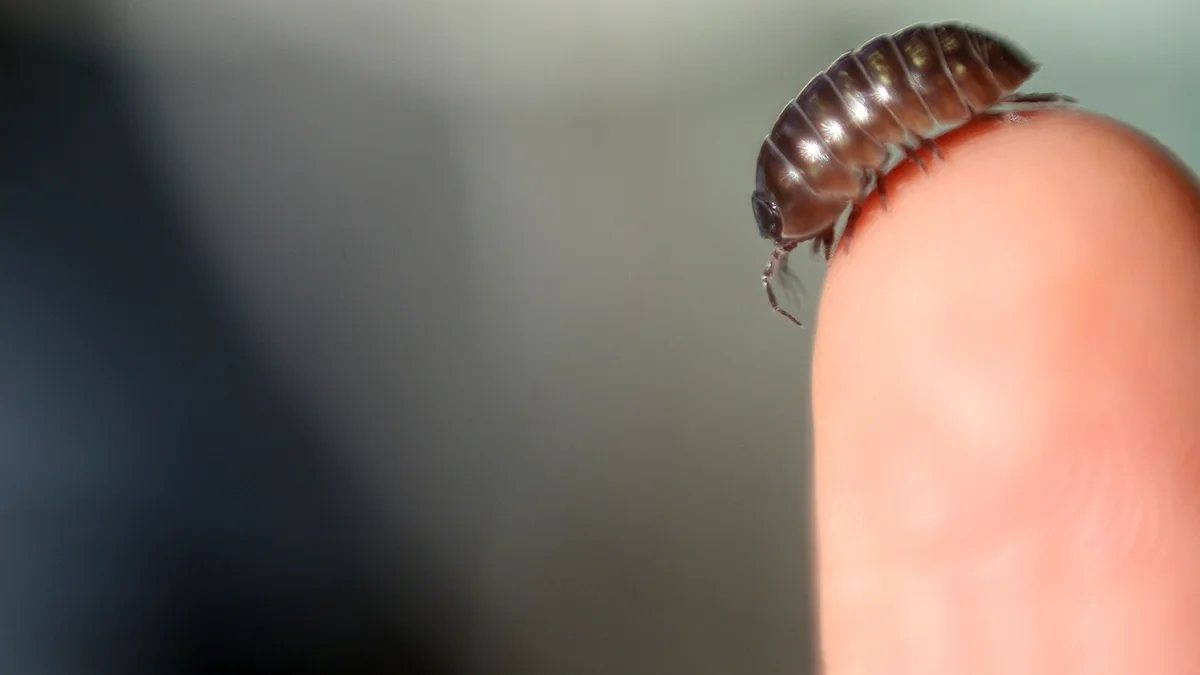
Diagnostic dilemma: Doctors performed surgery to remove a mass in a woman's gut — and a bug-like creature immediately jumped out
The patient: An 82-year-old woman in Bologna, Italy The symptoms: The woman was admitted to the hospital with abdominal pain that had worsened over the previous four days.
The symptom was accompanied by constipation and episodes of nausea and vomiting.
What happened next: During a physical examination, doctors found that the patient's abdomen was distended and tender.
Laboratory results from a blood test indicated that her white blood cell count was elevated, which is often a sign of an immune response to an infection.
When doctors performed an abdominal X-ray, they discovered that parts of the woman's intestines had expanded due to gas or fluid, while other portions of her intestines had collapsed.
An abdominal CT scan revealed that the woman had a solid object blocking her intestinal loops on the right side — a situation known as a small bowel obstruction (SBO).
The diagnosis: SBOs have several possible causes, including tumors.
Additionally, a section of the bowel can twist, forming a "volvulus," or a mass of tissue can push through a tear in the intestinal wall, causing a hernia.
However, in a report of the case , the doctors wrote that SBOs can sometimes be foreign bodies, such as swallowed objects; gallstones that migrate to the intestines; packed masses of parasites, like roundworms or nematodes; or bezoars , which are solid clumps of undigested matter that collect in the gastrointestinal system.
Bowel obstructions can be life-threatening if the blockage completely shuts off the intestinal tube and the condition goes untreated.
In this case, the doctors recommended emergency surgery to clear the patient's blockage and prevent strangulation , meaning tissue death that affects parts of the intestines when the blood supply is cut off.
Gallstones (pictured) are one potential cause of small bowel obstruction. (Image credit: Roblan | shutterstock ) The treatment: Surgeons performed a procedure called a laparotomy, making a small abdominal incision to access the patient's intestines.
They then pinpointed the location of the mass and surgically removed it.
The object measured just over 2 inches (5.5 centimeters) long and was a phytobezoar, meaning a bezoar composed of plant material.
5News aggregated this summary from the outlet’s public feed. The full article, with all the context, is on www.livescience.com — the content belongs to Live Science.