Every major Nvidia customer is now a competitor as Microsoft reveals new Maia chip
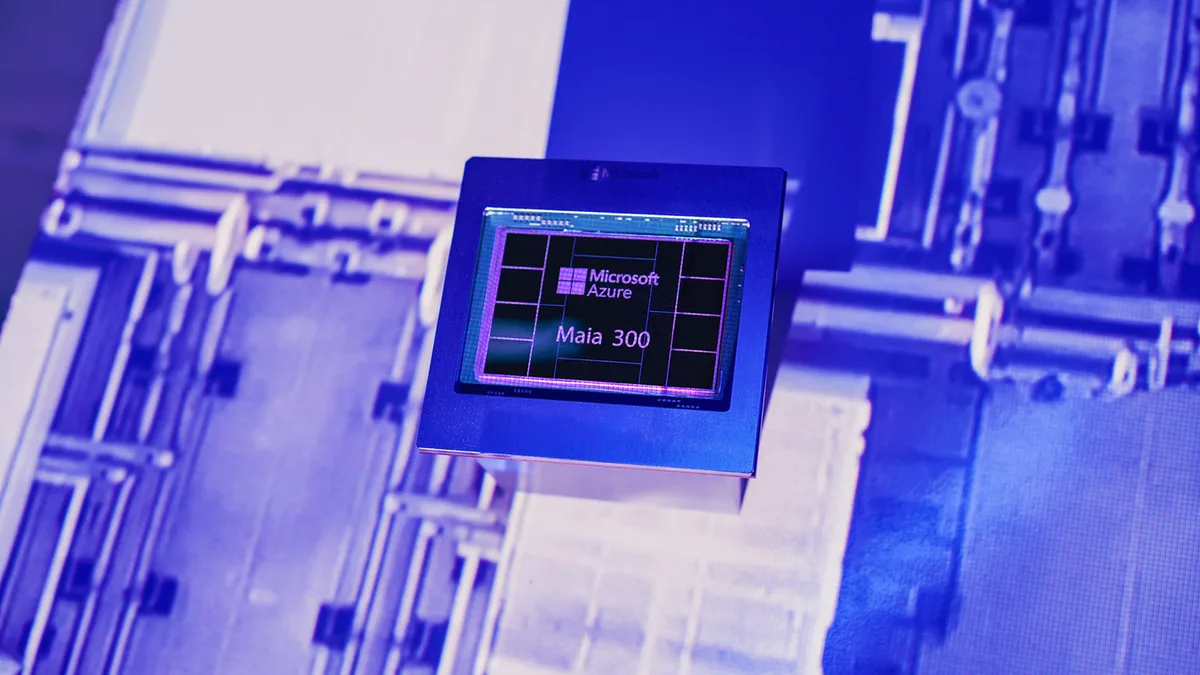
The trillion-dollar AI race is moving from software to silicon, as Microsoft's massive bet on its proprietary Maia chips proves Big Tech wants to wean itself off Nvidia's dominance.
Why it matters: Microsoft's plan to power its AI products with custom silicon shows how every major Nvidia customer is now a competitor, seeking lower costs, improved performance and more control.
The shift is particularly significant for inference — the computing needed to generate AI responses — as more sophisticated AI models and agents drive demand for computing power.
Driving the news: Microsoft unveiled Maia 300, its latest custom AI accelerator, saying it will begin deploying the chip in 2027 and it will become the primary inference system for its own products and services.
The company says Maia 300 will deliver 40% more AI tokens per megawatt than leading GPU-based systems.
It's also designed to minimize unnecessary data movement between chips and memory, a growing bottleneck as AI models become more complex.
The big picture: Microsoft's plan is part of a much broader shift, with nearly all major AI players seeking Nvidia alternatives.
Google has been developing its own Tensor Processing Units for years, with its latest generation including separate versions optimized for training AI models and running inference.
OpenAI is developing its Jalapeño chip with Broadcom, initially focusing on inference workloads.
The company said in August that its first chip was outperforming Nvidia hardware on certain workloads and that it was already developing subsequent generations.
Amazon has its own Trainium family of AI chips, which are being used by customers including Anthropic.
OpenAI has also committed to using Amazon's custom silicon as part of a massive infrastructure agreement.
Anthropic confirmed in August that it is exploring its own chip designs, even as it continues to rely on chips from Nvidia, Amazon and other suppliers.
Meta also has an internal chip development program, while continuing to buy substantial computing capacity from Nvidia and other suppliers.
5News aggregated this summary from the outlet’s public feed. The full article, with all the context, is on www.axios.com — the content belongs to Axios.