Sunday, October 18, 2026 SourcesAbout🌓
🇺🇸 US ▾
BREAKING
› Dominion still has pending lawsuits against election deniers such as Rudy Giuliani and Sidney Powell› Russia is 'going backwards' in equipment and deploying post WWII-era tanks, according to Western officials› Podcast: One country musician is calling for other artists to oppose assault rifles› Bidets save you money and reduce waste — we tested the best options out there› 50+ products to make your life easier and our planet cleaner› Mother's Day is around the corner. Here are 50+ thoughtful gifts she'll love› A head-to-toe guide of how men should dress this spring, and where they should shop› 42 of the most useful travel products you can buy on Amazon› The 7 best high-yield savings accounts of April 2023› Taxes are due tomorrow. Here's how to file for an extension› Dominion still has pending lawsuits against election deniers such as Rudy Giuliani and Sidney Powell› Russia is 'going backwards' in equipment and deploying post WWII-era tanks, according to Western officials› Podcast: One country musician is calling for other artists to oppose assault rifles› Bidets save you money and reduce waste — we tested the best options out there› 50+ products to make your life easier and our planet cleaner› Mother's Day is around the corner. Here are 50+ thoughtful gifts she'll love› A head-to-toe guide of how men should dress this spring, and where they should shop› 42 of the most useful travel products you can buy on Amazon› The 7 best high-yield savings accounts of April 2023› Taxes are due tomorrow. Here's how to file for an extension
Science

Returning the first samples from a Martian moon: Inside the science of Japan's bold MMX mission to Mars

Space.com ·
Returning the first samples from a Martian moon: Inside the science of Japan's bold MMX mission to Mars

Japan's mission to Mars is one of the most ambitious in spaceflight history.

It aims to become the first spacecraft to return to Earth from Mars orbit, carrying with it the first-ever samples from the Red Planet system.

The mission, known as Martian Moons eXploration (MMX), is a first-of-its-kind endeavor to study the origin of Mars' moons Phobos and Deimos.

The robust undertaking includes a landing on Phobos to collect the samples — which will likely be the first from the Mars system to return to Earth — and a search for evidence that could shed light on events during the formation of the solar system billions of years ago.

MMX is scheduled to launch on an H3 rocket from Japan's Tanegashima Space Center on Monday (Oct.

19) at 3:41 p.m.

EDT (1941 GMT; 4:41 a.m. local time in Japan, Oct.

20).

After a 10-month journey to reach Mars, the spacecraft will spend about three years studying Phobos, deploying a rover and landing to collect its samples.

The mission will then shift its focus to Deimos for a series of flybys before departing for Earth in November 2030.

If all goes according to plan, the MMX sample-return capsule is scheduled to land in Australia in 2031.

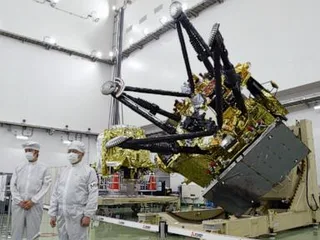
The spacecraft The MMX spacecraft is comprised of three main parts, as well as a small rover.

After release from its H3 launch vehicle, a propulsion module will provide the boost to put MMX on course for Mars.

MMX's main exploration module carries the microwave-size IDEFIX rover and most of the mission's scientific instruments, while the return module houses the sample-return capsule.

Read the full article on Space.com ›

5News aggregated this summary from the outlet’s public feed. The full article, with all the context, is on www.space.com — the content belongs to Space.com.

This story in other outlets

More from Space.com

See all ›

More in Science

See all ›