The Legal Right’s Unofficial Birthday
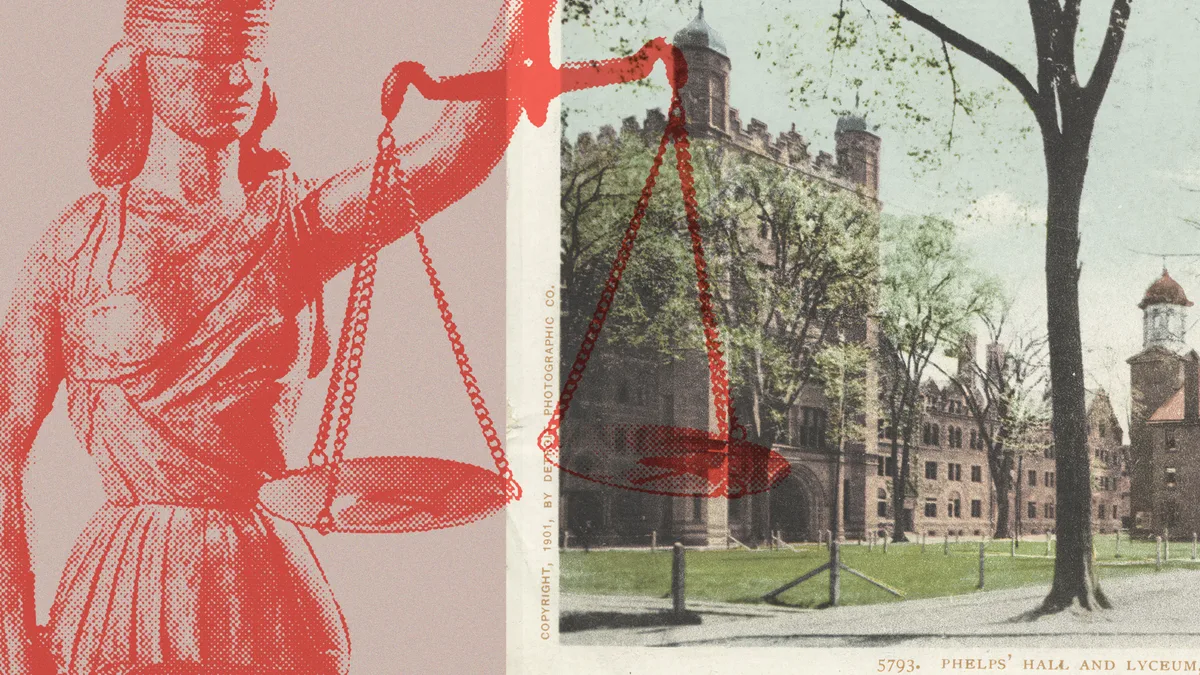
A merica’s highest court didn’t take on a deeply partisan , conservative bent overnight.
This transformation began decades ago, with a simple purpose: In the early 1980s, three law students were fed up with what they saw as a liberal monoculture at their elite universities.
They wanted a place to freely debate conservative ideas and to refine their arguments.
So the students—Lee Liberman, Steve Calabresi, and David McIntosh—decided to build one.
In late April 1982, their newly formed group, the Federalist Society, held its first conference, at Yale University.
The formal title of the three-day affair was “A Symposium on Federalism: Legal and Political Ramifications,” but the snoozy name belied the energy of the weekend.
Young Reaganites packed their sleeping bags and overnighted on the floors of fellow students they’d never met before.
During smoke breaks, they chatted up Robert Bork, the famous Yale professor, and Antonin Scalia, then a lesser-known professor from the University of Chicago.
But if the attendees were idealistic about the Reagan era and the emergence of a harder-core strain of conservatism known as the New Right, they also understood that they were still a tiny minority in both the academic and legal worlds.
Movements opposed to racism, sexism, and injustice remained the animating forces of campus life.
Many students across the country were embracing Marxism and socialism.
To make headway, young conservatives needed a voice—and a strategy.
To this end, Bork proved essential.
He had recently been nominated by President Ronald Reagan to serve on the D.C.
5News aggregated this summary from the outlet’s public feed. The full article, with all the context, is on www.theatlantic.com — the content belongs to The Atlantic.