Trump Administration Proposes $70K Fee for International Students to Work in U.S.
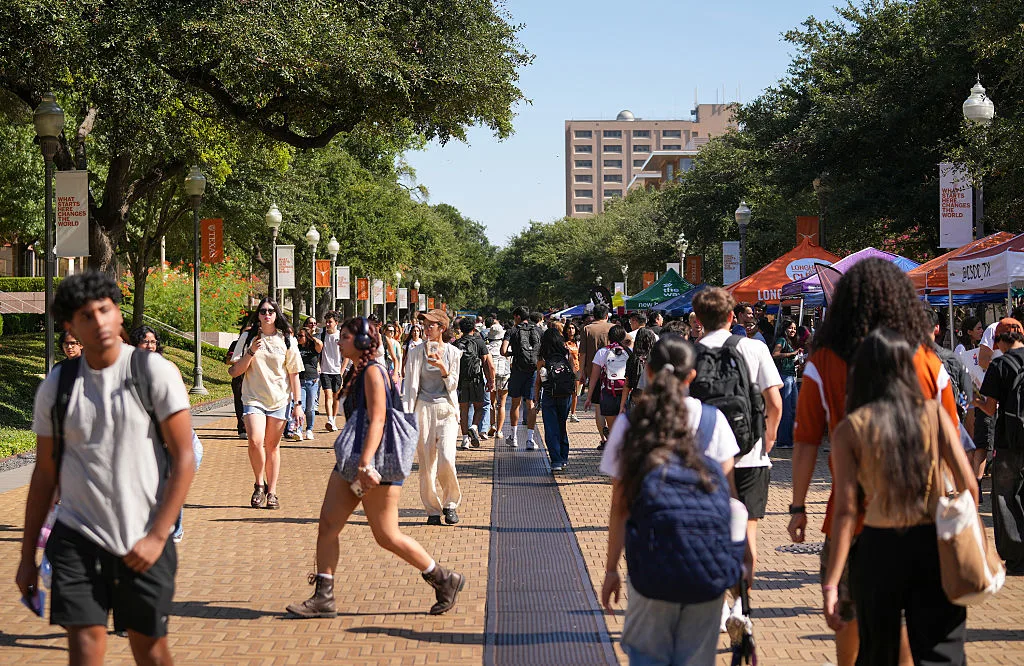
Students walk through the University of Texas campus on Aug.
24, 2026. —Jay Janner—The Austin American-Statesman/Getty Images The Department of Homeland Security on Wednesday proposed a rule that would charge schools $70,000 per international student seeking to work in the U.S. through a program known as Optional Practical Training.
It marks the Trump Administration’s latest attempt to curb foreign enrollment .
The proposal, published Thursday in the Federal Register and open for comment until Nov.
9, aims to crack down on OPT—a temporary employment authorization that lets students work in jobs related to their field of study and that DHS has claimed has “ballooned into an uncontrolled guest worker pipeline” and become a “magnet for fraud.” Under the current system, students pay about $500 to apply and are generally permitted to work in the U.S. for up to a year during or after their study, while those in the science, technology, engineering, and mathematics (STEM) fields may get work period extensions.
Under the proposal, schools would have to pay $70,000 for a student’s initial participation—and another $30,000 for each additional program participation—though DHS said it recognizes schools “may pass the financial obligation of this proposed fee” to students or employers.
Collected fees would be deposited in the U.S.
Treasury.
A DHS spokesperson said in the announcement of the proposed fee that OPT “was never meant to be a back door into the American workforce, a subsidy for cheap labor, or a prize for those who game the system,” and that “American workers should not have to compete against a program that has been turned into a pipeline for cheap foreign labor.” International students have been in the crosshairs of the second Trump Administration as part of the President’s wider anti-immigration agenda.
The Administration has revoked thousands of student visas and heightened vetting of applicants , including by reviewing their social media activity.
It also pressured universities and colleges to agree to a compact that includes capping the number of undergraduate students on foreign visas , and it tried to limit the stays of international students to only four years.
The Administration has zeroed in particularly on Chinese students amid national security concerns.
While the Administration champions policies discouraging foreign student enrollment as a means to benefit Americans, experts have said that such policies could hamper U.S. competitiveness in the long run.
Why DHS is cracking down on OPT Since 1947 , federal regulations have allowed foreign students to work in cases where employment for practical training is required or recommended by their schools.
5News aggregated this summary from the outlet’s public feed. The full article, with all the context, is on time.com — the content belongs to TIME.