The Morbid Lesson of 10,000-Plus Sea-Lion Deaths
You have likely never heard of synanthropes, though you surely know them.
And they know you.
Synanthropes, whose name is derived from the Greek for “together with man,” are not our pets or our herds of domesticated animals but something like our oldest frenemies: beings from which we have long sought and failed to decouple ourselves, that now reside within our communities, and that have become an ineluctable part of our lives.
They include insects like bedbugs, which have evolved within urban environments to become uncommonly dependent on humans for their survival, as well as house sparrows, seagulls, blackbirds, and pigeons, all of which have adapted themselves to take advantage of cities while evading their dangers.
In Singapore, synanthropic river otters have begun rampaging through local markets and aggressively pursuing tourists for food.
Black bears are bathing in backyard swimming pools in California.
All of these creatures straddle the human world and the wild.
And that can make them uniquely perilous to human health.
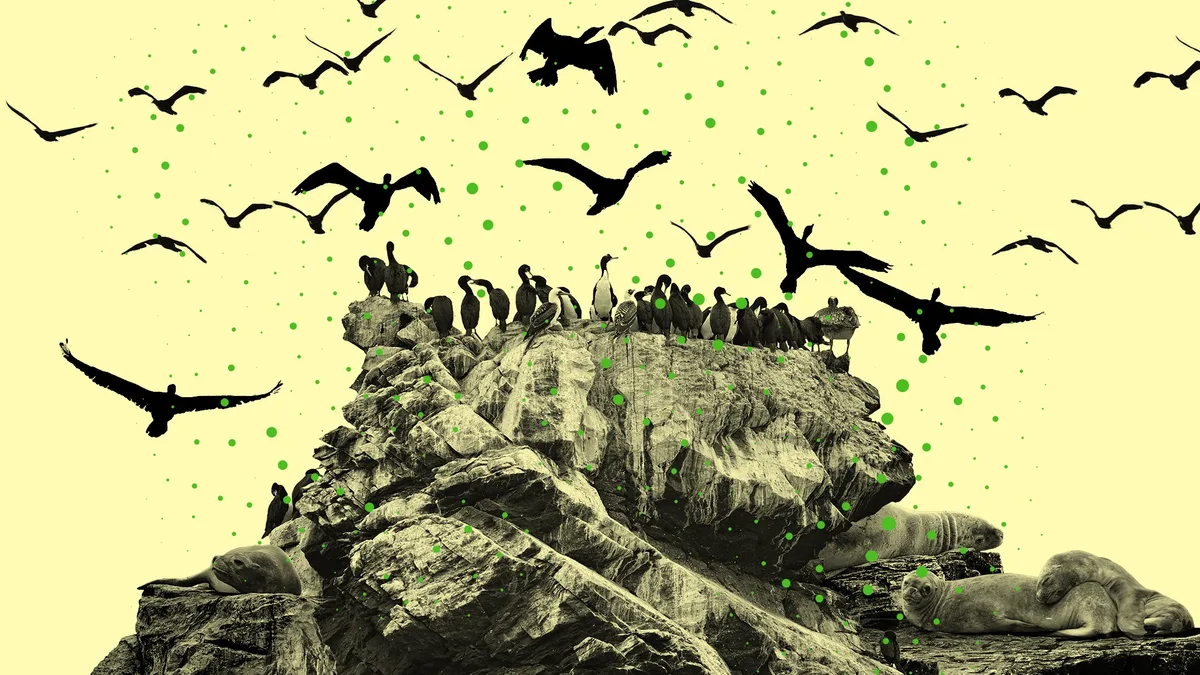
In Chile, which has a 4,000-mile-long coastline, the most conspicuous synanthrope is the South American sea lion.
About 130,000 of these pinnipeds, which can weigh 660 pounds and resemble giant waterlogged chocolate Labrador retrievers, live in raucous colonies on the water’s edge.
On account of their ubiquity, pretty much everyone in Chile has had some kind of run-in with the barking beasts.
“As a Chilean, you can easily see sea lions,” Victor Neira, a veterinary scientist and virologist, told me from his lab at the University of Chile in Santiago.
Sea lions have long been habituated to human handouts in Chile, and many of the urban colonies they’ve established are located near fish-processing plants, where the animals gorge on fish guts, bycatch, and other detritus dumped back into the ocean.
“They’re not aggressive by nature,” Neira said.
5News aggregated this summary from the outlet’s public feed. The full article, with all the context, is on www.theatlantic.com — the content belongs to The Atlantic.