Elizabeth Holmes Is Not the Problem With You Can See Everything
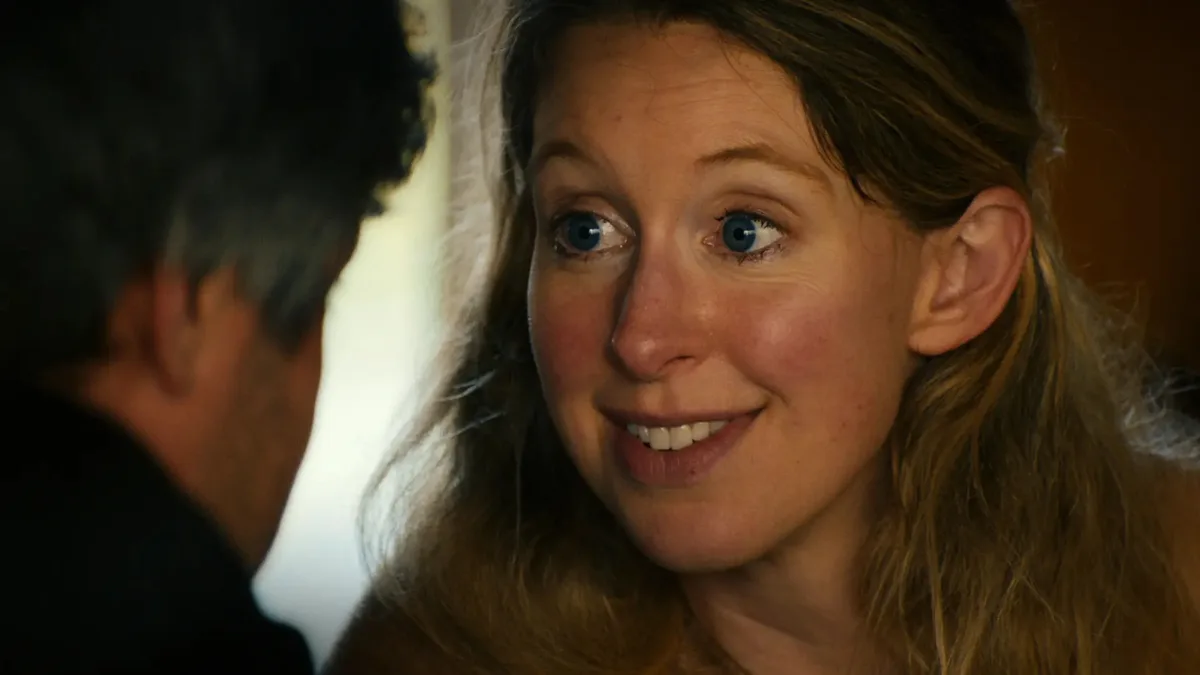
—Courtesy of A24 Warning: This post contains spoilers for You Can See Everything We might like to believe that documentary filmmakers are adamantly neutral parties, aiming their cameras at people who are just being themselves and, later, turning whatever the camera captures into objective truth.
But because documentaries are, for now, made by humans and not robots, pure objectivity is impossible.
When Albert and David Maysles captured Little Edie Bouvier Beale’s exuberant flag-twirling dance in Grey Gardens , they weren’t just casually showing us some random American eccentric in an outlandish headscarf; they were both in awe of her and, at least somewhat, laughing at her.
The sequence is funny, jaw-dropping, a little sad.
The camera isn’t human, but for better or worse the sensibility behind it is.
It may not tell us what to think, but its job is to lead us there.
Since its surprise debut at the Telluride Film Festival earlier this fall, You Can See Everything, directed by Nathan Fielder and Lance Oppenheim, has been widely praised as a groundbreaking documentary work, one that will change the face of nonfiction filmmaking forever.
Not so fast.
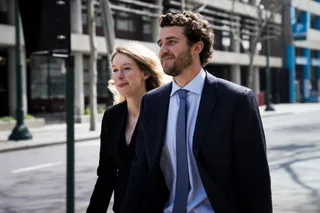
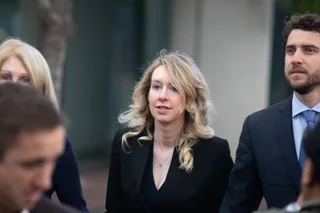
The first half of Fielder and Oppenheim’s film chronicles the 34 days leading up to the incarceration of Elizabeth Holmes , founder of the blood-testing technology company Theranos.
Holmes was convicted of fraud in 2018 and sentenced to just over 11 years in federal prison, commencing in May 2023.
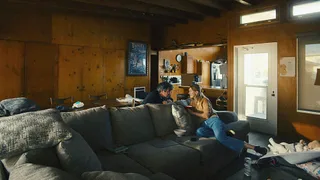
To make this documentary, Fielder, Oppenheim, and their crew camped out with Holmes, her partner Billy Evans, and their two small children, observing their lives up-close—or as up-close as possible.
The filmmakers had come at Evans’ urging: some time earlier, he and Holmes, who had completely withdrawn from the public eye, had approached A24 to see if the studio might be interested in making a documentary about them.
In a roundabout fashion, Fielder and Oppenheim became the filmmakers charged with the task.
Early in the film, we hear Evans explaining that he wanted the world to get an accurate picture of the woman he knew, a devoted partner and mother, whom he felt had been unfairly villainized.
5News aggregated this summary from the outlet’s public feed. The full article, with all the context, is on time.com — the content belongs to TIME.