Waymo’s cheaper, next-gen robotaxi is now open to all riders in these three cities
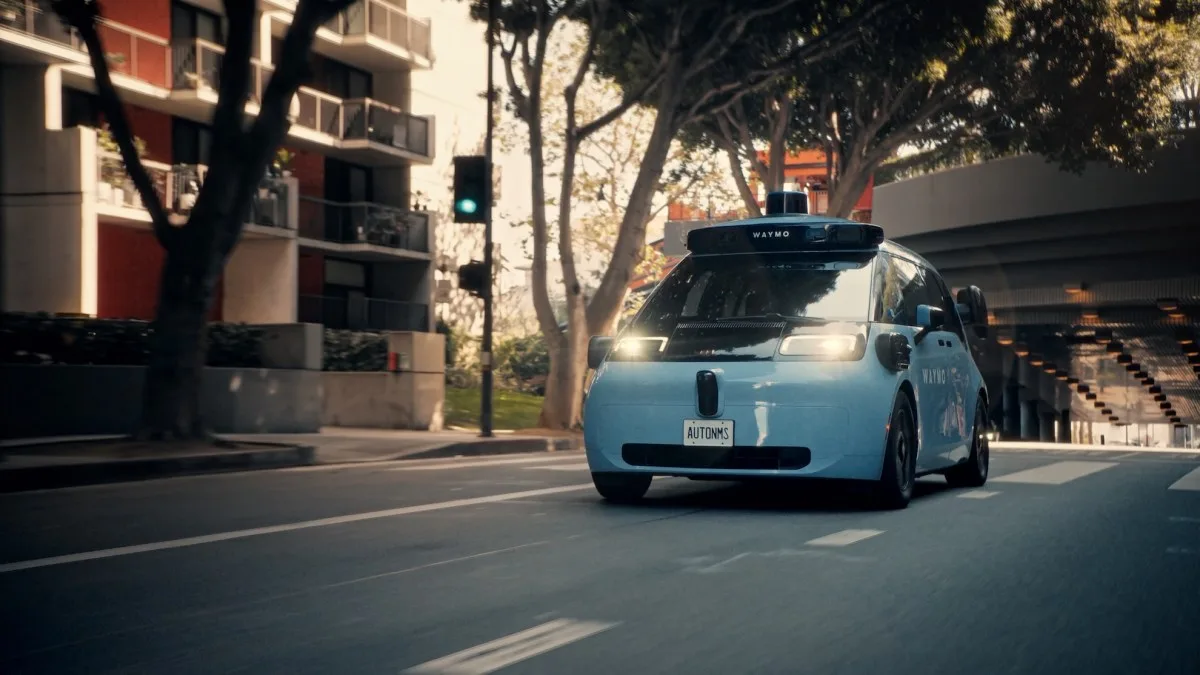
Waymo has opened its next-generation robotaxi to all riders in Los Angeles, Phoenix, and San Francisco — a notable milestone for the Alphabet company as it pushes to expand its fleet with vehicles that are cheaper to build, operate, and maintain.
For now, customers in these markets may be matched with the new robotaxi, called the Ojai (pronounced oh-hi) when they hail a ride. Once Waymo has enough Ojais in its fleet, riders will be able to choose between the new vehicle and the older Jaguar I-Pace robotaxi. Waymo has about 300 Ojai robotaxis in its commercial fleet today, according to a company spokesperson.
The company said Wednesday that it plans to roll out the Ojai in Denver, Las Vegas, and San Diego later this year.
For years, Waymo has relied on the all-electric, modified Jaguar I-Pace for its robotaxi fleet, which now operates in 11 U.S. cities today. While the white, sensor-laden autonomous hatchback has become ubiquitous in markets such as San Francisco, it has been more of a stopgap in Waymo’s longer term push towards mass scale, and eventually, profitability.
The Waymo Ojai robotaxi is meant to deliver on that ambition. The Ojai is equipped with Waymo’s sixth-generation self-driving system, which is critical to the company’s commercial strategy because it’s modular and designed to work across multiple vehicles types. The robotaxi also comes with a redesigned user interface and Google’s Gemini AI, which acts as an in-car assistant for riders.
Strip away that technology, though, and the Ojai is a minivan made by Zeekr, a brand owned by China’s Geely Holding Group. Waymo partnered with Zeekr in 2021 and has spent years testing a prototype, and later a production-intent version of the vehicle. It’s built on Zeekr’s SEA-M platform, an updated version of the automaker’s “Sustainable Experience Architecture,” which the company designed for vehicles like robotaxis and delivery vans. The goal was to create a robotaxi that was attractive and easy for riders to access, but also cheap to build and maintain and durable enough to withstand near-constant use.
The Ojai delivers on many of those goals, though tariffs on the imported vehicles have added cost. Under current U.S. trade policy, vehicles built in China face steep import tariffs, which raises Waymo’s costs for every Ojai it brings into the country. The base Zeekr vehicles ship without any Chinese connected-car technology on board. After arriving in the U.S., they’re sent to Waymo’s Arizona factory, where they are outfitted with the self-driving system.
New York-based research firm MoffettNathanson , which tracks Ojai imports by examining detailed receipts of shipped goods, said Waymo is on pace to bring 5,000 Ojai vehicles to the United States by the end of 2026. That would be more than double Waymo’s current Jaguar fleet, according to the firm. In July alone, 725 Ojai vehicles entered the country, underscoring the scale and pace of Waymo’s expansion efforts.
When you purchase through links in our articles, we may earn a small commission . This doesn’t affect our editorial independence.
Scale faster. Grow your portfolio. Gain practical expertise.
5News aggregated this summary from the outlet’s public feed. The full article, with all the context, is on techcrunch.com — the content belongs to TechCrunch.