Meta’s Day of Reckoning
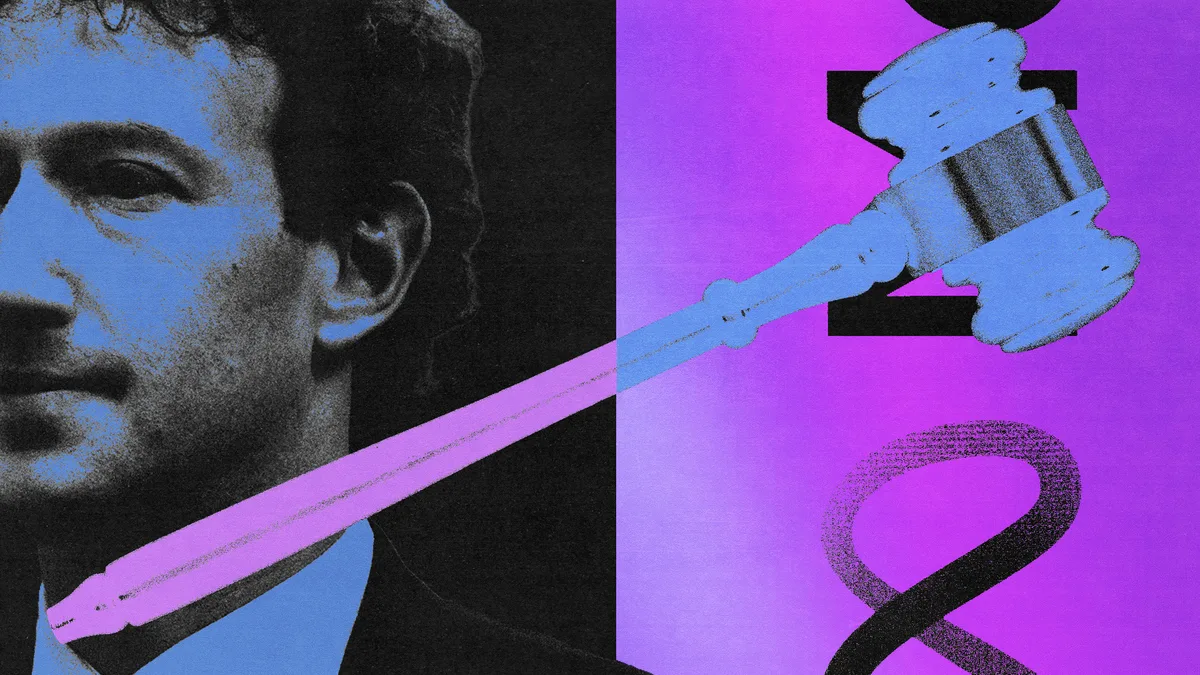
Meta avoided the worst today by settling a massive lawsuit over alleged damages “to the mental and physical wellbeing of America’s youth.” The case, brought by the attorneys general of 47 states, plus U.S. territories and Washington, D.C., had been mid-trial in a federal court in California and was by far the most significant legal challenge the company has ever faced.
To resolve the lawsuit, Meta will have to make a slew of design changes to its social-media platforms, and it will pay more than $12 billion—down from the approximately $200 billion that was initially sought, and a fraction of the $60 billion that the company made in profit last year.
The settlement can be used by the states and other parties to pay for their litigation costs and for a variety of school and community programs.
Judge Yvonne Gonzalez Rogers agreed to the proposal this morning, saying “I’m quite happy” and congratulating both parties.
There seems to be good cheer all around; Meta, which avoided any admission of guilt, put out a sunny announcement framing the agreement as part of its “longstanding efforts to empower parents and support teens.” Brian Schwalb, the attorney general of the District of Columbia, told The New York Times that the settlement represents a “monumental public health victory” that will “fundamentally and immediately change how young people use Instagram and Facebook.” The former claim will have to be proved over time, but the latter is clearly true.
As part of the agreement, Meta has agreed to submit to regular auditing of both its age-verification systems and its efforts to prevent minors from making multiple accounts to get around its restrictions.
And the company will make other tweaks that are intended to target the big recent villains of social media: short-form video and the never-ending feed. [ Read: A legal decision that could change social media ] Teen users, by default, will not have access to most features of Instagram and Facebook at night (though they can still access messages and settings) and will not receive notifications from the platforms during school hours (defined as 8 a.m. to 3 p.m. on weekdays from August 15 to June 15).
They’ll also be limited to a maximum of one hour a day per platform, though this doesn’t include time spent sending messages or consuming long-form content (which the agreement defines as audio or video at least 22 minutes long).
Meta is also required to interrupt scrolling every 15 minutes with pop-ups that encourage “productive pauses,” and the company will have to study how well the interruptions work and submit its findings to an auditor.
Parents can still manually change any of these settings for their kids.
5News aggregated this summary from the outlet’s public feed. The full article, with all the context, is on www.theatlantic.com — the content belongs to The Atlantic.