Why Southeast Asia Is Facing a Haze Crisis
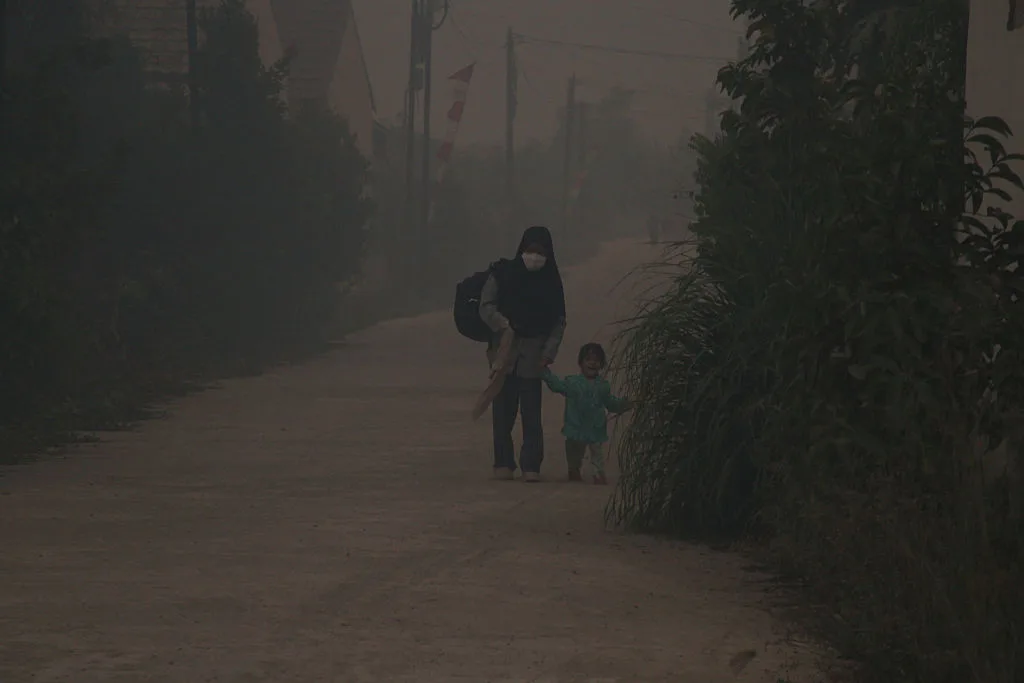
A mother and her daughter walk through the smoke as wildfire breaks out near their house in Sematang Borang district of Palembang, South Sumatra, Indonesia, on Sept.
16, 2026. —Muhammad Fajri—Anadolu/Getty Images Indonesia is battling its worst wildfires in 11 years, blanketing more than 12 million people with thick smog and spreading haze to neighboring countries.
Fires across seven provinces on the islands of Borneo and Sumatra have been burning for weeks .
Dry weather and drought linked to a “Super El Niño” are making it harder to contain the fires, which occur seasonally in the country often when farmers and corporations burn away vegetation to clear land.
From January to July, fires ravaged 202,000 hectares of land, according to government data .
In August alone, fires scorched 600,000 hectares of land in August alone, according to environmental group YKAN.
Smoke from the fires, containing soot and tiny suspended particles, has produced haze across parts of Southeast Asia, with humid conditions reducing visibility.
Suwadi, a resident of Kalimantan, told the Guardian last month that breathing feels “like smoking a cigarette.” Indonesian authorities warned that the wildfires could continue through October or early November due to a forecasted late rainy season.
The government urged farmers and corporations not to use fire to clear the land, which is broadly against the law.
As of Sept.
4, Indonesian police were investigating 112 people suspected of deliberately or accidentally starting fires, and five companies had their licenses suspended over alleged fires.
President Prabowo Subianto called for tougher penalties and ordered local governments to abolish exemptions that allowed smallholders to clear small areas of land by burning.
Indonesia has deployed more than 50 aircraft to conduct water bombing and cloud seeding operations over affected regions in Sumatra and Kalimantan, and Japan sent three CH-47 Chinooks to aid in firefighting efforts.
Government agencies and civil society groups have also handed out oxygen cylinders to residents and firefighters in the hardest hit areas as part of the “Rumah Oksigen” or Oxygen House campaign.
5News aggregated this summary from the outlet’s public feed. The full article, with all the context, is on time.com — the content belongs to TIME.