Chesapeake blue crabs had an unusual rebound after years of decline. Scientists don't know why
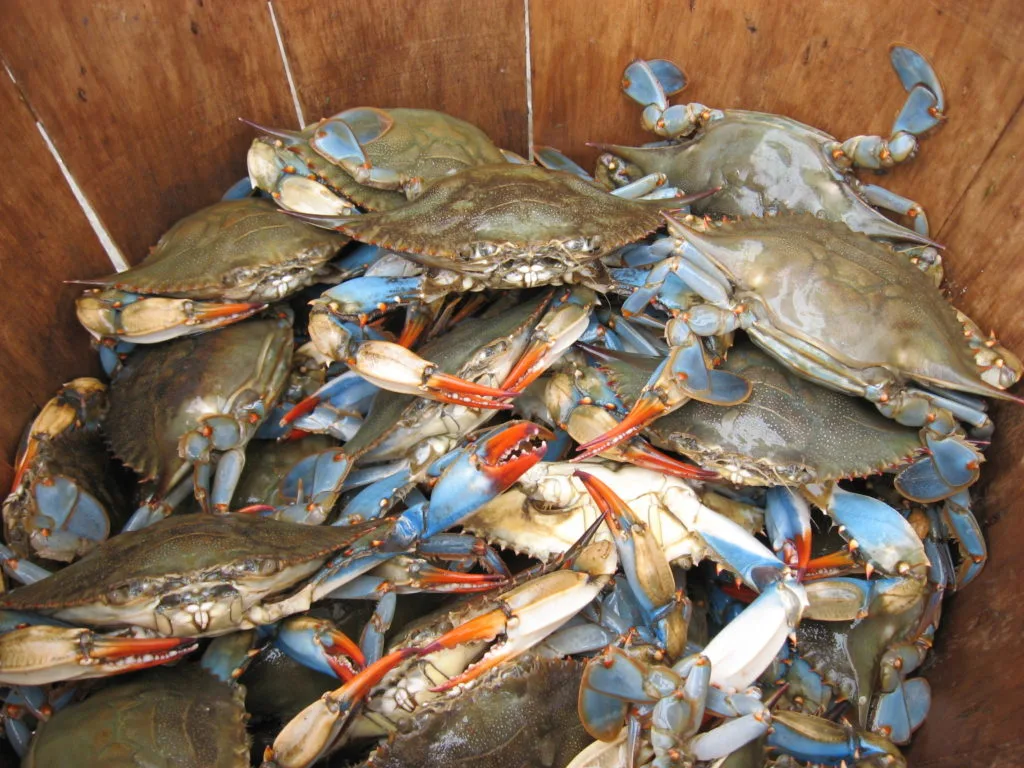
After half a decade of worryingly low numbers, the Chesapeake Bay's blue crab population appears to be fighting its way out of a slump.
This year's field sampling estimated a total population of 349 million blue crabs in the bay, a 46% increase over last year, according to the Maryland Department of Natural Resources and Virginia Institute of Marine Science's annual winter dredge survey. This raised the population overall to the highest it's been since 2019.
Still, the growth deserves cautious optimism: "We're kind of coming up from the very bottom," said Mandy Bromilow, blue crab program manager at the Department of Natural Resources. The increase is "from basically the lowest point that we've seen."
More than one-third of the nation's blue crab catch comes from the Chesapeake Bay, bringing in at least $74 million dockside in 2024. The results from the annual dredge survey are used by scientists, fisheries and conservation groups to help manage the population.
While juvenile crabs and adult male crabs increased in numbers this year, female blue crabs decreased. Bromilow and other scientists still have no clear explanation for why.
So what's happening to blue crabs in the Chesapeake Bay and what could these changes mean for the future of the population? Here's what to know about the risks they face and what experts say is at stake for the broader ecosystem.
Every year since the 1990s, the Blue Crab Winter Dredge Survey has raked blue crabs from their mud habitats at sites across the Chesapeake Bay, giving fishery managers and scientists information to help manage the bay's blue crab population.
Behind this year's overall growth was a headline-grabbing 121% increase in juvenile blue crabs and a 43% increase in adult males. Meanwhile, the adult female population dropped by 25% to 81 million, which is below the fishery management target of 196 million but still considered a healthy threshold.
The increases are a positive sign, said Thomas Ihde, a research assistant professor at Morgan State University's Patuxent Environmental & Aquatic Research Laboratory who was uninvolved in Maryland's assessment. But "unfortunately it only brings us up to the long-term average counts of juvenile blue crab."
Bromilow said surveys are not "infallible" and are a tool for estimating abundance.
"We're going out to certain sites, as much coverage as we possibly can, randomly throughout the bay," she said. "So we're going to be missing pockets of potentially high-density crabs or we're hitting pockets where it's high density, and we think there are more crabs than there."
Michael Wilberg, a fisheries science professor at the University of Maryland Center for Environmental Science who was also not involved with Maryland's assessment, cautioned that the estimated numbers aren't always reflected out in the water.
"In the past, we've seen peaks in blue crabs in that survey that haven't turned out to show up in the fishery — either weren't there originally or didn't survive to adulthood," Wilberg said.
"I think we'd need to see several years like that to really feel like we're in a good spot recovery-wise," he added.
5News aggregated this summary from the outlet’s public feed. The full article, with all the context, is on www.pbs.org — the content belongs to PBS NewsHour.