IMF chief warns AI’s ‘slow-moving tsunami’ is coming—and it could leave Gen Z graduates stuck making lattes at Starbucks

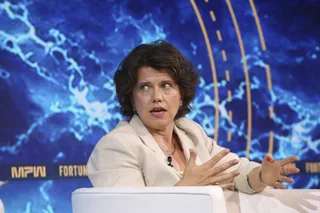
The world is only just beginning to feel AI’s impact on the job market, according to Kristalina Georgieva , head of the International Monetary Fund.
The coming disruption, she said, is like a “slow-moving tsunami” and warned that young workers could be among those hit hardest .
“The people to worry about first and foremost are young people that are coming into the labor market,” Georgieva said at an event in conjunction with the IMF and World Bank annual meetings in Bangkok on Monday.
“Normally, they would get into these routine, repetitive jobs and then grow up the ranks.
But if they’re gone, I don’t think any young person wants to be a barista in a coffee shop as their professional future.” The IMF estimates that around 40% of jobs worldwide will be augmented, downgraded, or eliminated as AI advances.
Georgieva added the technology is already reshaping the labor market: Workers with AI-related skills are earning more, but that hasn’t translated into broad-based job growth.
Meanwhile, lower-paying roles , including restaurant jobs and data-center construction , are growing.
Middle-skilled workers whose jobs are highly exposed to automation risk being left behind, with advanced economies facing a particularly significant impact.
“Burst the myth that AI is shrinking demand for people,” Georgieva said.
“What it is doing is shifting demand for people now.
That may not be the case in the future.” Singapore’s president warns Gen Z will ‘lose trust in the future’ if entry-level talent pipelines aren’t fixed It’s not yet too late to build up the flood barriers.
Governments, Georgieva said, need to rethink education for a world in which workers can no longer expect to learn one set of skills and rely on it throughout their careers.
One way to encourage this thinking is by focusing on the fiscal implications: Major labor market disruptions will lead to less spending, and consequently, less revenues generated by taxes—leaving governments in a tough financial spot, she added.
Singapore President Tharman Shanmugaratnam, who joined Georgieva onstage, acknowledged this reality.
5News aggregated this summary from the outlet’s public feed. The full article, with all the context, is on fortune.com — the content belongs to Fortune.