The giant cavity in America's dental care industry
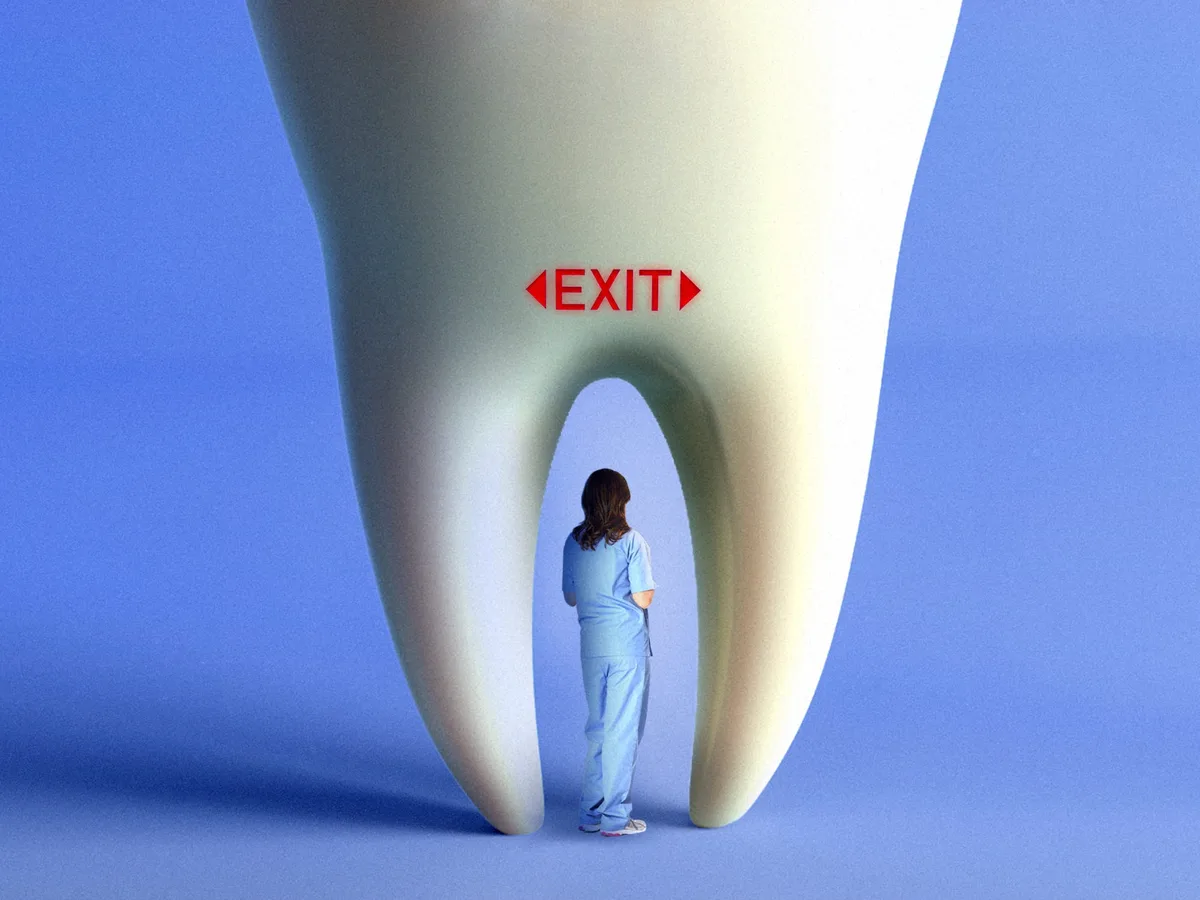
Getty Images; Alyssa Powell/BI When Elysse Morris decided to become a dental hygienist , it seemed like a natural fit.
She was a fairly "sciencey" student in high school and generally liked going to the dentist.
Plus, she'd always been a talker.
Eleven years into her career, Morris, now 34, knows she could probably be making more money.
Her home state of Virginia has a severe shortage of dental hygienists, and temporary workers can command high hourly rates by hopping between practices.
But Morris has spent four years at the same privately owned office because she's happy there.
Her boss gives her decent equipment, benefits, a bonus, and — most importantly — respect.
The dentist treats her like a clinician rather than a pair of hands.
"We're not workers to her," Morris says.
Her setup is what those in the business call a "unicorn" office, and the short supply of these quality workplaces is helping cause a short supply of dental hygienists across the country.
I'm not kidding when I say I love my dental hygienist.
I was going to quit my dentist , who I feel like often tries to push questionable treatments on me, but then Andrea started, and she's amazing.
Last time I was in the office, I mentioned my union was bargaining a new contract, and she said she wished hygienists had a union of their own.
It makes sense that they don't — the United States doesn't do sectoral bargaining , and most hygienists have traditionally worked in small, private offices where organizing would be difficult — but it got me thinking.
5News aggregated this summary from the outlet’s public feed. The full article, with all the context, is on www.businessinsider.com — the content belongs to Business Insider.