On this day in space! Sept. 9, 1982: The 1st private rocket, called Conestoga 1, launches from a Texas cattle ranch
On Sept.
9, 1982, the first private rocket launched from a Texas cattle ranch.
The Conestoga 1 rocket was designed by Space Services Inc. of America (SSIA) and built from spare parts of other rockets .
It was named after a type of covered wagon that used to transport American settlers westward to the new frontier during the 19th century.
The 36-foot rocket lifted off from a private launch facility on Matagorda Island, Texas and flew for 10-and-a-half minutes.
It reached an altitude of 195 miles and became the first privately funded rocket to reach space .
The only payload on board was 40 gallons of water, which didn't serve much scientific purpose, but it was ejected from the spacecraft at peak altitude to serve as a visual marker so ground crews could watch.
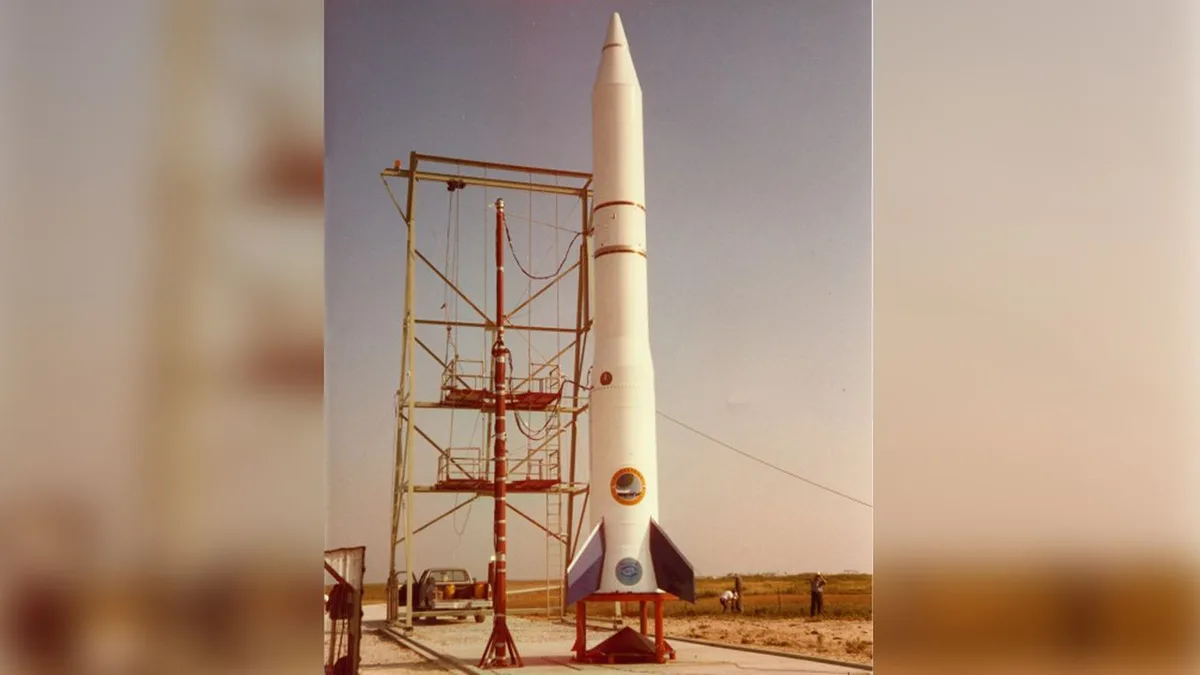
The private Conestoga 1 rocket sits atop its launchpad at Matagorda Island, Texas ahead of its historic Sept.
9, 1982 launch.
It was the first privately developed rocket to fly. (Image credit: Space Services Inc.) Why it mattered Private rocket launches may seem routine today ( SpaceX alone launches hundreds each year), spaceflight in 1982 was primarily the purview of government agencies like NASA, the U.S. military and other national agencies.
That changed with the launch of Conestoga 1 by SSIA.
The company, led at the time by legendary Mercury 7 and Apollo-Soyuz astronaut Deke Slayton , and entreneurs Charles Chafer and David Hannah, Jr., was based in Houston and raised $6 million from 57 supporters to develop their rocket, according to Wired .
The company initially tried to launch a different type of rocket, called Percheron, in 1981, but it exploded on the pad, according to an account by Inc. magazine .
SSIA found success three years later with Conestoga 1, a solid-fueled rocket based on an old Minuteman missile second stage (which Wired said SSIA bought from NASA for $365,000).
5News aggregated this summary from the outlet’s public feed. The full article, with all the context, is on www.space.com — the content belongs to Space.com.