Sunday, October 18, 2026 SourcesAbout🌓
🇺🇸 US ▾
BREAKING
› Russia is 'going backwards' in equipment and deploying post WWII-era tanks, according to Western officials› Podcast: One country musician is calling for other artists to oppose assault rifles› Bidets save you money and reduce waste — we tested the best options out there› 50+ products to make your life easier and our planet cleaner› Mother's Day is around the corner. Here are 50+ thoughtful gifts she'll love› A head-to-toe guide of how men should dress this spring, and where they should shop› 42 of the most useful travel products you can buy on Amazon› The 7 best high-yield savings accounts of April 2023› Taxes are due tomorrow. Here's how to file for an extension› Composting is an easy way to reduce food waste. Here's how to do it› Russia is 'going backwards' in equipment and deploying post WWII-era tanks, according to Western officials› Podcast: One country musician is calling for other artists to oppose assault rifles› Bidets save you money and reduce waste — we tested the best options out there› 50+ products to make your life easier and our planet cleaner› Mother's Day is around the corner. Here are 50+ thoughtful gifts she'll love› A head-to-toe guide of how men should dress this spring, and where they should shop› 42 of the most useful travel products you can buy on Amazon› The 7 best high-yield savings accounts of April 2023› Taxes are due tomorrow. Here's how to file for an extension› Composting is an easy way to reduce food waste. Here's how to do it
Science

On this day in space! Aug. 22, 1963: X-15 sets world altitude record
Space.com ·
On this day in space! Aug. 22, 1963: X-15 sets world altitude record

On Aug.

22, 1963, U.S.

Air Force Captain Joe Walker flew an X-15 rocket plane higher than any pilot had ever flown before.

Walker reached an altitude of over 67 miles (108 kilometers).

That's about 5 miles (8 km) above the edge of space! Walker experienced about five minutes of weightlessness over the course of the 11-minute flight.

This was the second and final suborbital spaceflight of the X-15 program.

Walker piloted both flights and became the first person to go to space twice.

For both flights, he flew in the space plane X-15 #3, which also became the first reused spacecraft to return to space.

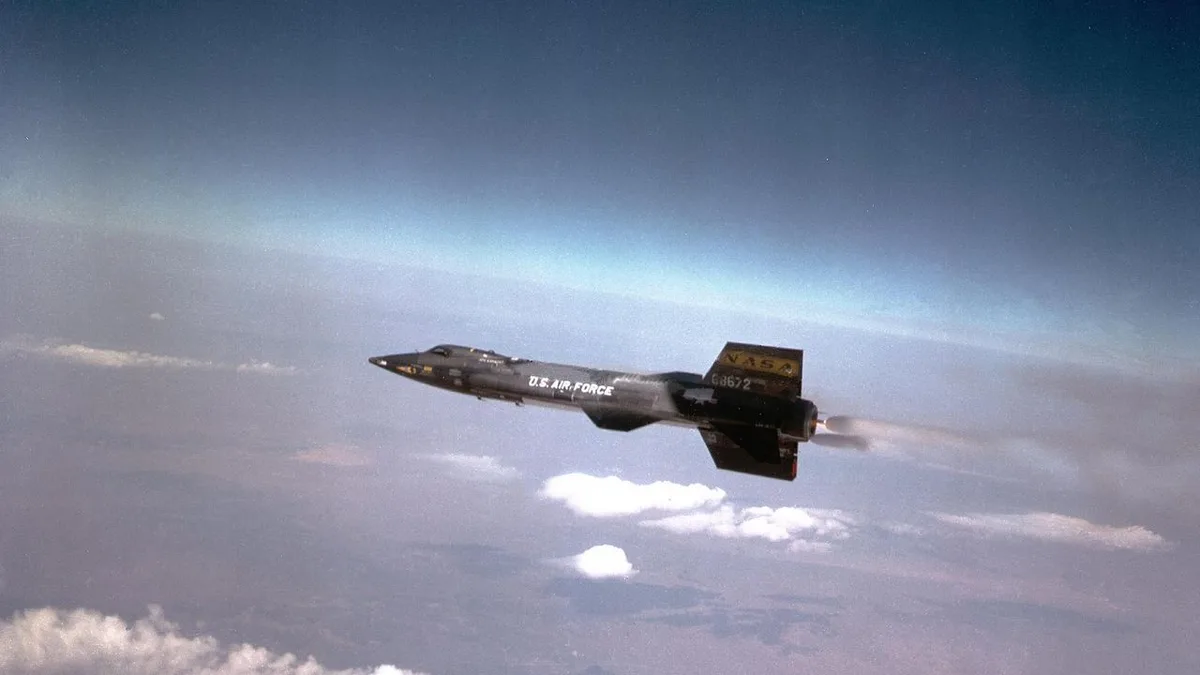
Photos: X-15 Rocket Plane Reaches Space in Test Flights A rocket-powered X-15 flies over the western U.S. during a NASA/U.S.

Air Force research mission in the 1960s. (Image credit: U.S.

Air Force) Why it mattered Walker's flight was part of an X-15 program that helped aerospace engineers learn how humans and vehicles operate at hypersonic speeds and transition between the atmosphere and the vacuum of space.

The rocket planes tested reaction-control systems for maneuvering where the air was too thin for normal aerodynamic controls, while gathering data on heating, stability, structural loads, human performance and piloting techniques during reentry.

Those lessons contributed to NASA's Mercury, Gemini and Apollo programs and, later, the development of the Space Shuttle.

Walker's Aug.

Read the full article on Space.com ›

5News aggregated this summary from the outlet’s public feed. The full article, with all the context, is on www.space.com — the content belongs to Space.com.

More from Space.com

See all ›

More in Science

See all ›