HOLE IN NONE: Ailing LIV’s existence changed golf and made players richer than ever before
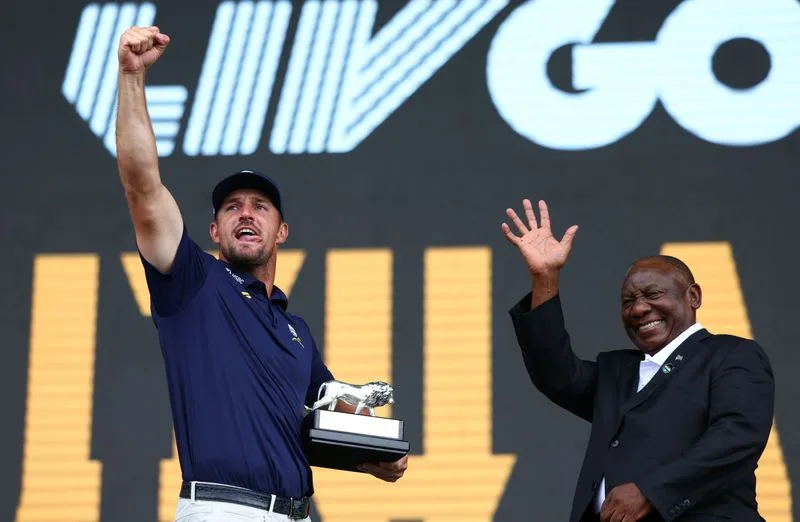
{JSON.stringify(article.attachments[0], null, 2)} --> LIV Golf arrived like an explosion in the golfing world, created havoc by disrupting the old order, but it fizzled out into a facsimile of its grandiose hype that was never underpinned by more than a whim.
LIV Golf, the Saudi-backed league that, whether you like it or not, changed the landscape of professional golf, looks set to wither away in a sea of debt.
LIV filed for Chapter 11 bankruptcy in a US court on 8 September, effectively killing the league, although current CEO Scott O’Neil continues to fight to keep it alive.
The jargon of the moment is that LIV 1.0 is gone, but LIV 2.0 is coming. How, and more importantly why, are the obvious questions when it comes to LIV’s existence.
Its own numbers, which are in the court papers, show a league without a TV audience and therefore no real market.
LIV couldn’t make it work with the unlimited resources of Saudi Arabia’s Public Investment Fund (PIF) and close to $6-billion in backing over its five-year lifespan. There is never going to be that much gratis money flowing its way again, and without money, what attraction does it offer to serious professional golfers?
Besides being the creation of the golf-obsessed Yasir Al-Rumayyan, the PIF governor who chairs LIV, there was very little foundation to the league. It had money and a gun-for-hire frontman in Greg Norman as its first CEO, but little else.
Promises were made and players bought for obscene amounts to sign up to the league’s promise of “golf, but louder”. It’s all ended with a simpering whimper.
Al-Rumayyan called the league “my baby” during its original recruitment drive and personally assured players the league would be funded until 2032. Well, here we are.
The bankruptcy filing itself is a dry, soulless document – shorn of the hype LIV promised, but never delivered.
LIV has essentially taken a $49.6-million loan from PIF to keep the lights on. But it has liabilities of between $500-million and $1-billion against assets of between $100-million and $500-million.
According to court papers, it had only $15-million in the bank in September.
The filing shows broadcast rights at only 5% of LIV’s revenue, roughly $10-million to $11-million against $208-million total income.
O’Neil said last month there was a new backer in principle, which the court papers confirm.
5News aggregated this summary from the outlet’s public feed. The full article, with all the context, is on www.dailymaverick.co.za — the content belongs to Daily Maverick.