POWER CRISIS: Property owners spend millions on diesel as Joburg CBD power outages drive away tenants
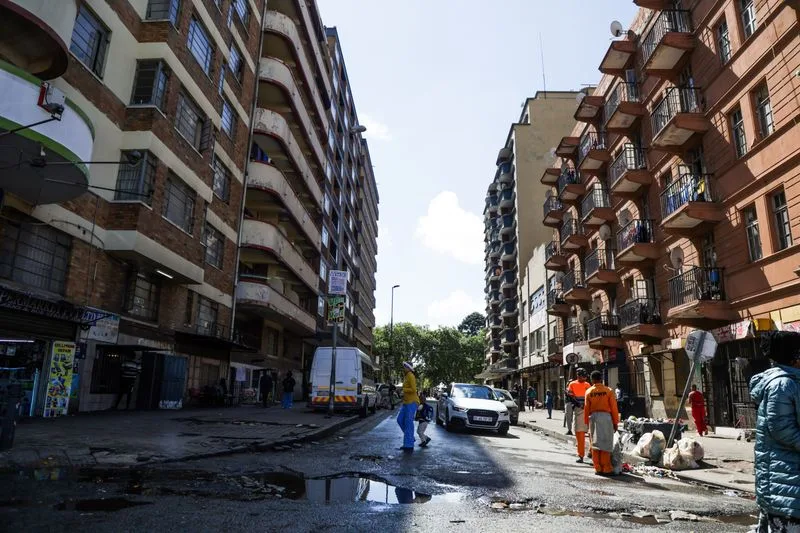
{JSON.stringify(article.attachments[0], null, 2)} --> Johannesburg’s electricity crisis is increasingly threatening years of work to regenerate the inner city.
Property owners in Johannesburg’s CBD say they are at their wits’ end as repeated electricity failures leave residential buildings and businesses without power and water for days at a time.
Marshalltown, home to Central Substation, which supplies large parts of the Johannesburg CBD, has been particularly hard hit. An outage tracker based on City Power reports recorded 10 outages affecting the suburb over the past 90 days, four linked to the substation.
Some inner-city residents have endured outages totalling about 17 days, only to lose electricity again within hours of supply being restored.
In a strongly worded statement, the Johannesburg Property Owners and Managers Association (JPOMA) warned that repeated electricity failures were threatening years of investment and regeneration in the inner city.
JPOMA executive head Angela Rivers said property owners who had invested heavily in buying and renovating ageing CBD buildings were increasingly frustrated that prolonged power and water failures were undermining that work.
Examples supplied by JPOMA members cover more than 6,000 residential units alone, not including business and retail, that are affected by the outages, although the association stressed that this was not a count of the entire affected area.
Rivers said the cost of keeping buildings functioning had become staggering.
One member reported spending R1.115-million on diesel over two months across three residential buildings. Another estimated spending R2.5-million during about 14 days of generator operation across another portfolio, while a third reported spending R200,000 on diesel over two months.
Another property owner reported spending R10,000 every two days on water, with diesel potentially adding R15,000 every two days if their generator ran continuously.
But even this expenditure does not necessarily keep the lights on inside people’s homes, Rivers added.
JPOMA said generators in many residential buildings were being used primarily to keep lifts, common-area lighting and water pumps operating while tenants remained without normal electricity in their flats.
The association said electricity failures were also becoming water failures. Where municipal pressure was insufficient, electric pumps were needed to move water to upper floors. Once stored supplies were exhausted, residents could be left without water for drinking, washing and sanitation.
The costs forced one property owner to restrict generator operating hours and occasionally shut it down, affecting tenants including dressmakers and other businesses dependent on electricity for their livelihoods.
5News aggregated this summary from the outlet’s public feed. The full article, with all the context, is on www.dailymaverick.co.za — the content belongs to Daily Maverick.