The Unwritten Constitution of Access, Loyalty and Money
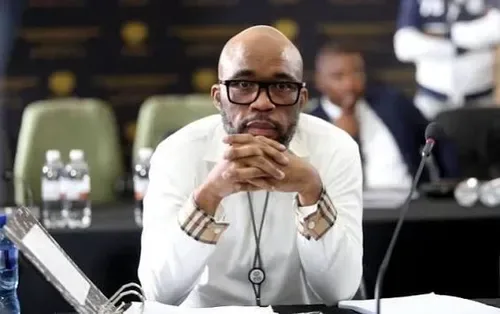
As revelations continue to emerge from the Madlanga Commission, South Africa faces an uneasy truth: a vast network of influence may exist outside the grasp of formal accountability structures. Understanding how these connections are forged and how they operate may hold the key to dismantling the shadowy machinations of power that threaten the very fabric of democracy.
But beneath these individual revelations, a much larger story is beginning to take shape, one that should concern anyone who still believes the state ultimately belongs to the public, rather than to those sufficiently well connected to navigate the spaces between politics, business, security, government contracts and personal relationships.
The question is no longer simply whether Vusimuzi "Cat" Matlala knew Hangwani Morgan Maumela, Jotham "Mswazi" Msibi or Steve Motsumi. Knowing another person is not evidence of wrongdoing, and association cannot, by itself, establish guilt. The more important question is what becomes possible when the same people repeatedly appear around substantial amounts of money, private businesses, government contracts, security structures and access to powerful institutions.
This is why the emerging connections involving Matlala, Maumela, Msibi and Motsumi deserve serious scrutiny, not because those relationships prove wrongdoing, because they do not, but because the purpose of the commission is to examine the relationships, transactions, communications and institutional decisions that ordinary oversight either failed to see or failed to stop.
Matlala told the commission that his relationship with Maumela went beyond friendship and extended into business, testifying that the two contributed money toward government requests for quotations and shared profits when contracts were obtained, despite the absence of a formal written agreement between them. That testimony, considered by itself, does not prove that any procurement process was improperly influenced, but it becomes considerably more significant when placed alongside the other financial and personal relationships being examined by the commission.
The commission has also examined an approximately R4 million payment associated with Maumela, and evidence concerning Matlala's forwarding of proof of payment to the late taxi boss Jotham "King Mswazi" Msibi. Matlala explained that he could not remember precisely why he had forwarded the payment record, maintaining that Maumela did not have Msibi's number, which was why he had passed the information on.
The significance of this evidence is not that it automatically establishes an improper transaction, but that it raises questions about who was communicating with whom, why those communications were necessary, what the payment represented, and whether the relationship formed part of a wider network that the commission needs to understand.
Then there is Steve Motsumi, whose relationship with Matlala introduces another dimension.
5News aggregated this summary from the outlet’s public feed. The full article, with all the context, is on iol.co.za — the content belongs to IOL.