ROVING REPORTERS: Ducking disaster — what storm-battered Madagascar teaches us about conservation resilience
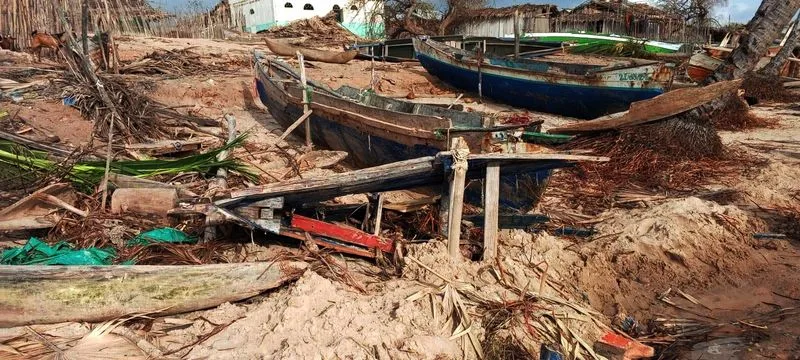
Madagascar is often reduced to headlines of disaster as cyclones intensify and ecosystems come under pressure. But that is only part of the story. From a drained lake that nearly wiped out an endemic duck, to storm-affected coastal habitats, this is also a story of resilience, community-led recovery and the practical lessons Madagascar offers on adapting to a changing climate.
When Cyclone Gezani hit Madagascar on 10 February 2026, much of the landscape – and thousands of people – had only just started to recover from the ravaging impact of Tropical Cyclone Fytia 10 days earlier.
Gezani was more destructive. According to Madagascar’s National Bureau for Risk and Disaster Management, 424,000 people (more than 105,000 households) across 25 districts were affected. Fifty-nine people were killed and 804 injured.
While people and property bore the brunt of the storm, the impact on already fragile ecosystems – and the species that depend on them – soon began to emerge. Endangered wildlife was not spared.
At Baly Bay, in northwest Madagascar, the Durrell Wildlife Conservation Trust protects one of the last breeding populations of the critically endangered ploughshare tortoise. Aaron Hawkins, Durrell’s country director in Madagascar, recalls the aftermath of the cyclones:
“It disabled all our communication infrastructure. There was no internet or cellphone service available, so we had a really hard time even understanding whether our staff and the centre were okay.”
Fortunately, all their staff and animals were safe, although homes, property, captive centre infrastructure and trees had been destroyed.
Despite it being cyclone season in Madagascar, Hawkins says they did not expect the storm to hit this region. “The area it hit is not one that typically experiences cyclones. The east and south are much more exposed because of the currents,” he explains.
After the cyclone, field assessments showed about 2,000 households in Baly Bay had been affected, with widespread losses to homes, fishing equipment and livelihoods. Recovery efforts moved quickly, helping families rebuild boats and houses while turning to fast-growing crops in vegetable gardens for immediate income. At the same time, attention turned to the surrounding landscape, where the storm’s impact on already fragile ecosystems was only beginning to take shape.
Further inland, a separate crisis had already been unfolding long before Gezani arrived.
In February 2024, heavy storms tore through Lake Sofia, widening a narrow outlet into a gaping breach that began to drain the lake. Within weeks, much of the water had disappeared, endangering the fragile wetland ecosystem that both people and wildlife depend on.
With the water gone, the Madagascar pochard – the world’s rarest duck – had yet another brush with extinction.
5News aggregated this summary from the outlet’s public feed. The full article, with all the context, is on www.dailymaverick.co.za — the content belongs to Daily Maverick.