MUZI DLADLA | When protest becomes destruction, who pays the price?
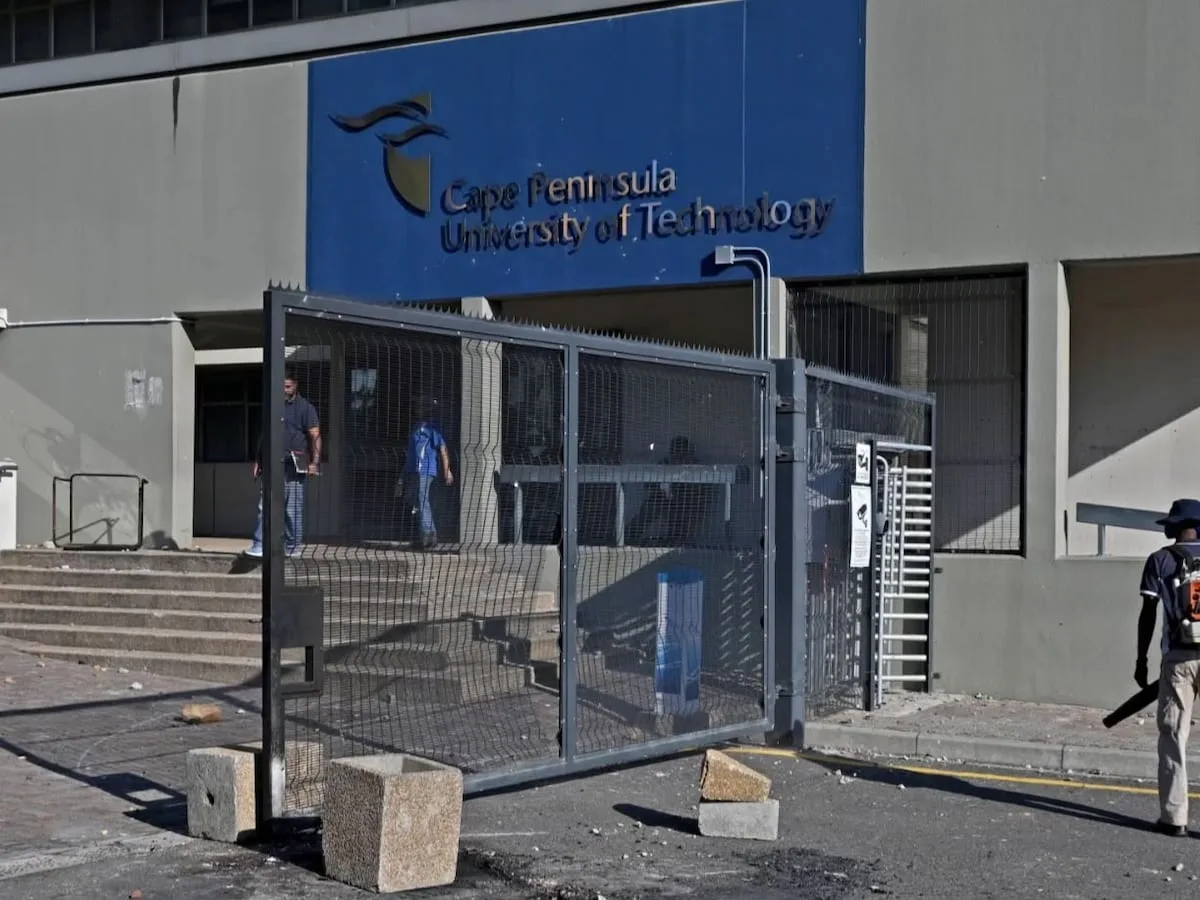
The events at the Cape Peninsula University of Technology (CPUT) over the past week should force South Africa to confront a difficult question: what happens when legitimate grievances become destructive, and who ultimately pays the price?
Student protests are not new to South Africa. In a democratic society, the right to protest is fundamental and provides citizens with an important mechanism to challenge institutions, policies and decisions. But the events at CPUT demonstrate how quickly a legitimate expression of frustration can become something more dangerous when protest crosses the line into violence, arson and destruction of public infrastructure.
The burning of CPUT’s Old Education Building at the Bellville campus, with damage estimated at R1.5m-R2m, is more than a property-loss figure. It represents classrooms, facilities, resources and institutional capacity that must now be repaired or replaced.
The university subsequently closed its campuses and ordered students to vacate residences in an attempt to prevent further escalation. While hundreds of students reportedly left, others remained because they could not afford the journey home or had nowhere else to go.
This creates a paradox that South Africa must take seriously. In seeking to make their voices heard, some protesters can end up harming precisely those whose interests they claim to represent.
The CPUT crisis therefore provides an opportunity to move the conversation beyond the immediate question of who is right or wrong. We need to ask what violent protest costs society ― not only in damaged buildings, but also in disrupted education, lost economic activity, psychological distress, institutional trust and the erosion of social cohesion.
For students, the consequences are immediate. Academic programmes are disrupted. Examinations and graduation timelines can be affected. Students who depend on university residences can suddenly find themselves without accommodation.
We need to ask what violent protest costs society ― not only in damaged buildings, but also in disrupted education, lost economic activity, psychological distress, institutional trust and the erosion of social cohesion.
For parents and families already carrying the financial burden of higher education, disruption creates additional costs. And for institutions, rebuilding physical infrastructure is only one part of the recovery. Restoring confidence and relationships can take considerably longer.
There is also a broader economic cost that is often invisible when images of burning buildings disappear from the news cycle.
South Africa has experienced this before. The July 2021 unrest demonstrated how quickly localised social and political tensions can develop into widespread economic disruption. The lesson should not simply be that institutions need better security or insurance. It should be that resilience must begin long before the first stone is thrown or the first building is set alight.
The insurance industry has an important role to play in this conversation, but insurance is not a substitute for prevention. Risk can be transferred financially, but it cannot always be reversed socially.
5News aggregated this summary from the outlet’s public feed. The full article, with all the context, is on www.businesslive.co.za — the content belongs to Business Day.