‘Thrill of the hunt’: Experts weigh in on Ekurhuleni murders
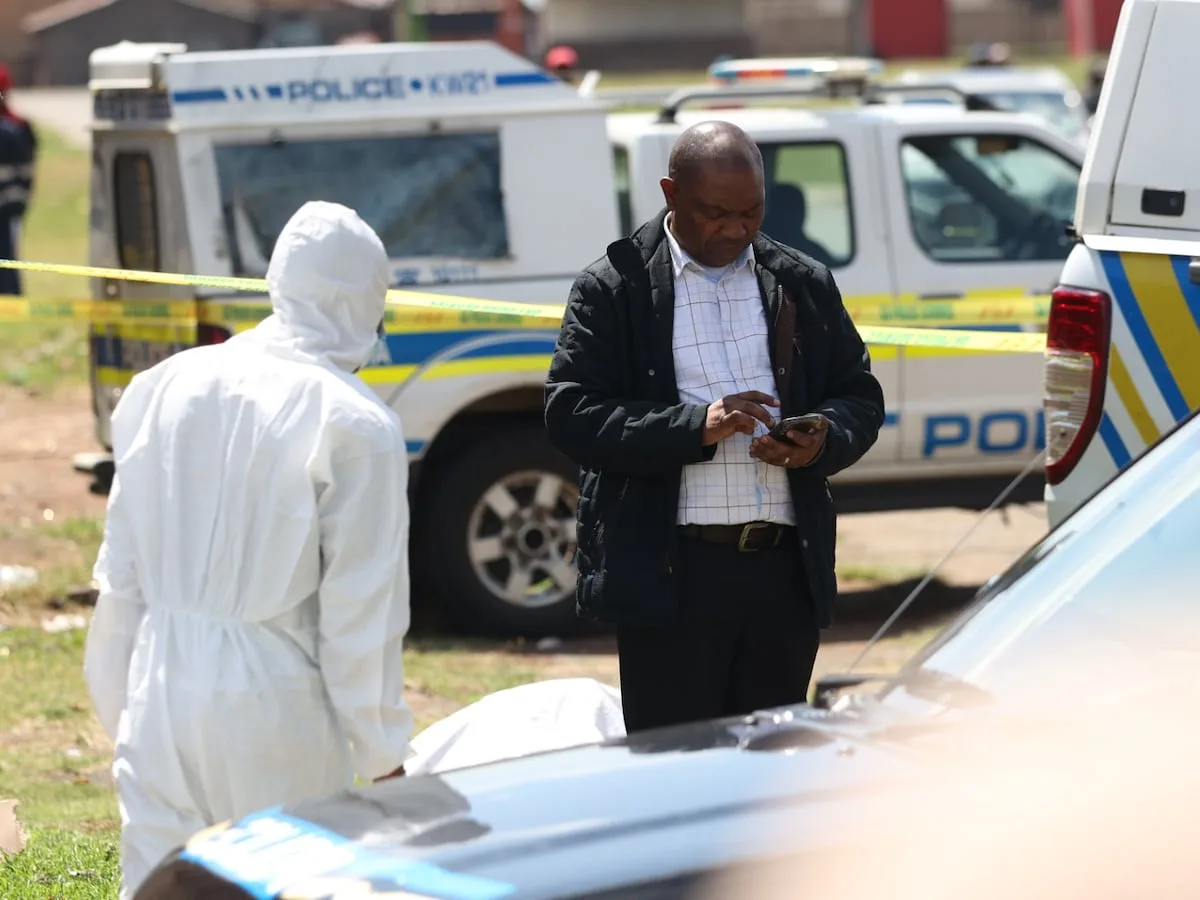
As police intensify their investigations into the killing of nine women whose bodies were found in different locations in Ekurhuleni, investigators and criminologists remain divided over whether the string of murders can yet be linked to a single perpetrator.
Seasoned private investigator Chris Craucamp, who played a key role in solving the case of the Pretoria serial killer , believes the pattern of killings suggests a mobile and calculating offender operating within the triangle of Brakpan, Boksburg and Kempton Park.
He says the suspect may be driven by deep-seated trauma or a hatred of women, and he could be stalking victims before disposing of their bodies in remote locations, possibly deriving a twisted thrill from the ongoing investigation and media attention.
However, leading criminologists urge caution before drawing any conclusions. Prof Christiaan Bezuidenhout of the University of Pretoria stresses that only forensic evidence and established case linkage, such as DNA, can confirm the presence of a serial killer. He notes that South Africa’s high murder rate means multiple bodies discovered in close proximity are not unprecedented, though it is unusual.
“We cannot say that until the police have enough evidence, collected enough evidence to say, OK, we’ve got case linkage between all eight bodies now, or nine bodies,” Bezuidenhout said.
Dr Gerard Labuschagne, former head of the South African Police Service Investigative Psychology Section, echoes calls for a focused police response, arguing that the similarities in victim profiles and geographic clustering justify treating the cases as potentially linked, at least until evidence proves otherwise.
Craucamp believes police may be dealing with a serial killer. However, Bezuidenhout said investigators needed sufficient evidence to establish whether the cases were connected before referring to a single offender or a serial killer.
“There are so many bodies lying in shallow graves, in bushes, in dams, in rivers, maybe in houses or in gardens,” he said.
However, he acknowledged that the discovery of several women’s bodies in relatively close proximity was a distinctive aspect requiring attention.
“What makes this unique is that we found several women in relatively close proximity,” he said.
Craucamp said that the victims’ age range, their routines and the fact that some may have been running alone in isolated areas could be relevant to understanding how they were targeted.
He also raised the possibility that the perpetrator may have stalked or followed potential victims before attacking them.
There are so many bodies lying in shallow graves, in bushes, in dams, in rivers, maybe in houses or in gardens.
Craucamp said there is a possibility that the perpetrator may be killing women at another location before dumping their bodies in different areas, including near freeways and other quiet spots where the bodies were found in recent weeks.
5News aggregated this summary from the outlet’s public feed. The full article, with all the context, is on www.timeslive.co.za — the content belongs to TimesLIVE.