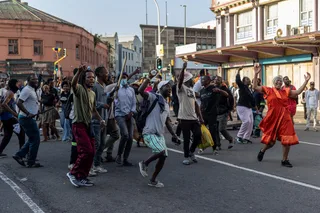
ANTI-FOREIGNER UNREST: Home Affairs scraps asylum seeker directive after violence in Durban and Soweto
The Department of Home Affairs has withdrawn its directive regarding the intake of asylum-seeker applications. This follows severe operational strain on Refugee Reception Offices and violent protests in Durban and Soweto. The department will start from scratch to draft a sustainable plan that meets the requirements set by the Constitutional Court.
On Friday, 9 October 2026, the director-general of the Department of Home Affairs (DHA) withdrew a directive instructing its offices to accept asylum applications so they could be judged on their merits rather than excluded on procedural grounds.
The reversal follows protests this week by anti-immigrant groups and widespread misinformation suggesting the directive granted asylum seekers citizenship or voting rights.
The Home Affairs directive was issued on 28 September following a Constitutional Court ruling in July that declared certain provisions of the Refugees Act unconstitutional and invalid.
The court found that procedural hurdles could have prevented asylum seekers from accessing a merits-based assessment of their claim, particularly given the constitutional right to dignity and the principle of non-refoulement, which prevents states from returning people to countries where they face persecution or other serious harm.
The directive instructed Refugee Reception Offices (RROs) to receive people who report in person and indicate that they intend to apply for asylum, and to assist them in lodging their applications.
It applied to people who had entered the country unlawfully, had entered somewhere other than a designated port of entry, did not have a visa, or had failed to report to one of the country’s five offices within five days.
On Thursday, the Inter-Ministerial Committee on Migration reasserted that the court’s judgment does not automatically grant refugee status or permanent residence, nor does it legalise unlawful migration.
“The ruling does not grant automatic refugee status or guarantee a right to remain in South Africa indefinitely. Every applicant must still subject themselves to the formal Refugee Status Determination process, where their claims will be thoroughly investigated under the strict criteria set out in international and domestic law.”
Still, anti-immigrant groups and some political figures have used the judgment and directive, and in many instances misrepresented its meaning, to amplify anti-immigrant sentiment in South Africa.
One false claim circulating on social media, fuelled in part by long queues of asylum applicants at reception offices, is that asylum seekers are being registered to vote ahead of the 2026 local government elections.
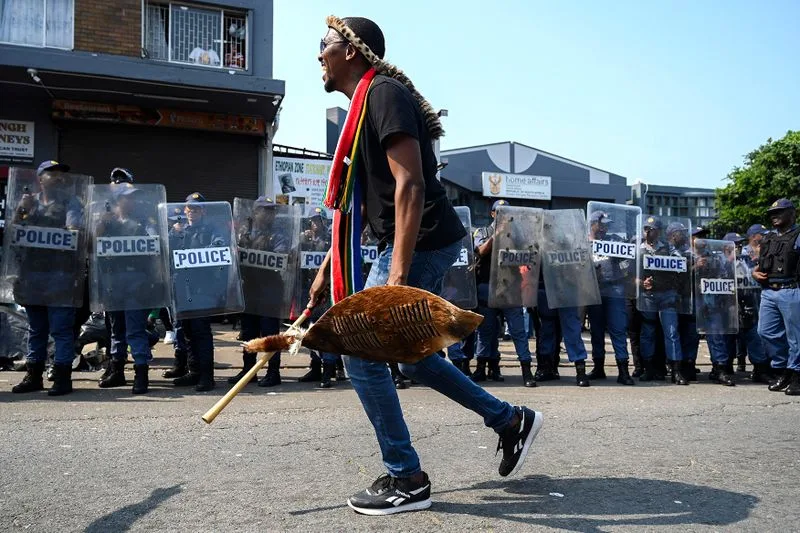
On Tuesday, 6 October, members of March and March disrupted asylum applications at the Durban Refugee Reception Centre on Che Guevara Road, where hundreds of people had queued to apply for asylum.
Protesters subsequently continued to block access to the centre.
5News aggregated this summary from the outlet’s public feed. The full article, with all the context, is on www.dailymaverick.co.za — the content belongs to Daily Maverick.