FEMINIST HISTORY: Pacifist Emily Hobhouse’s 1926 state funeral to be brought back to life in Bloemfontein
A century after the state funeral of British pacifist, feminist and humanitarian, Emily Hobhouse, in Bloemfontein, the Emily100 movement is planning to re-enact the event. The recreation, taking place on 31 October 2026, will bring new life to Hobhouse’s story and connect younger generations to an important chapter in South Africa’s history.
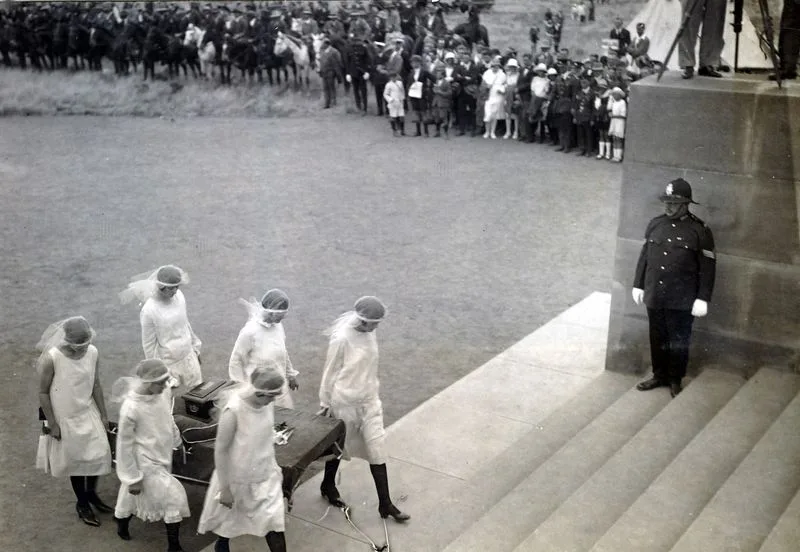
In October 1926, a grand funeral was held for Emily Hobhouse, a British pacifist, feminist and humanitarian, in Bloemfontein, Free State. Over 20,000 people attended as women clad in white carried her ashes through the streets, and interned them at the foot of the National Women’s Monument. It was the first state funeral for a woman, and the only one for a foreigner.
Now, 100 years later, the Emily100 movement is seeking to re-enact the historic event, bringing new life to Hobhouse’s story and connecting younger generations to an important chapter in South Africa’s history.
“We remember Emily Hobhouse... a pacifist, feminist, humanitarian, and most of all, a whistleblower. At great personal cost, she exposed the falling conditions in the British concentration camps run by men. Alone, she challenged a powerful empire to face its abuses in the midst of a war when patriotic sentiment was running high. During an era when women had no voice, she demanded that injustice be recognised and redressed,” said Elsabé Brits, author and project lead for Emily100.
On 31 October 2026, 650 people will take part in the recreation of Hobhouse’s funeral, wearing clothes specially made to match those of the time. As in 1926, 200 girls from the local Eunice and Oranje schools will lead the procession. The Free State Youth Wind Ensemble will be performing in the march.
“We will walk the 600 metres on Monument Road, right up to the national monument, where there will be men and women on horseback... We will re-enact the whole programme of the day, the psalms, the scripture, and Jan Smuts still-relevant speech, with some surprises,” said Brits.
Hobhouse, born in 1860 at St Ive, Cornwall, was a woman ahead of her time. When the Anglo-Boer War broke out in 1899, Emily became involved with the South African Conciliation Committee, which was against the war, and soon after established her own fund, the South African Women and Children Distress Fund.
According to The story of Emily website, Hobhouse became a witness to the injustices in the British concentration camps in South Africa while travelling between these sites in 1901, distributing aid and collecting evidence for a report. Her 40-page report about the conditions in the concentration camps was published in June 1901.
While she was discredited by British imperialists for speaking out, a commission appointed to investigate conditions in the camps confirmed her findings.
When Hobhouse travelled to South Africa in the years after the war ended, she continued to assist in relieving hunger and distress by raising money for a planting and ploughing plan, and establishing 26 spinning and weaving schools, and one lace-making school.
In recreating Hobhouse’s funeral, the Emily100 group has relied on 30 photographs and one film taken of the 1926 procession.
5News aggregated this summary from the outlet’s public feed. The full article, with all the context, is on www.dailymaverick.co.za — the content belongs to Daily Maverick.