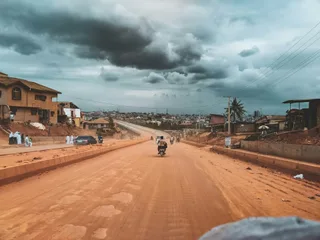
Millions of Africans are displaced without crossing a border – and their needs are often overlooked

The eruption of the Bundibugyo strain of Ebola in the eastern region of the Democratic Republic of Congo in May 2026 sparked a major crisis.
Transmissions and deaths are skyrocketing, and no vaccine is currently available .
This virus is notably prevalent in settlements and communities for internally displaced persons (IDPs) and communities.
This happened too with the Mpox outbreak that started in the Congo in 2025 and spread to the rest of the world.
But who are “internally displaced persons”? And why are they disproportionately affected by disease outbreaks such as Ebola and mpox? Across Africa, there were estimated to be 31.7 million people living in internal displacement camps as of the end of 2025.
More than 29 million of them were displaced due to conflict and violence.
Sudan hosted the largest number of internally displaced people of any country in the world – approximately 9.1 million of its total population of around 52 million .
Another 2.8 million remained displaced outside the country as refugees.
Over 20 years ago , I began doctoral research in Colombia with more than 40 displaced communities living in conflict-affected regions.
This has since extended to include research on Mexico, central America and Yemen.
I then helped set up networks to support researchers and policymakers working on internal displacement in Africa, Latin America and the Middle East.
This work led to the recently published Handbook of Internal Displacement .
Based on this work, it’s become clear that the issue of “internal displacement” remains poorly understood despite the very large number of people involved and their significant role in shaping social trends.
This may be about to change.
5News aggregated this summary from the outlet’s public feed. The full article, with all the context, is on theconversation.com — the content belongs to The Conversation Africa.