Russians flee abroad, citing fears of mobilisation and loss of freedom
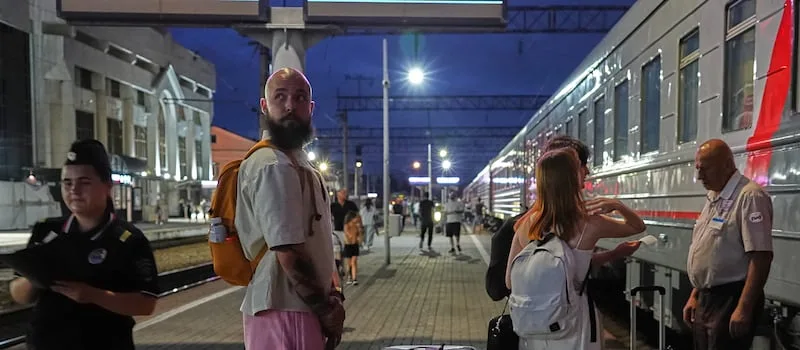
This year, a 28-year-old digital content marketer packed his suitcases and boxes and fled Russia, leaving behind his family and friends and not knowing when he’ll be able to return.
“It is very sad to leave Russia,” he said in the southern city of Krasnodar before heading for the border with Georgia.
He blamed “the political situation” in Russia and complications over authorities restricting internet access as his reasons for leaving. Otherwise “I never would have left for more than several months,” he said, speaking on condition of anonymity because of security concerns.
He is one of a number of people who left or are contemplating a move amid recent Ukrainian drone attacks inside Russia and persistent rumours of a coming mobilisation of troops for the war that has raged for more than four years.
The attacks this summer caused an unprecedented fuel crisis and dealt crippling blows to the booming e-commerce sector. Since last year, the government has cited the attacks to justify harsh restrictions on connecting to the internet.
The exodus is nowhere near as large as in 2022, when hundreds of thousands fled in the first year of the full-scale invasion. A group that helps citizens who flee abroad said it received nearly eight times more queries last month than it had in May.
“It doesn’t mean there is a huge number of people at the borders,” said Anastasia Burakova, founder of Kovcheg, which means “ark” in Russian. “But we’re seeing that people are preparing to emigrate. We’re seeing people are looking into what options are there.”
The numbers are hard to gauge. Unlike 2022, when droves of men fled a partial call-up for the military, there are no lines at border crossings or shortages of plane tickets to visa-free destinations such as Armenia, Georgia, Kazakhstan and Turkey at the moment.
At the same time, AP found social media videos from all over Russia of people saying they had decided to leave, citing war-related reasons. Others were worried about the declining economy, an uncertain future and shrinking freedoms.
Ukrainian President Volodymyr Zelensky and other officials in Kyiv have said Russia is planning another mobilisation after the State Duma election that concluded on Sunday, claims the Kremlin has repeatedly and vehemently rejected.
Yan Slovitsky, an urgent assistance co-ordinator for Kovcheg, described “a panicked wave” of emigration since mid-July linked to mobilisation fears, the fuel crisis and internet restrictions.
A Moscow-based diplomat spoke about “a palpable rise in public anxiety this summer”, and pointed to “anecdotal evidence of higher than usual numbers of Russians appearing in neighbouring Georgia and Armenia, possibly fearing another mobilisation after the Duma elections”. The diplomat was not authorised to comment publicly and spoke on condition of anonymity.
Alen Simonyan, secretary of Armenia’s security council, told independent Russian TV channel Dozhd last month his country “will not interfere in any way, and if necessary, will help” Russians who are moving there to avoid being drafted.
That drew a sharp rebuke from the Russian foreign ministry, which called Simonyan’s remark “provocative”.
5News aggregated this summary from the outlet’s public feed. The full article, with all the context, is on www.timeslive.co.za — the content belongs to TimesLIVE News.