NARNIA BOHLER-MULLER | ‘Don’t run alone’: the curfew we keep placing on women
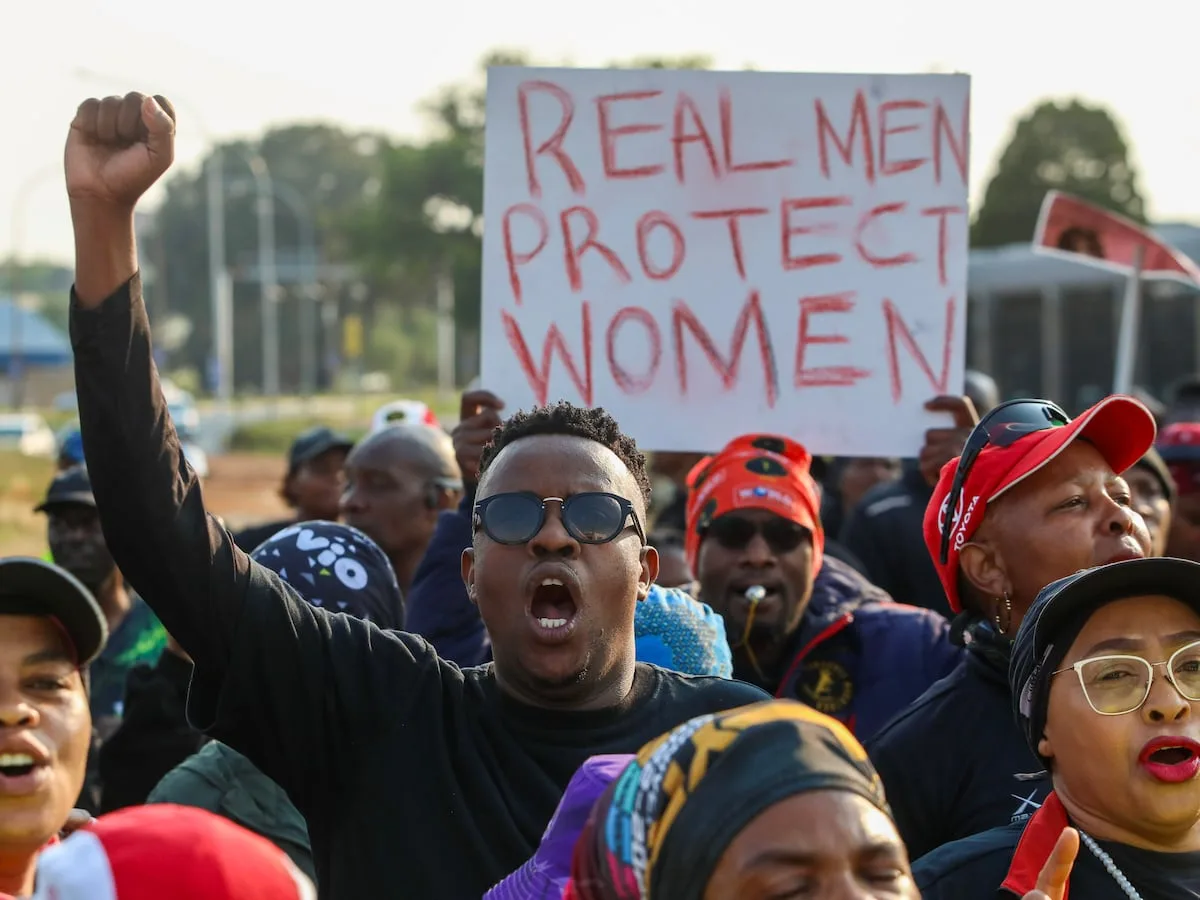
Elizabeth “Tsontso” Moselakgomo went for a run after work. It is one of the most ordinary freedoms.
To leave your home, to move through your own neighbourhood, to come back. She did not come back. Her eight-year-old daughter raised the alarm. Her body was found behind a hotel in Rhodesfield, Kempton Park.
Since mid-July, women’s bodies have been found across Ekurhuleni beside the R21, in the veld at Olifantsfontein, in a river at Clayville, on a roadside in KwaThema and in Dawn Park — bringing the total to nine. Only four of these women have been identified. Police say four were sexually assaulted.
Notice the grammar of the police reports. The women “were found”. The passive voice hides someone. The women on those roadsides did not simply come to lie there, partially clothed, in full view. Someone left them. Public space has become not only the scene of this violence but also its stage. A woman’s body left beside a highway speaks to every woman, and the message is an old one: this is not your space .
The SAPS has urged women around Kempton Park not to walk or run alone, to avoid secluded spaces and to exercise in groups. Any woman would be wise to heed this advice.
But women have seen this bargain before, as our safety is purchased with our freedom. A curfew is drawn around women’s bodies, while whoever threatens them moves freely. And women are sent home, as though home were a refuge.
It is not. The HSRC’s National GBV Study of 2022 found that more than 35% of women over 18 have experienced physical or sexual violence in their lifetime, mostly at the hands of intimate partners. We are told to leave the street for the room. The room has never been safe.
In 1989, writing after a woman was stabbed to death alone in a London train compartment, Gill Valentine mapped a “geography of women’s fear”. She showed how blaming victims for being in the “wrong” place teaches all women to fear places and to shrink their lives to fit.
Valentine called women’s inhibited use of space “a spatial expression of patriarchy”. Thirty-seven years on, the advice from Kempton Park could serve as her case study.
Judith Butler sharpens the stakes. Frames of War (2009) asks when a life is grievable and shows that grief is unevenly shared. Some deaths are framed as wounds to a whole society, while others barely register. Women lying unnamed in a mortuary while police appeal to families for help is a question of grievability before it is a question of forensics.
It asks which lives our institutions are built to notice. In Notes Towards a Performative Theory of Assembly (2015), Butler writes of a plural “right to appear ” : bodies claiming the street together and, by appearing, demanding a liveable life.
That right cuts both ways. When runners come together to honour the dead, they exercise it with dignity. But a right to appear that a woman may exercise only in company, only in daylight, and only on approved routes is not a right.
It is a permission. Solidarity among women is precious, but it cannot replace the state’s duty to make the streets safe for a woman who simply wants to walk or run alone.
Our constitution leaves no room for evasion.
5News aggregated this summary from the outlet’s public feed. The full article, with all the context, is on www.sowetanlive.co.za — the content belongs to Sowetan.