Changing the history curriculum is not enough if English always dominates the classroom – South African study
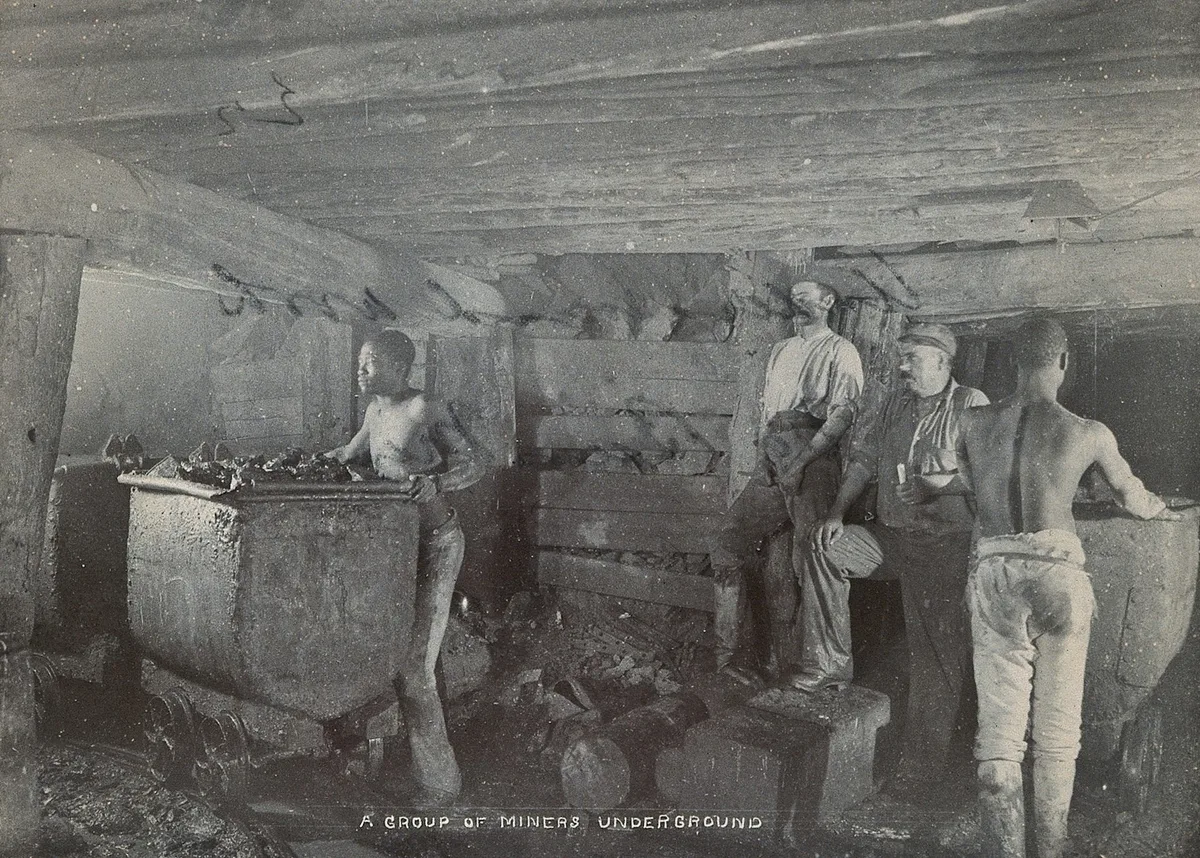
Miners in the De Beers diamond mines in Kimberley, Southern Africa, photograph by J.E.M., 1896.
Wellcome Collection. , CC BY In many South African classrooms, learners continue to experience the subject of history through the language, concepts and perspectives inherited from colonial traditions.
Changes have been made to what children are taught .
But the curriculum changes might not be enough to change what children learn in history classrooms.
The reason for this is that English continues to dominate as the language of learning and teaching in most secondary schools.
This is despite the fact that South Africa officially recognises 12 languages.
As education researchers with an interest in the languages used in the classroom, we wanted to examine the relationship between language choice and the teaching of history.
We did this through a study of Grade 8 history classrooms in the Northern Cape province of South Africa.
Focusing on a local historical event, learners were encouraged to examine whose perspectives become visible or invisible through different language choices.
We found that this allowed them to think critically about how history is recorded, challenge the standard versions of the event, and create more of a connection between their own lives and the bigger historical picture.
Our research suggests that if learners are to engage critically with history, they must also be empowered to question the language through which the subject is taught.
The Kimberley diamond rush Our research focused on the Kimberley diamond rush .
The development of Kimberley can be traced back to the discovery of diamonds around 1870 on a farm in what was then known as Griqualand West, now part of South Africa’s Northern Cape province.
News of the discovery spread quickly and attracted thousands of prospectors, fortune seekers and labourers from across the region and beyond.
5News aggregated this summary from the outlet’s public feed. The full article, with all the context, is on theconversation.com — the content belongs to The Conversation Africa.