Beyond the Badge: Why Chinese Carmakers Are Now Structural Players in South Africa
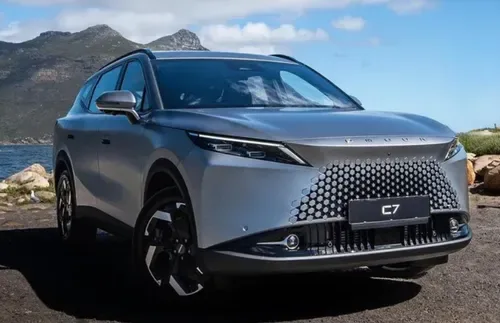
Chinese brands now hold about 19.1% of the passenger and light commercial market, up from roughly 4% in 2021. Chinese sales grew 72% year on year in the second quarter of 2026, against 3% for traditional manufacturers, taking their share to about 22%. The figures differ by source because the datasets and periods differ, but the direction is the same in all of them.
The cause is mostly economic. Naamsa’s chief economist, Paulina Mamogobo, links the rise to pressure on real disposable incomes and elevated interest rates, which suit a value proposition aimed at price-sensitive buyers. A Cars.co.za survey backs this up: shoppers rank price (70.8%) and fuel efficiency (52.5%) as their top priorities. Fuel costs sharpened the second concern, as petrol breached R23 a litre in April after the Middle East conflict escalated.
Banks follow demand rather than create it, so the lending data is the better test of mainstream acceptance. Absa found that Chinese brands rose from 19% of SUV finance applications in 2023 to 40% this year, while the average SUV application barely moved, from about R350,000 to R353,000. Chinese brands have taken share without pushing up the price of a typical SUV purchase.
Electrification is following the same pattern, but through hybrids and plug-ins rather than a broad move to fully electric. BYD accounts for 61% of EV finance applications at Absa.
The used market is the next test. About 6% of Absa’s used-vehicle finance applications involve Chinese brands, because these cars are only now ageing into the secondary market. Residual values remain largely untested, and that is where buyer confidence could still be tested.
Official figures miss part of the market. Geely, Dongfeng and iCaur, major players in new-energy vehicles, do not yet report monthly sales to Naamsa. The evidence suggests demand for them is real. Geely reserved 200 E2 units for South Africa and received over 2,400 orders within two months. Exports tell the same story: Ember data shows Chinese EV and plug-in hybrid exports to South Africa hit a record R1.35 billion in July, around six times the previous year’s level. Reported market share is therefore probably a floor.
Chery’s story shows how far the strategy has moved. It first launched here in 2007, exited quietly in 2018, and returned in 2021. Its earlier withdrawal followed complaints about quality, spare parts and after-sales support. Those complaints are the weaknesses a returning brand most needs to fix.
Its response has been to buy a factory. Chery has taken ownership of Nissan’s former Rosslyn plant in Tshwane, with production expected in the middle of 2027, starting with the Tiggo 4. It has committed to retaining all 692 existing employees and expects close to 3,000 direct and indirect jobs. It is targeting 40% local content by 2028 and has a long-term ambition of selling more than 100,000 vehicles a year.
The real test is the 40% local content figure. Whether this becomes industrial development or a repackaged import model depends on how many components are made here rather than shipped in. Chery also plans to bring in Chinese suppliers for electric and intelligent-vehicle components.
5News aggregated this summary from the outlet’s public feed. The full article, with all the context, is on iol.co.za — the content belongs to IOL.