JUDICIAL REVIEW: Phala Phala impeachment could return to Parliament even if court quashes report
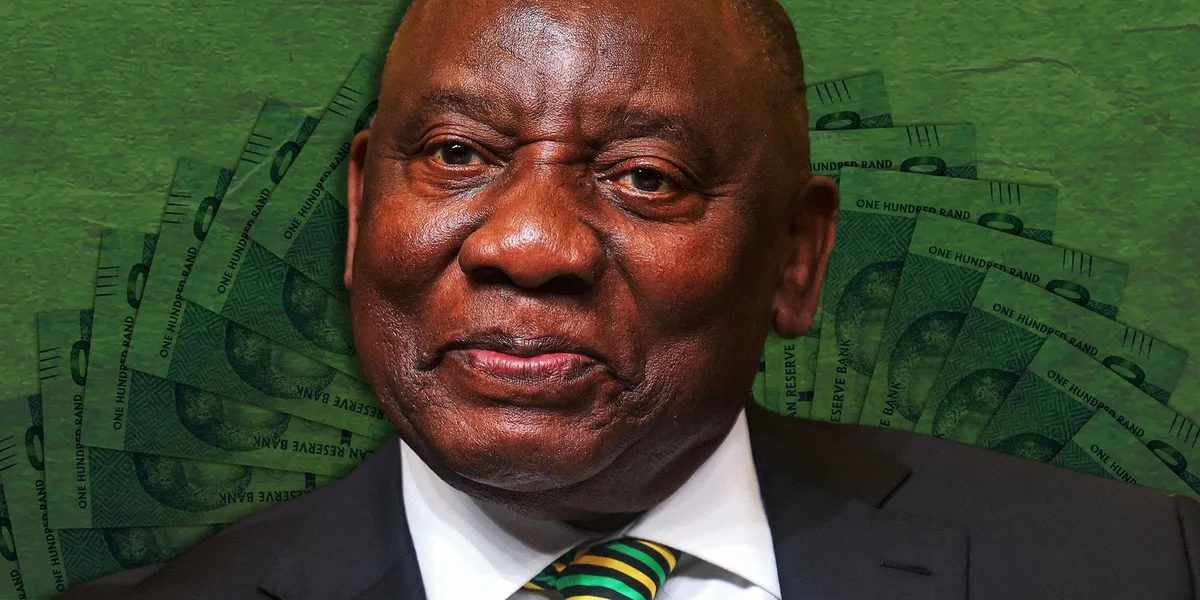
Setting aside the Section 89 report into the Phala Phala saga would not automatically end impeachment proceedings against President Cyril Ramaphosa, the Western Cape High Court heard on Wednesday.
When Western Cape Judge President Nolwazi Mabindla-Boqwana asked President Cyril Ramaphosa’s lawyer about the impact of setting aside the Section 89 panel report – which previously found Ramaphosa had a case to answer over the Phala Phala saga – advocate Wim Trengove replied that the matter would return to Parliament to decide whether to establish a new Section 89 panel.
The court exchange underscores the politicking in the Phala Phala saga that has hung over Ramaphosa and the ANC for more than four years.
Should the matter return to the National Assembly, the Government of National Unity coalition parties, including the ANC, DA, IFP, Patriotic Alliance and Freedom Front Plus, hold the majority of the 400 seats. This would allow them, if united on this point, to vote down any further proceedings.
Such a move would mirror the ANC’s actions in December 2022, when it relied on its parliamentary majority to defeat the Section 89 panel report that found Ramaphosa had a case to answer over the saga.
However, any future developments depend on the outcome of the judicial review of the Section 89 report, which began on Wednesday, 2 September, in the Western Cape High Court.
This is the latest turn in a protracted legal saga. It follows Ramaphosa successfully securing an interdict to halt parliamentary impeachment hearings pending the outcome of this review – a process effectively revived in May 2026 after the Constitutional Court, responding to an EFF application, set aside Parliament’s December 2022 vote as invalid.
On Wednesday, Trengove argued that the Section 89 panel report had failed to make a “qualitative assessment” and “balancing exercise” of all the evidence, including the President’s submissions, and failed to ask the “right question: Does the evidence show the President acted wilfully and in bad faith?”
Ramaphosa had not knowingly violated any rules, the senior counsel argued; “Even if he’s wrong, he acted in good faith.”
Trengove argued it was not enough for the panel to say prima facie evidence existed, but that “sufficient evidence” was the requisite standard to warrant a public inquiry.
Against this backdrop, Trengove argued, subjecting the President to a public inquiry would cause him irreparable reputational harm and public humiliation. The impeachment committee, which included “the President’s adversaries”, was “the equivalent of a political trial” but without an independent judge.
The report found that “Viewed as a whole, the information presented to the panel, prima facie , establishes that:
There was a deliberate intention not to investigate the commission of the crimes committed at Phala Phala openly.
The misconduct based on violations of the provisions of section 96(2)(b) and the violation of section 34(1) of Precca [the Prevention and Combating of Corrupt Activities Act] were committed to keep the investigation a secret.
5News aggregated this summary from the outlet’s public feed. The full article, with all the context, is on www.dailymaverick.co.za — the content belongs to Daily Maverick.