INVESTING IN THE FUTURE: Beyond the World Cup — Rugby’s Greatest Rivalry gives Boks, All Blacks cash lifeline
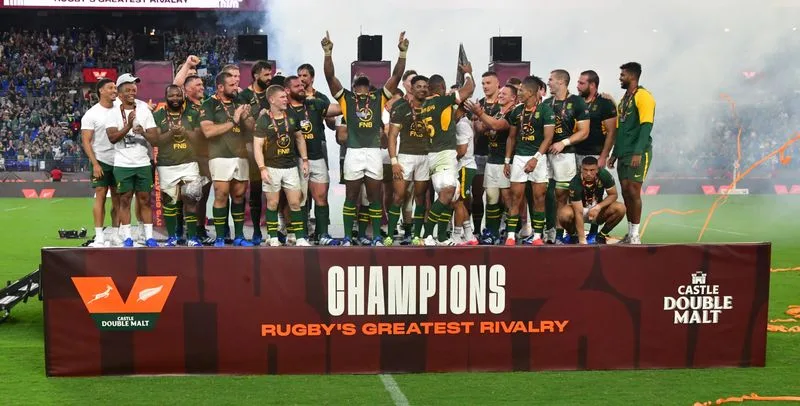
{JSON.stringify(article.attachments[0], null, 2)} --> While the recent Rugby’s Greatest Rivalry series between the Springboks and All Blacks was a rousing on-field success, it is also a long-term financial stabiliser for the two stressed unions.
South Africa last hosted a Rugby World Cup in 1995, while New Zealand’s most recent stint as host was in 2011. And neither is set to host the sport’s showpiece event in the foreseeable future.
In fact, there is a feeling in the boardrooms of South Africa and New Zealand Rugby that they may never host the global showpiece again.
That thinking, based on how the World Cup seems to shift to a new market (Japan, the US), or a slightly fringe rugby market such as Australia (where the sport is about fourth in the pecking order), and then back to the UK or France, led to a focusing of minds to rekindle full Test series and tours between the Boks and All Blacks.
Commercially, Rugby’s Greatest Rivalry (RGR) is set to become a World Cup replacement for South Africa and New Zealand and a four-yearly cash injection that they both desperately need.
After the Boks’ 3-1 series win in the 2026 edition hosted in South Africa in August and September, the series will be played in a similar time slot in New Zealand in 2030.
And it will continue on a home-and-away basis every four years after that. The 2034 tour in South Africa has been agreed in principle, although the contracts for that tour have not been signed.
According to a new report, widely referenced in the New Zealand press last week, New Zealand Rugby’s (NZR) finances appear to be unravelling.
Against this backdrop, the South African Rugby Union’s (Saru’s) finances, while stable, despite a small financial loss in 2025, still require long-term protection.
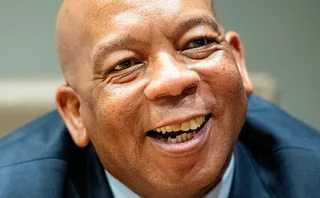
Saru chief executive officer Rian Oberholzer made no bones about it when the RGR tour was discussed in a media forum earlier this year – South Africa is unlikely to ever host the World Cup again.
“I think we have moved away from the philosophy that everybody must get an equal chance to host a World Cup," Oberholzer told a media gathering at Saru’s offices in March.
“New Zealand and South Africa will not make the money out of a World Cup that World Rugby needs. I don’t think it’s a negative for us. It is more important for the best interest of rugby.”
New Zealand’s economy is relatively small, while South Africa has failed in recent bids for the 2011, 2015, 2019 and 2023 World Cups. Those bids required significant government guarantees reaching about R2-billion (at the last time of bidding).
Given South Africa’s stagnant economy, high unemployment and collapsing infrastructure, the appetite to spend lavishly on global sports events has waned.
5News aggregated this summary from the outlet’s public feed. The full article, with all the context, is on www.dailymaverick.co.za — the content belongs to Daily Maverick.