Battery start-up picks China over US for first factory
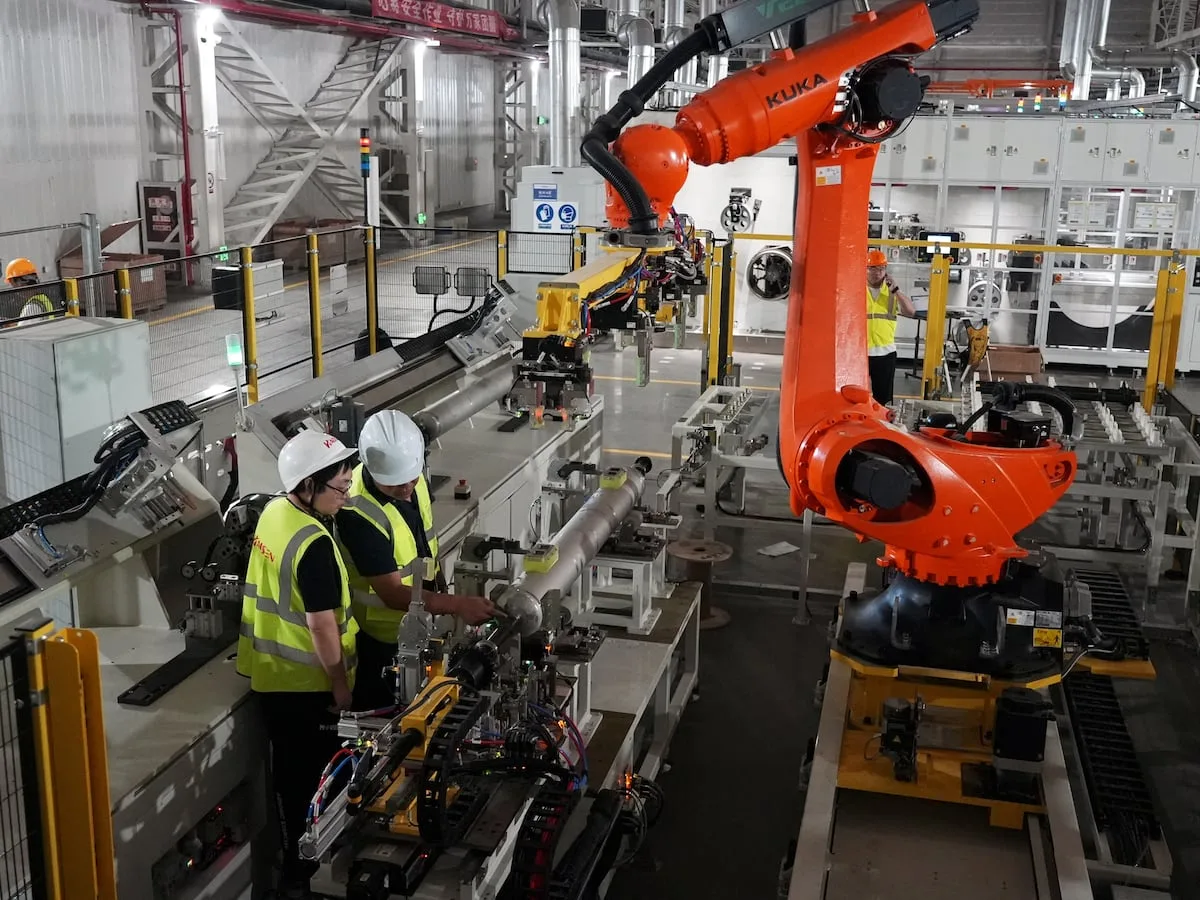
Changzhou, China — A US battery start-up that scrapped plans to make Kentucky the site of its first factory has instead built it in China, exposing the limits of President Donald Trump’s efforts to lure manufacturing home just as he welcomes Chinese President Xi Jinping for a summit.
EnerVenue starts mass production at its manufacturing facility in the eastern Chinese city of Changzhou on Thursday, the same day Trump meets Xi in Washington, as relations between the superpowers remain strained by a tariff war the US president launched partly to bring back manufacturing and jobs.
CEO Henning Rath told Reuters the date was a coincidence, and the decision to manufacture in China instead of the US was down to skills and supply chain depth — particularly in Changzhou, which bills itself as China’s “new energy capital”.
“The secret sauce is this industrial cluster,” Rath said, citing the density of hydraulics, pneumatics and automation specialists, along with engineers able to iterate quickly on what he called a “first-of-its-kind” line.
Without building in China, Rath said, it would be “very difficult with the capital available” to prove the manufacturing process at a commercial scale.
EnerVenue’s choice exposes how Trump’s offer of lower taxes, easier permitting and other incentives may not be enough to overcome the advantages offered by places like China, even in a sector viewed as critical to US energy security and supply-chain resilience.
When Rath joined the company in April, he made building in China a precondition for taking the job.
A floor manager at the Changzhou plant said local suppliers often develop equipment without payment until a design is adopted, unlike foreign vendors that tend to ask for money upfront.
Graduate engineers earn about 12,000 yuan ($1,792) a month, well below US salaries, he added.
EnerVenue, which has R&D in Fremont, California, and was founded by Stanford materials science professor Yi Cui, makes nickel-hydrogen batteries derived from technology Nasa used in the Hubble space telescope and international space station.
It announced a Kentucky factory plan in 2023 with a first phase costing $264m and creating 450 jobs but abandoned it a year later.
Rath, speaking as engineers tested spinning hydraulic arms and lidar-guided robots ferrying materials between production stations, said the attempted project was a “valuable learning experience”, but the technology wasn’t yet ready.
Rath declined to disclose the cost of the Changzhou facility, which is around 95% automated and will employ about 400 workers by the end of the year, but gave a $20m to $50m range. Government support was limited to permitting, certification and site selection, he said.
EnerVenue raised more than $300m in a March funding round led by Full Vision Capital, the family office of Hong Kong property heir Peter Lee Ka-kit, whose broader group includes customer Towngas, Rath said, with other investors including Saudi Aramco and SLB.
5News aggregated this summary from the outlet’s public feed. The full article, with all the context, is on www.businesslive.co.za — the content belongs to Business Day.