How France handles its secularism as it prepares for a papal visit
A four-day visit by Pope Leo XIV beginning on Friday that will feature large public gatherings, popemobile parades and an open-air Mass in Paris presents France with a balancing act under its strict approach to secularism, known as laïcité.
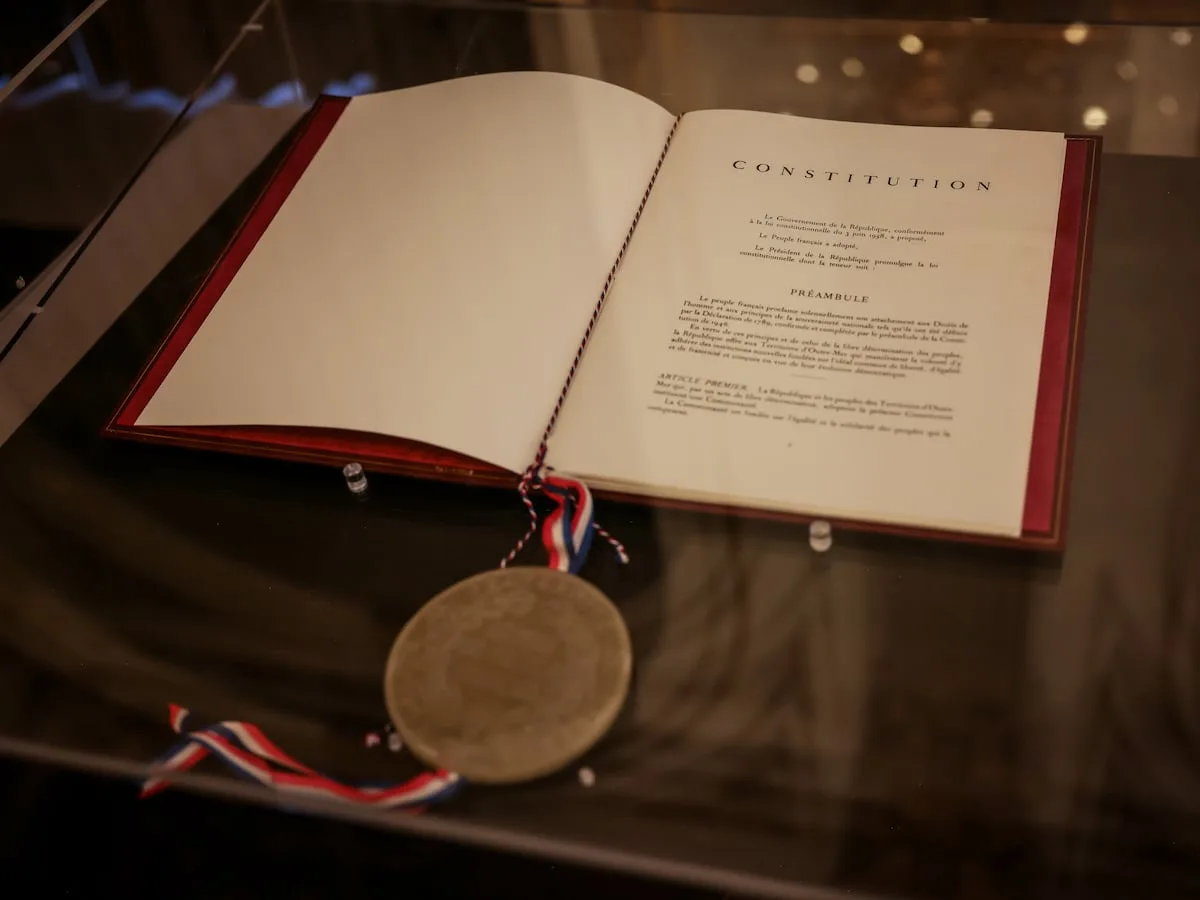
“France is an indivisible, secular, democratic and social Republic,” the country’s constitution states.
Secularism guarantees the freedom to believe or not to believe, and the freedom to practise a religion as long as it does not disturb public order. It also requires the state to remain neutral toward all religions.
Key rules have been defined by a historic 1905 law, primarily intended to distance the state from the then-powerful influence of the Catholic church.
The law guarantees freedom of conscience and the free exercise of religion while requiring the state to remain neutral.
Churches built before 1905 are the property of municipalities or the state, which maintain the buildings while religious communities use them for worship.
Most places of worship built after 1905, including most mosques, are financed and maintained by religious organisations.
A national survey carried out in 2019 and 2020 found Catholicism was France’s largest religious affiliation, representing 29% of the population, followed by Islam at 10%. About half of respondents said they had no religious affiliation.
During his time in France, Leo will visit Paris, Saint-Denis, Lourdes and Metz. He will be received by French President Emmanuel Macron in the pope’s capacity as head of Vatican City, making Friday’s meeting at the Élysée Palace an encounter between two heads of state.
Laïcité does not require the government to reject contact with religious institutions.
Macron met Leo at the Vatican in April to discuss relations with the Holy See, international affairs, peace and interreligious dialogue, according to his office.
During Pope Francis’ visit to Marseille in 2023, Macron attended the Mass but did not participate in worship. Responding to criticism that his attendance breached France’s secular principles, Macron said he would be present as president out of respect and courtesy, not as a practising worshipper.
The 1905 law explicitly mentions religious ceremonies, processions and other outdoor manifestations as subject to the ordinary rules governing public order. Security for such events, however, is provided and financed by the state.
Other religions also regularly receive permission to use public spaces. However, some observers argued that holding Saturday’s Mass at Place de la Concorde and along the Champs-Élysées, near the National Assembly and the presidential palace, could be seen as a continuation of Catholicism’s privileged cultural position.
5News aggregated this summary from the outlet’s public feed. The full article, with all the context, is on www.timeslive.co.za — the content belongs to TimesLIVE.