CRÉATION AFRICA: Neimil blends fashion, interior design and art to tell authentic African stories
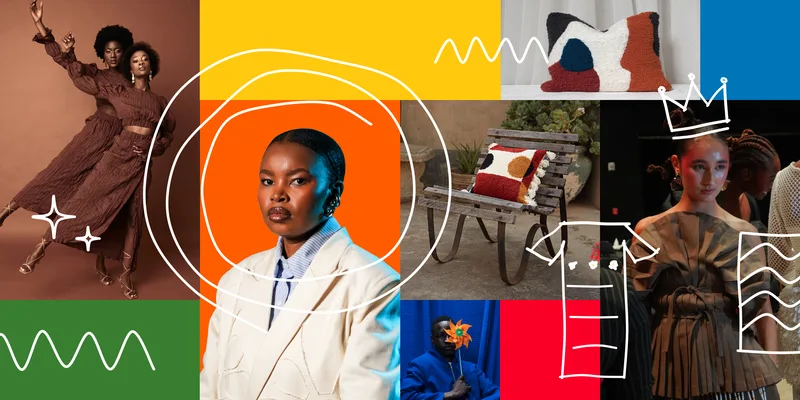
Keneilwe Mothoa rejects fast fashion and operates instead on a slow-design philosophy to create exclusive and handcrafted clothes and homeware under a homegrown label.
Neimil started with two people, two nine-to-five jobs and at first, no real idea of what the business would become.
The Johannesburg-based fashion and homeware brand took off during the during Covid-19 pandemic. “People were spending more time at home, investing and beautifying their spaces,”says founder Keneilwe Mothoa. “Cushions and artworks made with wool and yarn became some of our first pieces.”
Now, Neimil is taking that creative journey a step further as a Création Africa 2 participant – a seven-month incubation programme by the French Ministry for Europe and Foreign Affairs, the Embassy of France and the French Institute of South Africa (Ifas), supporting cultural entrepreneurs across South Africa, Lesotho and Malawi.
Mothoa’s inspiration comes from her upbringing in Mpumalanga. She uses the colours of the land in her designs, with one of her first homeware pieces the Batho scatter cushion.
“Batho means people and when you look at the cushion you’ll see that it’s silhouettes of people gathered together. We collaborated with clothing company H&M on this and that was a really big moment for us. The cushion is handmade with yarn, and tufted, and that was the first piece that made us ‘Neimil’,” she says, smiling.
Registering it in 2018 with her partner and co-founder Lubabalo Mxalisa (Lu), Mothoa knew that she wanted something she could call her own. After being retrenched from the Edcon group in 2020, she took it in her stride and dedicated her time to building Neimil.
“That was a huge moment for me. I wasn’t sad, I took it like a champ and it was almost like a sign to say: ‘Okay, now this is your chance, girl. You need to really do this thing and put your full effort into it.’”
“It’s a funny story that my partner likes to tell. My name is Keneilwe but people call me ‘Nei’ and the ‘mil’ part was from him knowing how much I like a minimalistic approach and we put those two together and it became Neimil.”
In keeping with this minimalist approach, their design process often starts with the fabric. “Fabric is such an important element of the design process because it informs how the garment is constructed and what story you want to tell in the garment.”
From there, Mothoa sketches and brings in references from traditional dress. The fabrics are also chosen with longevity in mind.
“We use a lot of denim or bull denim, and we also use long-lasting fabrics, which are often used in tradition.”
Everything is made locally and in-house in Johannesburg, with some homeware components made by local suppliers.
“I think it’s important to preserve handwork,” says Mothoa. “A lot of brands or companies thrive off creating volumes, but at what cost?”
5News aggregated this summary from the outlet’s public feed. The full article, with all the context, is on www.dailymaverick.co.za — the content belongs to Daily Maverick.