DRC’s cobalt exports contain unreported uranium – our study estimates the global nuclear risk
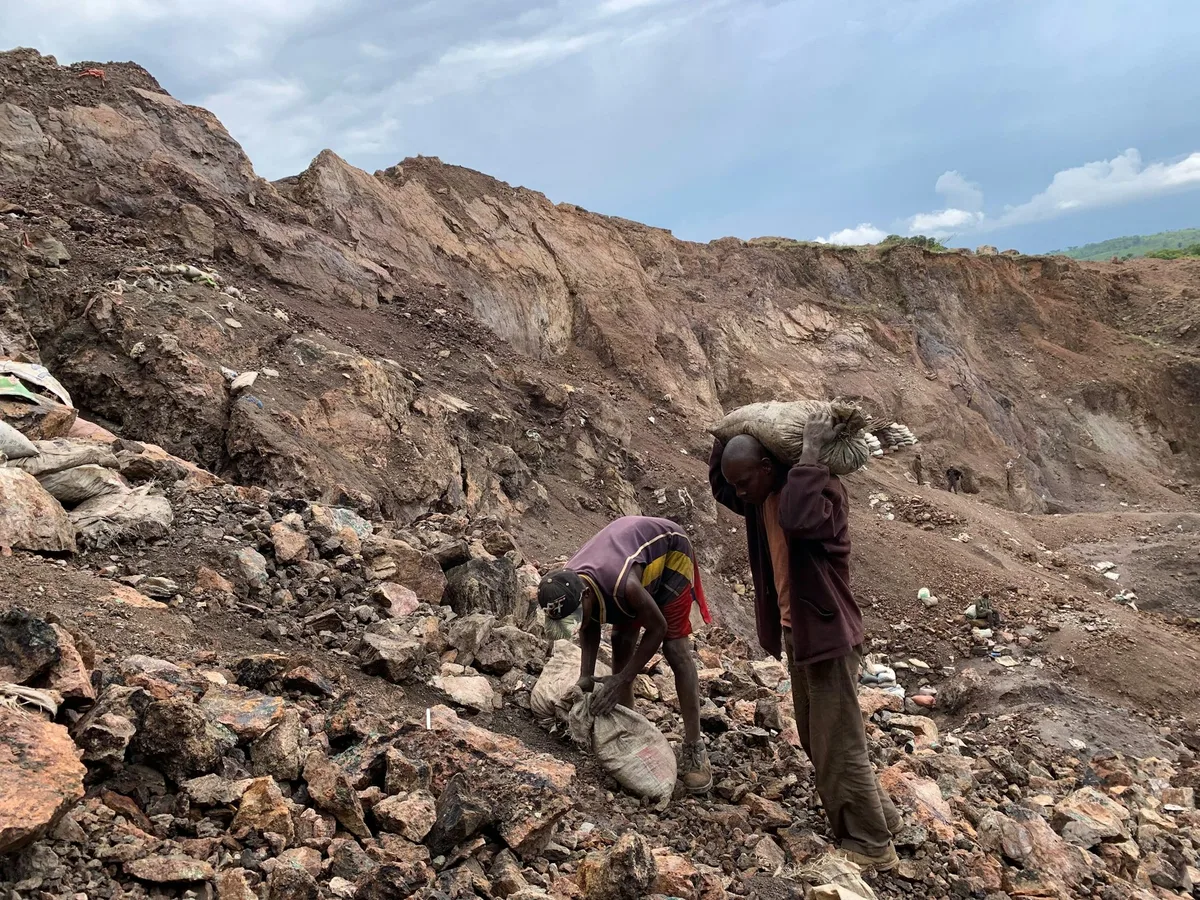
Artisanal cobalt miners in the Democratic Republic of Congo risk exposure to uranium while working.
Wikimedia Commons The southern region of the Democratic Republic of Congo (DRC) is known as the Copperbelt because of its rich deposits of copper and other minerals.
The area was the original source of uranium ore for the first nuclear weapons built by the US’s Manhattan Project (1942 and 1947) .
Two atomic bombs were then dropped on the Japanese cities of Hiroshima and Nagasaki in 1945.
The Manhattan Project’s main source of uranium was the Cobberbelt’s Shinkolobwe mine in south-east DRC.
It has been officially closed to excavation since 2004 .
The DRC hasn’t officially reported any uranium exports in decades .
However, our recent research shows that substantial unreported quantities of uranium are likely to be leaving the country today.
I am a geologist with expertise in analysing data concerning the chemical and mineral contents of rocks.
I do most of my work in map-view, taking in spatial data points – like regional cobalt statistics – and drawing conclusions.
Our research is the first to systematically take two crucial factors into account: the natural geologic co-occurence of uranium and cobalt their similar behaviour in processing chemistry.
Uranium and cobalt occur together in rock and respond the same way to chemical processing, so they are hard to separate.
From this we were able to come up with a single estimate of how much uranium is at stake when cobalt is mined and exported.
Very few data points about uranium concentrations in ores or the chemical steps that prepare cobalt for shipment are publicly available.
5News aggregated this summary from the outlet’s public feed. The full article, with all the context, is on theconversation.com — the content belongs to The Conversation Africa.


