EDITORIAL | Firm action on illegal cellphones in prisons is long overdue
Why, after years of warnings, plans and technological discussions, can criminals in South African prisons still use cellphones to communicate with the outside world and, in some cases, allegedly continue running criminal enterprises from behind bars.
This is a question that deserves a clear answer from the department of correctional services (DCS), the minister of correctional services and the communications regulator.
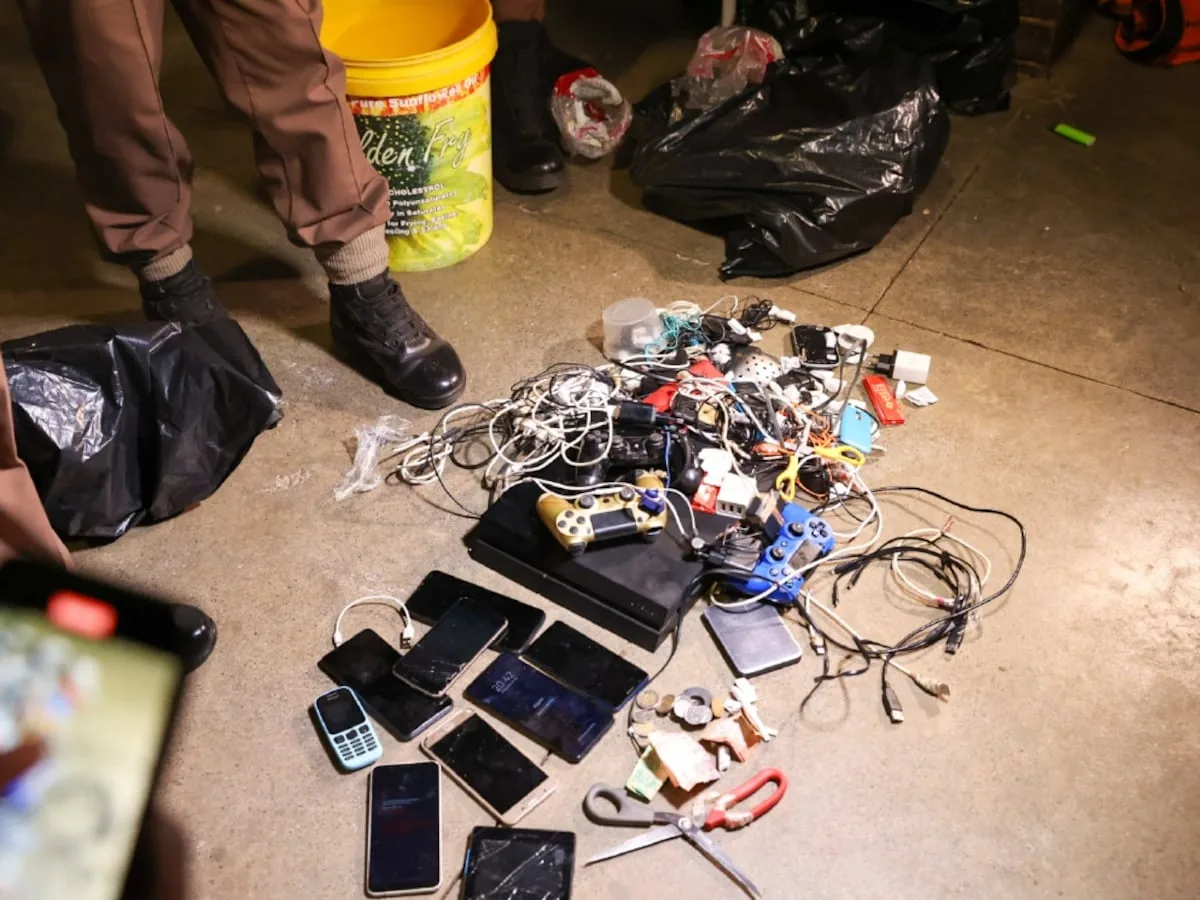
National commissioner of correctional services Makgothi Thobakgale revealed on Thursday that 102,720 cellphones had been seized in correctional facilities between 2023 and 2026.
Presenting evidence before the Madlanga commission, Thobakgale said inmates used illegal cellphones to direct criminal operations, co-ordinate drug distribution, intimidate witnesses and officials, and facilitate fraud against members of the public.
This is a worrying state of affairs. When a maximum security prison inmate can seamlessly run a multimillion rand criminal enterprise or direct local gang networks using a smartphone, the protective wall between incarceration and society is effectively dismantled.
And the problem is not getting smaller simply because more phones are being confiscated. During Operation Vala over December 2025 to January 2026, correctional services officials seized 8,063 cellphones nationally.
The question is why the department is still relying so heavily on searches to find phones after they have entered prisons.
In October 2023, the department announced it was collaborating with the Council for Scientific and Industrial Research (CSIR) to develop technology that would prevent the use of mobile devices inside correctional facilities.
At the time, the DCS said the mobile network operators believed conventional jamming was not permitted by the Independent Communications Authority of South Africa (Icasa), and the Association of Communications and Technology was seeking an exemption from Icasa for cellphone jamming in prisons at specified times.
There is a legitimate distinction between allowing lawful prison communication and allowing an illegal cellphone to operate inside a correctional facility.
This question arose in February 2025 when a correctional services portfolio committee member asked Thobakgale why cellphones jammers were not used to counter the use of cellphones in prisons.
Thobakgale replied that the department was informed by Icasa that because it was no longer included in the security cluster of government departments, it no longer had the authority to make such a request. Thobakgale said the request must be made via the South African Police Service or the justice department.
“We are now looking into that, but there is also an attempt to reclassify us as part of the security cluster,” Thobakgale said at the time.
In July 2025, correctional services minister Pieter Groenewald gave essentially the same explanation, that regulatory obstacles prevented the DCS from using signal jammers or intercepting communications and argued that restoring the department to a state security structure would assist in preventing organised criminal activity in correctional facilities.
5News aggregated this summary from the outlet’s public feed. The full article, with all the context, is on www.timeslive.co.za — the content belongs to TimesLIVE.