Why Bollywood live tours no longer grace South Africa
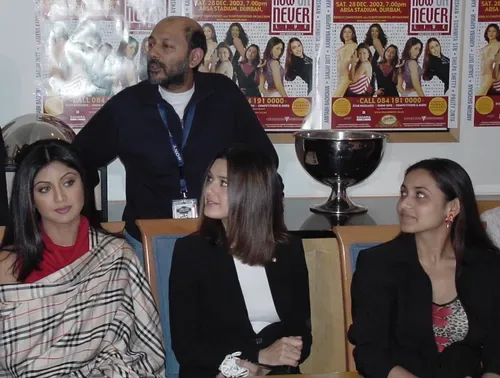
The biggest ever Bollywood show in South Africa was Now or Never in 2002, featuring a dozen leading artists from the industry. Promoter Anant Singh is seen here with, from left, Shilpa Shetty, Preity Zinta, and Rani Mukherjee at a media conference in Durban before the show.
THE euphoric tours of South Africa in the 1990s featuring leading Bollywood stars have died out, and there are various reasons for this.
For decades, the cultural ties between India and South Africa were written in the language of cinema and music, extended to such live shows.
From the historic enclaves of Durban and Johannesburg to the sprawling cultural centres across the country, the arrival of a Bollywood live show was a monumental event. It meant glittering costumes, high-energy choreography, and the chance to see legendary actors step off the silver screen and into real life.
Today, however, those massive stage productions have all but vanished. To understand why South African arenas no longer echo with the sounds of playback singers and mega-stars, one must look back at a complex history of political isolation, soaring economic realities, and a shifting global entertainment landscape.
The story of Bollywood entertainment in South Africa cannot be told without acknowledging the profound impact of India's historic stance against the apartheid regime. Long before the international community fully mobilised, India cut off diplomatic, economic, and cultural ties with South Africa in the 1940s and 1950s, protesting institutionalised racism. This policy meant a total ban on Indian films, cultural exchanges, and artist tours.
For decades, South Africa's vibrant Indian diaspora experienced a deep cultural isolation from the heartland of Indian cinema. While pirated VHS tapes and vinyl records filtered through, live performances by Bollywood actors were completely out of reach.
When the apartheid regime fell and South Africa transitioned to democracy in the early 1990s, the floodgates reopened. The lifting of the cultural ban was met with euphoric celebration. Historic tours in the post-apartheid era felt like a triumphant family reunion. Massive troupes featuring iconic actors, comedians, and playback singers arrived at sold-out stadiums.
These early post-ban concerts were symbolic milestones of a newly democratic South Africa re-entering the global fold, bridges built on shared historical struggles and cultural affinity. But while the return of Bollywood in the 1990s and 2000s was defined by triumphalism, the subsequent decades were defined by economic friction.
Staging a modern Bollywood mega-concert has grown into a staggering financial gamble, and South Africa has increasingly found itself priced out of the touring circuit. The economics are unforgiving. Bringing A-list Bollywood actors, massive backing dance crews, high-end technical production, and security teams requires multi-million-rand capital outlays.
Promoters face immense financial risks, compounded by volatile currency exchange rates between the South African Rand and the US dollar in which the artists demand to be paid.
5News aggregated this summary from the outlet’s public feed. The full article, with all the context, is on iol.co.za — the content belongs to IOL.