‘Isolated Incidents’: Dolphin strandings in Gqeberha spark concern, but experts urge calm
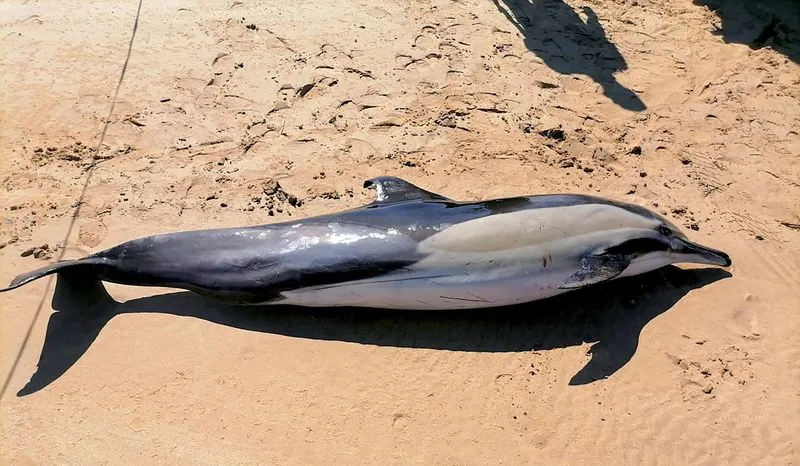
As distressing as it is for three dolphins to wash ashore in Nelson Mandela Bay in two weeks, experts believe these to be isolated incidents with no link to the recent outbreak of pilchard herpesvirus that caused thousands of fish to wash ashore around South Africa.
Marine mammal experts in Nelson Mandela Bay said there was no cause for alarm just yet after three dolphins washed ashore in the past two weeks.
Most recently, an adult common dolphin died shortly after becoming stranded at Denville Beach on Tuesday, 15 September, just days after two young bottlenose dolphins washed up at nearby King’s Beach.
These incidents raised alarm bells in light of the recent mass mortality of sardines along the same stretch of coastline, due to the outbreak of the pilchard herpesvirus. However, there is no evidence suggesting any link between the incidents.
The public has also been asked to take care when encountering stranded animals, and to contact local experts rather than attempting to push ocean mammals back into the surf.
“At this stage, we don’t believe there is any cause for alarm around the stranded dolphins. However, we will continue to monitor the situation and we ask the public’s help to notify us as soon as they see any more beached animals,” said Dr Greg Hofmeyr, the curator of Bayworld’s marine mammal collection.
Being the bottlenose dolphin capital of the world, beachgoers in Nelson Mandela Bay are often treated to dolphin sightings along the beachfront. Understandably, any sighting of dolphins in distress or washing ashore also leads to major concern among residents and visitors.
The first in the series of strandings occurred early last week when a newborn bottlenose dolphin was found dead on King’s Beach.
“It is not clear if the animal was already dead when it washed ashore, or if it died on the beach. It was still fresh and showed no clear signs of what could have caused its demise,” Hofmeyr said.
On Monday afternoon, a second dolphin was found along the same stretch of beach. Hofmeyr said it was older than the previous one, but still a calf. However, it was already badly decomposed and probably died at sea days before washing up on the sand.
“The newborn’s carcass was preserved, and we plan on doing a necropsy to try to determine the cause of death. No samples were taken from the second carcass as it was already badly deteriorated.
“At the moment we are treating these as two isolated incidents. These were two very young dolphins and they were still very vulnerable. They likely became separated from their mothers, for any number of reasons, and could simply not survive on their own.”
Hofmeyr said bottlenose dolphins travelled much closer to the shore than other species, and while finding them stranded – dead or alive – may be distressing to residents, it was not uncommon or anything to be worried about at this stage.
However, a common dolphin washing ashore is a far less likely scenario, but Hofmeyr said there was still no cause for alarm just yet.
5News aggregated this summary from the outlet’s public feed. The full article, with all the context, is on www.dailymaverick.co.za — the content belongs to Daily Maverick.