MTN’s Iranian dead end
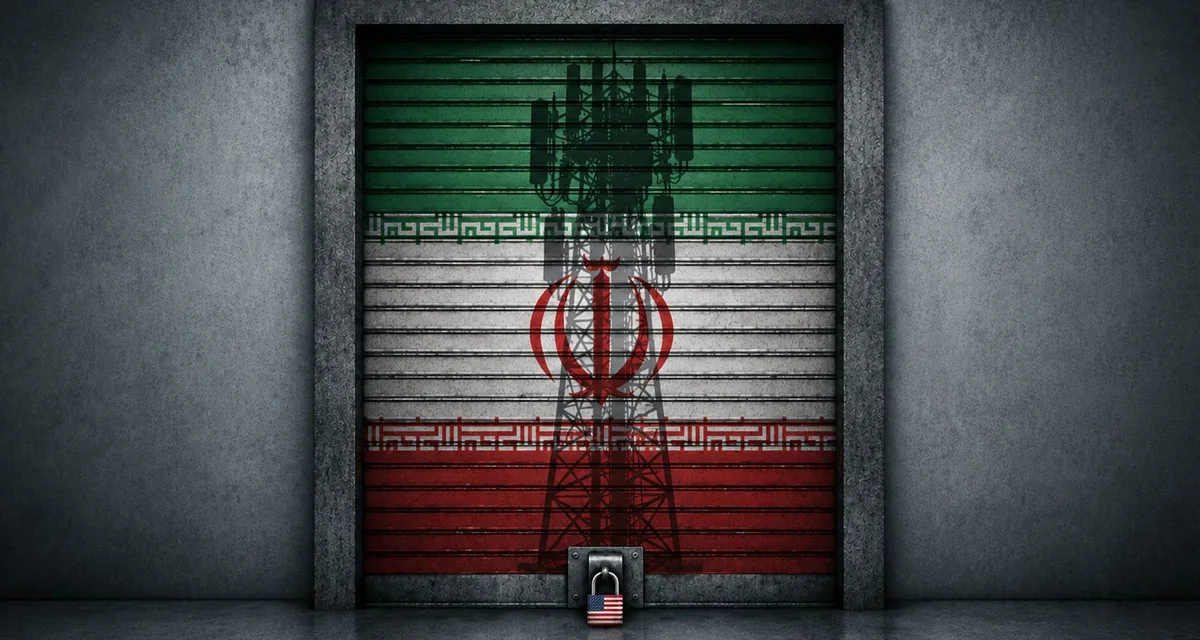
MTN Group wrote down its Iranian investment by R3.9-billion in the six months to end-June, and still carries R10.5-billion of Irancell net assets on its books. Both numbers now sit directly in the path of what US treasury secretary Scott Bessent has promised will be “the toughest sanctions in history” on Iran.
US President Donald Trump posted on Truth Social last week that “any country that allows its financial institutions, businesses, airports or government entities to provide any type of lifeline to Iran will itself face tremendous economic consequences”. He listed the conduits he had in mind: “Oil smuggling, swap lines, cash transfers, exchange houses, ship registries, front companies – it all needs to stop now.”
Bessent followed the next day on CNBC: “It is a one-two punch. We have the blockade, and we are going to have the toughest sanctions in history.” He returned to it in a Financial Times op-ed on Sunday and was due to set out the detail on Monday, the same day MTN released its interim results .
MTN owns 49% of Irancell, licensed in 2005 as Iran’s second mobile network. The other 51% sits with Iranian state-linked shareholders. It is a non-controlling, equity-accounted stake that MTN has been trying to leave for years, and cannot.
“With sanctions in place as they stand right now, we can’t put any money in, and we can’t take any money out,” group CEO Ralph Mupita told journalists on Monday.
That has been the position since May 2018, when the first Trump administration abandoned the Iran nuclear deal. The snapback that followed cut designated Iranian banks off from the Swift messaging network by that November. “Iran has been a trapped investment since May 2018 … we haven’t put any money in, haven’t taken any money out,” Mupita said.
The stranded cash is smaller than it was, but only because the currency collapsed. MTN disclosed about R886-million of receivables owed by Irancell at period end, with repatriation “constrained by the prevailing sanctions regime”. Mupita put it more plainly: “Post the devaluation, the total amount is just over R880-million equivalent of trapped dividends.”
That is not the only Irancell receivable on the books. A separate note puts the outstanding Irancell loan and receivable at R2.01-billion, classified as non-current because settlement is “neither planned nor likely to occur in the foreseeable future” and carried within investment in associates and joint ventures. It stood at R2.31-billion in December and R2.55-billion a year ago. The results do not spell out how the two figures relate.
It is not the first such trap. Under an earlier sanctions round MTN had roughly US$1-billion stuck in Iran, which it only recovered in 2017 , shortly before the door slammed shut again.
Irancell has been legally fraught from the start. Turkcell, originally selected for the licence, has for more than a decade alleged that MTN won the concession through bribery and political influence in South Africa and Iran. Its $4.2-billion claim has reached the constitutional court and names former group CEO Phuthuma Nhleko and former director Irene Charnley, both of whom deny the allegations.
5News aggregated this summary from the outlet’s public feed. The full article, with all the context, is on techcentral.co.za — the content belongs to TechCentral.