The roots of the Tata conflict run deep as India faces a corporate succession crisis
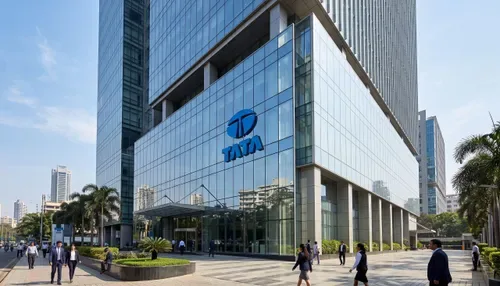
Tata succession saga exposes governance challenges facing India’s corporate giants.
In little over a month, the chairman of India's corporate giant Tata Group has gone from seeking another term to announcing his departure to returning to the role.
The saga around N. Chandrasekaran, who has headed the multi-billion-dollar empire for nearly a decade, has laid bare the succession challenge confronting India's industrial behemoths.
The leadership battle at Tata Group, whose businesses span everything from Jaguar Land Rover cars to Apple iPhone assembly, has highlighted weaknesses in governance and the power struggle between boards and controlling families.
But the consequences extend far beyond shareholders, with a growing number of succession dramas shaking global confidence in India, whose economy relies heavily on corporate giants, analysts say.
The Tata fiasco came to a head last week when the board of Tata Sons, the group's holding company, granted Chandrasekaran another five-year term.
The announcement came despite objections from the Tata Trusts, the philanthropic entities that control the conglomerate and which is chaired by family patriarch Noel Tata.
"The mutiny of the board against the controlling shareholder is possibly a first, and not the right precedent for corporate India," independent advisory firm IiAS said in a note.
Tata is far from an isolated case: from banks to consumer goods, some of India's biggest companies have been rocked by leadership exits and botched handovers in recent months.
"In the last 18-24 months, we've seen a number of CEOs being churned at the top," Navnit Singh of executive search firm Korn Ferry told AFP.
"I do think boards may not be spending enough time looking at long-term succession. Often enough companies do not have a 'hit by the bus' contingent plan and are often caught off guard."
For much of the year, Chandrasekaran's future hung in the balance as Noel Tata raised concerns about losses at some group companies, investment spending and the possibility of listing Tata Sons.
The tensions intensified after the death of former patriarch Ratan Tata in 2024, leaving unresolved questions over how authority would be shared within India's largest conglomerate.
"When Ratan was alive, he didn't trust Noel Tata enough to make him the chairman of the Trusts," said Shriram Subramanian of advisory firm InGovern.
5News aggregated this summary from the outlet’s public feed. The full article, with all the context, is on iol.co.za — the content belongs to IOL.