THE GATHERING 2026: A top urbanist’s guide to building modern South African cities
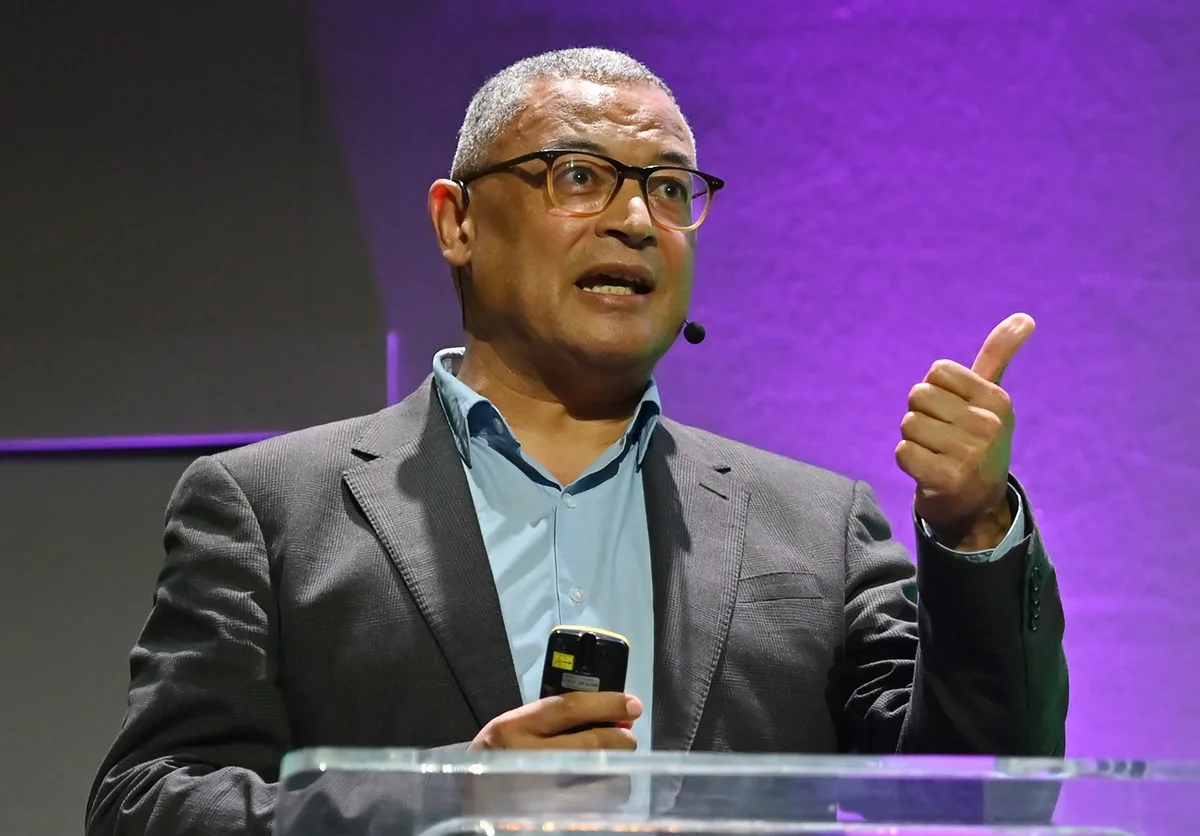
South Africa has delivered housing and infrastructure, but it has fallen short of building truly liveable cities. Urbanist Edgar Pieterse offers three bold ideas for creating safer, greener, job-rich neighbourhoods.
When South Africa came into democracy, the country had ambitious plans to fix its cities.
To do so, the government implemented plans to provide every household below the poverty line with free basic housing, access to free basic services such as petrol, water, and energy, and social development such as free basic education and health, said Edgar Pieterse, the director of the African Centre for Cities at the University of Cape Town.
He was speaking at The Gathering 2026 in Cape Town on 11 September, delivering a talk titled ‘Our Cities are not broken, they’re just built wrong’.
South Africa had delivered one of the most ambitious and most impressive housing programmes, Pieterse said, yet the country had failed to build cities and failed to achieve urbanism. Although the country had lots of infrastructure, it had neglected good design, beauty and spatial justice, he added.
“And there’s something more difficult to name, which is that vision that comes from when African cosmologies bump into modernity. When informality sits adjacent to formality. When the makeshift sits alongside the highly regulated. Those are unique African dispositions that we fail to harness as sources of innovation and creativity.”
Pieterse had three hacks to improve cities through private-public partnerships.
First, he said South Africa should harness minibus taxis. The country should look at ways to increase the revenue of taxis tenfold, so that they agreed to pay taxes and comply with regulations and safety standards.
There was potential for minibus taxis to spearhead a transition to electric vehicles in SA’s locomotive industry, he said. Minibus taxis also had the potential to build a new revenue stream through real estate.
As an example, he envisioned Cape Town’s Nyanga Station with social housing at the top of the station, informal trading at the front and electric minibuses at the centre. With the technical, financial and design expertise in South Africa, this plan was doable, he said.
Second, South Africa must embrace alternative materials to build infrastructure such as schools and housing, Pieterse said. He spoke about nonCrete, which is made from alien vegetation that is cleared off mountains and is repurposed into a low-carbon building material that is more effective than concrete and has better insulation and cooling properties than traditional concrete.
“Think of the kind of value chain that is possible and the jobs we can multiply [...] the jobs, the building needs at least are transformed with the quality of the environment across South Africa,” Pieterse said.
For his third hack, he said South Africa had the potential to transform its creative spaces.
5News aggregated this summary from the outlet’s public feed. The full article, with all the context, is on www.dailymaverick.co.za — the content belongs to Daily Maverick.