GROUNDUP : No relief in sight in Makhanda’s decade-long struggle for reliable water
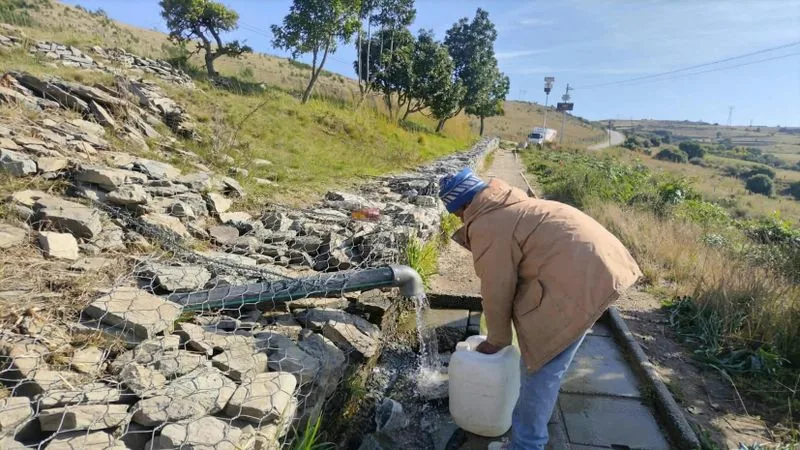
Upgrades to the water treatment plant to solve the crisis that started in 2015 are yet to be completed.
There is water in the taps in Khonziwe Tom’s house in Makhanda only two or three times a week, and when it does flow it is only for a few hours very early in the morning.
“If you don’t wake up early you might miss it,” says Tom, who lives in Fingo on the east side of town.
Sometimes there is water during the day, but then Tom and many other residents are at work or school. By the time they get home the taps are dry again.
“The water delivery truck takes a long time to arrive and when it does arrive the drivers are often in a rush, saying they have to hurry to another area,” says Tom.
The lack of reliable water means she often has to spend her stretched salary on water.
In Extension 6, Xolani Jacobs says he normally gets water between 4am and 5am, but it stops at about 9am, though sometimes it stretches until 11am. But one can never be certain, he says.
“For example, on 11 September we did not get water until 3pm and sometimes we don’t receive water for two days,” he says.
Frequent and unpredictable water outages have plagued Makhanda residents for at least 14 years , and have led businesses, institutions and residents who can afford it to fund their own water supply, independent of the municipality.
The water shortages were meant to be remedied by an upgrade to the James Kleynhans Water Treatment Works (WTW), taking it from a 10-million-litre-per-day plant to a 20 million one.
Makhanda is also supplied by the Waainek WTW on the west of the town, but it is a smaller eight-million-litre-per-day plant. Its raw water sources are Settlers Dam and Howieson’s Poort. The Glen Melville Dam, which supplies Kleynhans, is fed by the Orange-Fish tunnel scheme.
Upgrade work to Kleynhans began in 2015 and was supposed to be completed by 2018 at a cost of R102-million. Years later, it is still not finished, and according to implementing agent Amatola Water it has so far cost R279-million.
Work on the third and final phase of the project began in March and is to be completed by September 2027 at an additional cost of R223-million. This will mean a R400-million overrun overall even if the current phase stays within budget.
Six months into the 18-month Phase 3 upgrade, the work is 12% complete, according to Amatola Water spokesperson Nolitha Mbangcolo.
5News aggregated this summary from the outlet’s public feed. The full article, with all the context, is on www.dailymaverick.co.za — the content belongs to Daily Maverick.