What can a century-old Kuomintang building tell us about Australia?
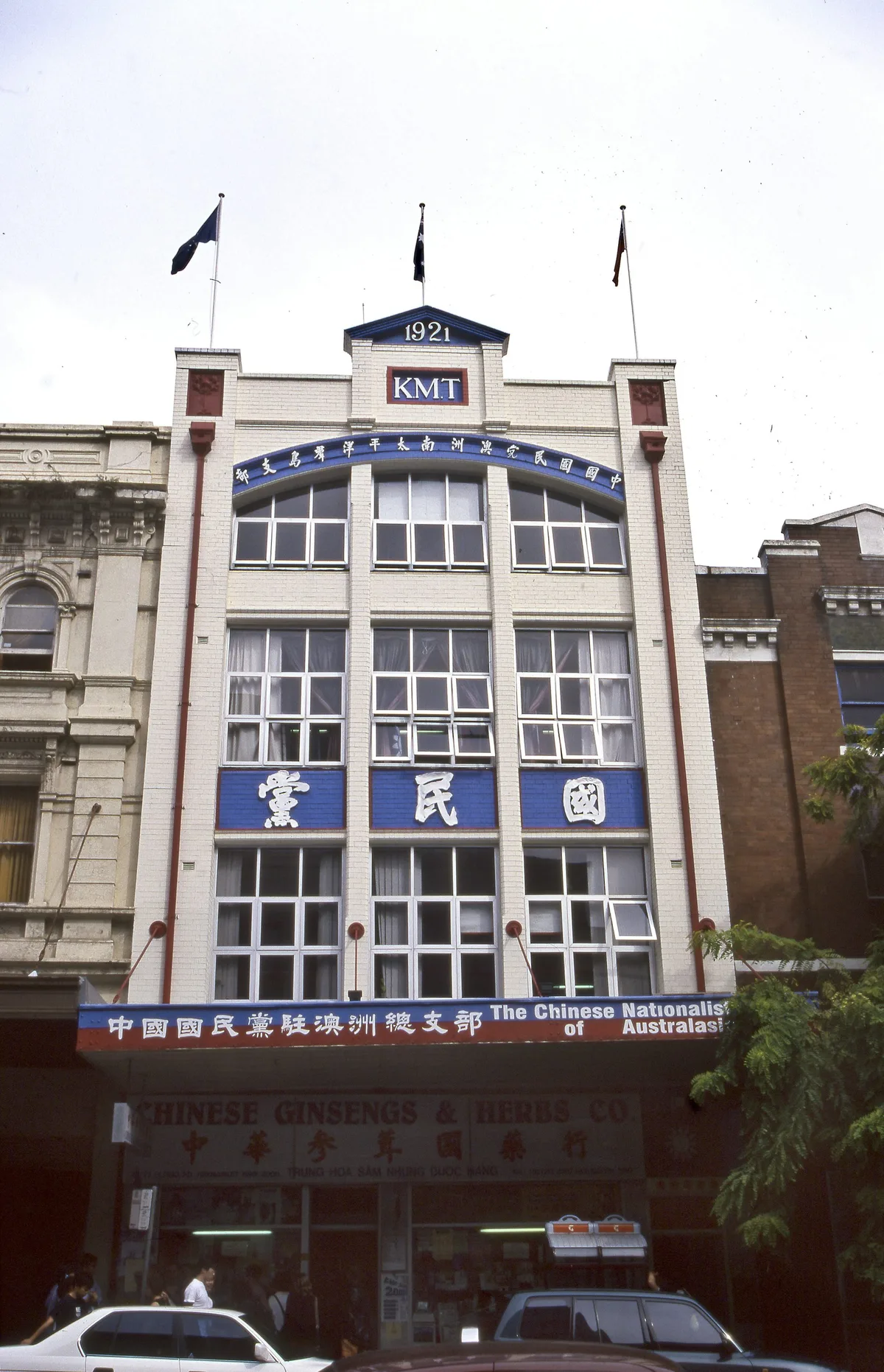
On Ultimo Road in Haymarket, just a few minutes’ walk from Paddy’s Markets, stands an unassuming building with an unusual history.
Built in 1921 for the Sydney branch of the Kuomintang (KMT), or Chinese Nationalist Party, it later became the headquarters of the party’s Australasian organisation.
More than a century later, the building has been heritage-listed by the City of Sydney .
It’s not only the building itself that is valuable, but the archives, objects and stories preserved there.
Together, they challenge some familiar assumptions about Australia’s past.
Most people associate the KMT with China and Taiwan.
Emerging from Sun Yat-sen’s republican movement in the late 19th century, it later governed China under Chiang Kai-shek until its defeat by the Chinese Communist Party in 1949.
In Taiwan, it imposed martial law and maintained authoritarian rule for decades.
Martial law was lifted in 1987, paving the way for Taiwan’s democratisation in the 1990s.
So what was this party doing in Sydney? And what can its headquarters tell us about Australia? KMT Building, Ultimo Road Haymarket, 2000.
Mark Stevens, courtesy City of Sydney Archives , CC BY-NC-ND In September, the Museum of Chinese in Australia invited me to talk about the building’s history .
But the discussion that followed my talk quickly moved beyond the building itself.
The audience brought together migrants from mainland China, Hong Kong and Taiwan, descendants of long-established Sydney families, policymakers, history enthusiasts and groups of international studies and high school students.
Some asked whether migrants are still viewed with suspicion from the wider Australian public over divided loyalties.
5News aggregated this summary from the outlet’s public feed. The full article, with all the context, is on theconversation.com — the content belongs to The Conversation Australia.