Bush preschool: Why going bush is so powerful for young learners
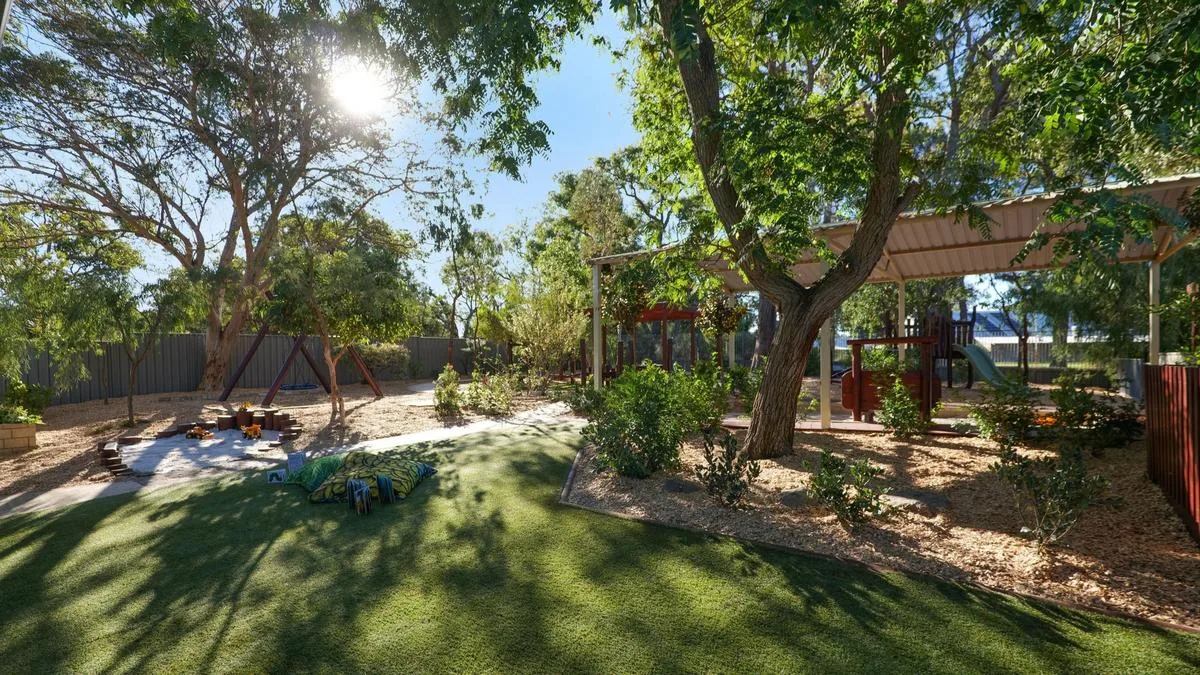
Bush preschool is gaining ground across Perth as parents and educators look for alternatives to the traditional classroom. Research out of the University of Melbourne and Deakin University has linked bush preschool programs to improved wellbeing and a deeper connection to the natural world in young children.
And according to the Keiki’s Bush Preschool in Hamersley, there’s no better evidence of this than the bright eyes and wide smiles of the children who attend and explore their nature play spaces each day.
Where a classroom offers a controlled, predictable environment, the outdoors offers the opposite: texture, smell, sound and constant change. The smell of flowers and earth, the feel of rough tree bark, the sound of wind moving through the trees, the taste of vegetables picked fresh from the garden, and the chance to watch plants and animals grow and change with the seasons. Educators say this sensory immersion helps children tune into the natural rhythms around them, and in turn, notice their own growth and change.
Time outdoors naturally raises questions about weather, seasons and life cycles.
At the Keiki’s Bush Preschool, children experience these cycles firsthand. They might water thirsty plants, harvest vegetables from the garden, or feed food scraps to a worm farm, which in turn fertilises the soil. Through these experiences, children begin to understand that they are part of the life cycle of their environment.
This connection to nature also opens meaningful opportunities to learn about how First Nations peoples care for Country and how these practices have sustained the environment for thousands of years.
As children’s awareness grows, so too does their knowledge. With endless curiosity and questions, they begin to recognise the birds, insects and plants that share their environment. They learn what these creatures eat, how they live and how their life cycles change with the seasons.
Before long, children become proud little nature experts. They go home able to identify the lizard on their porch or the flower in their garden, carrying with them an appreciation for the natural world that extends far beyond their bush preschool.
Unlike a classroom, the outdoors is the ultimate open-ended play environment. Nature invites imagination and creativity in ways that structured environments often cannot. A stick becomes treasure, a patch of dirt becomes a kitchen, and a handful of leaves becomes the ingredients for a mud cake shared among friends.
The games children create outdoors are organic, collaborative and ever-changing. There’s no telling what they might dream up on any given day.
Wide open space also does wonders for physical development. Running, climbing and balancing on uneven ground build strength, coordination and confidence in ways a carpeted classroom simply can’t. Sun-safety and supervision remain non-negotiable, but within those guardrails, children are given real room to test their limits.
As Deakin researchers Speldewinde and Campbell concluded in their 2024 study, “Children’s nature play facilitates the development of environmental understandings.
5News aggregated this summary from the outlet’s public feed. The full article, with all the context, is on www.perthnow.com.au — the content belongs to PerthNow.